top_banner_ttneorispro0426
Type foundry Blog TypeType Online Store: We Accept Card Payments for Your Convenience

TypeType Online Store: We Accept Card Payments for Your Convenience

Online Shop

Looking for a simpler and faster way to purchase fonts? Let us show you how! Below, you will find a detailed guide on the TypeType store features. Also, get ready for a pleasant surprise at the end of the article!

TypeType online shop

We put a lot of effort and love into designing each font, and we’re excited to bring you a convenient and user-friendly way to easily purchase our fonts from anywhere in the world, whenever you want.

You can pay for your purchases with credit cards, which makes the process significantly smoother and quicker.

The payment system is protected by cutting-edge security measures, ensuring the confidentiality of your data.

How to purchase fonts online

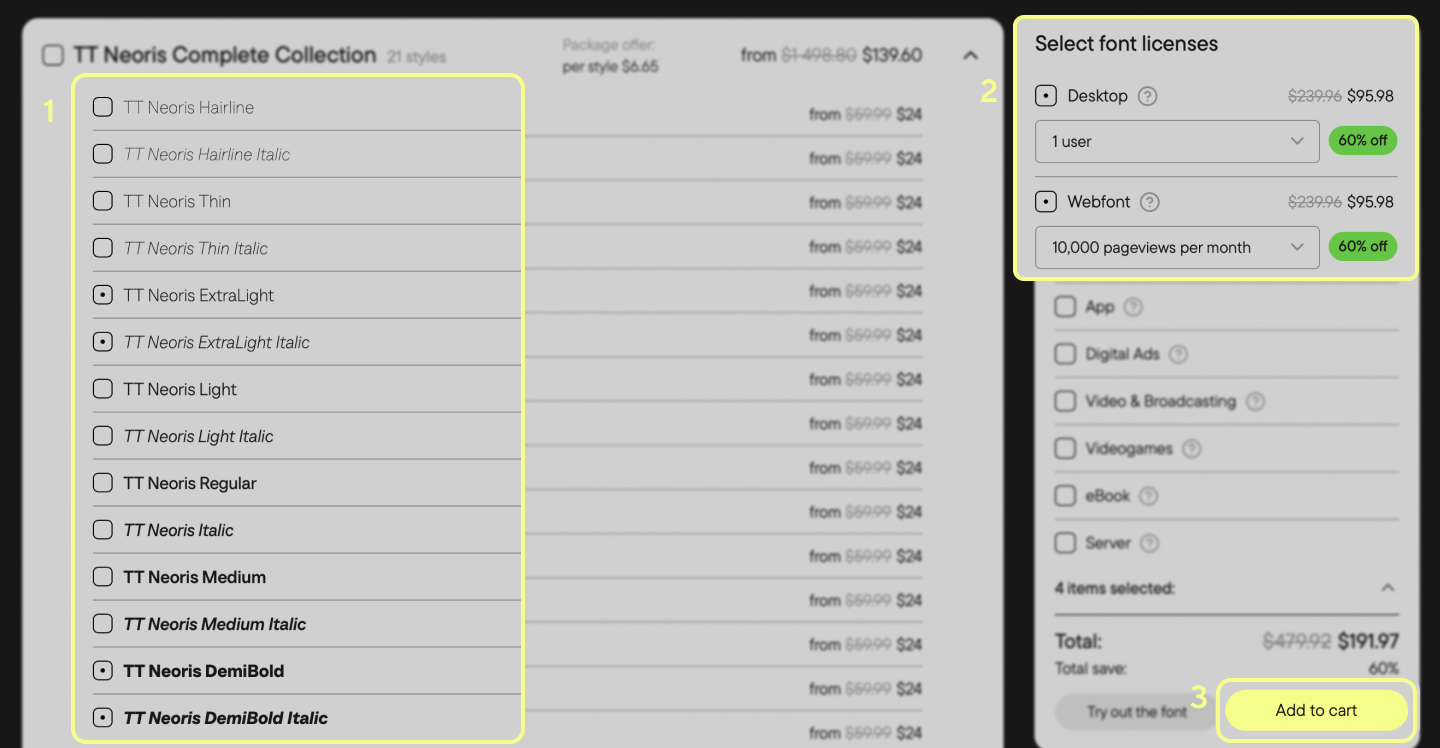
Step 1. On the font’s page, choose the necessary font styles or packages.

Choose the required licenses.

Click the “Add to Cart” button.
How to purchase fonts online

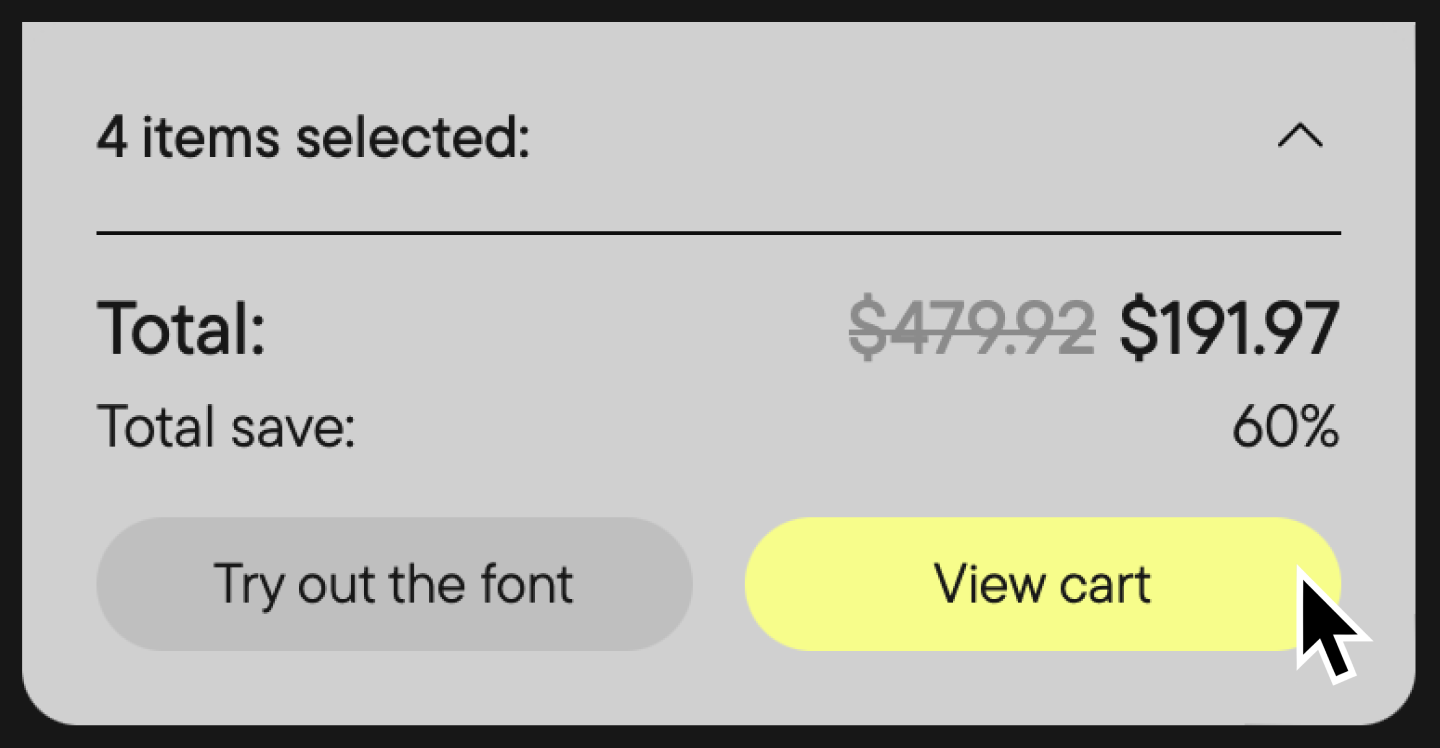
After that, the “Add to Cart” button will become the “View Cart” button. Click it if you don’t plan to add any more items, and you’ll be directed to the cart page.
How to purchase fonts online

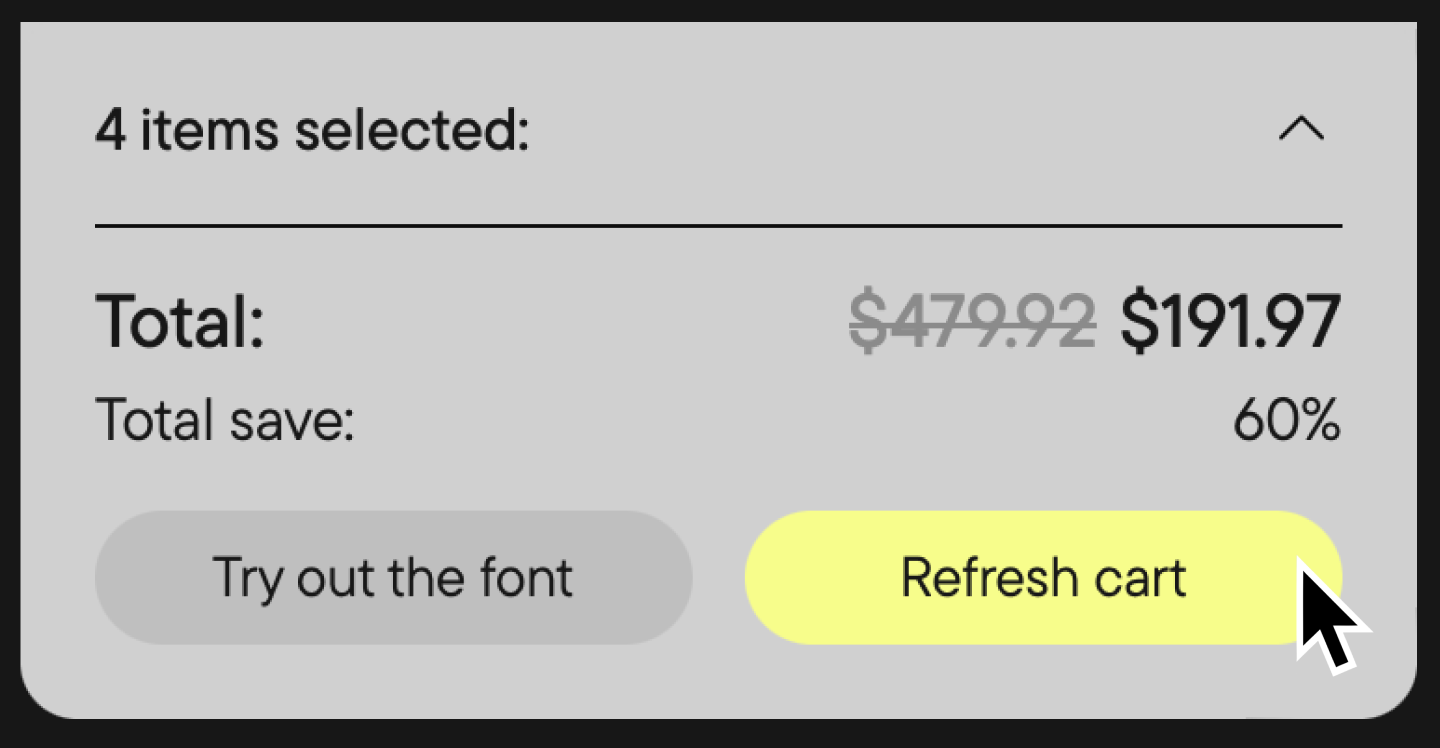
If you want to change the selection of font styles or licenses, you can always go back to the font’s page, select again, and click the “Refresh Cart” button.
How to purchase fonts online

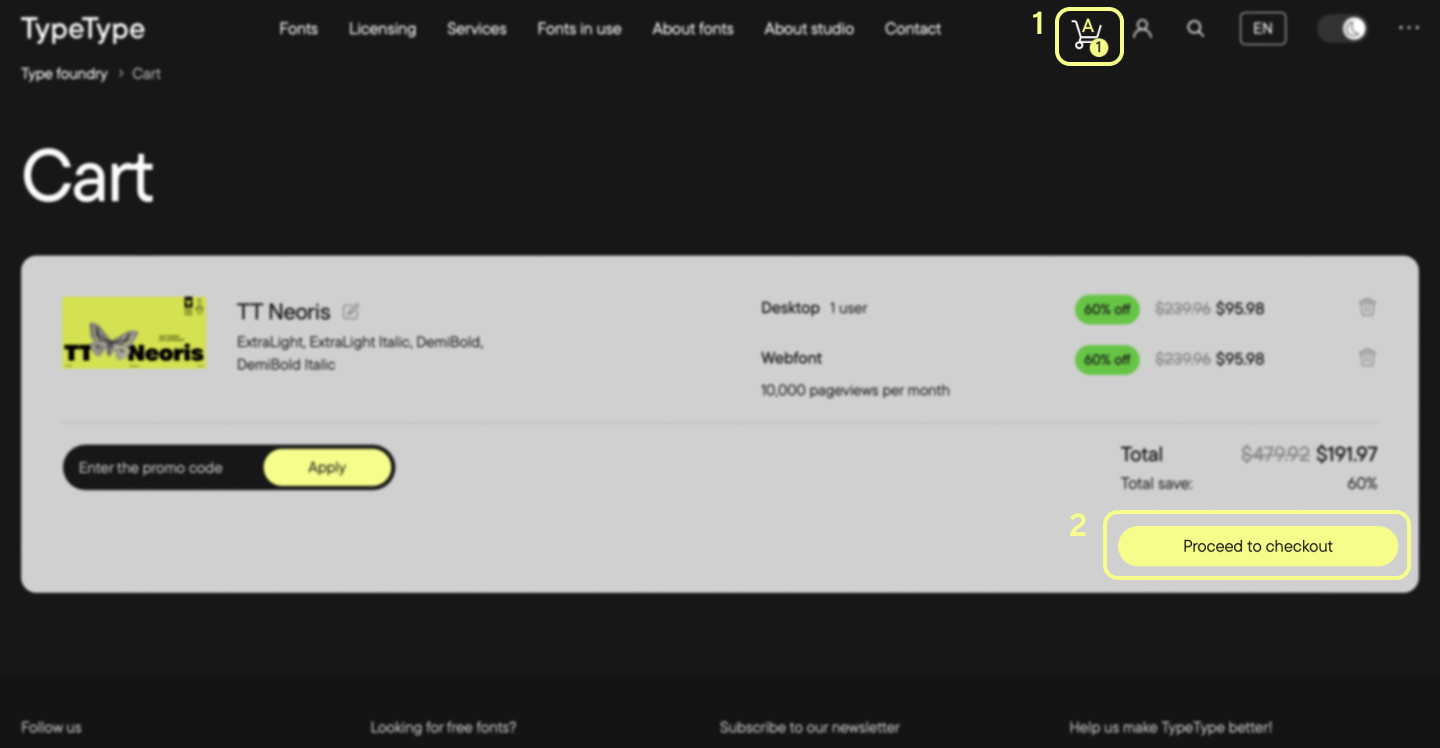
Step 2. To go to the cart page from any other page, click the corresponding icon in the website’s main menu (the icon is located in the top right corner).

The cart allows you to view your selected fonts and licenses and gives you the option to edit or remove them.

When your order is fully completed, click the “Proceed to Checkout” button.
How to purchase fonts online

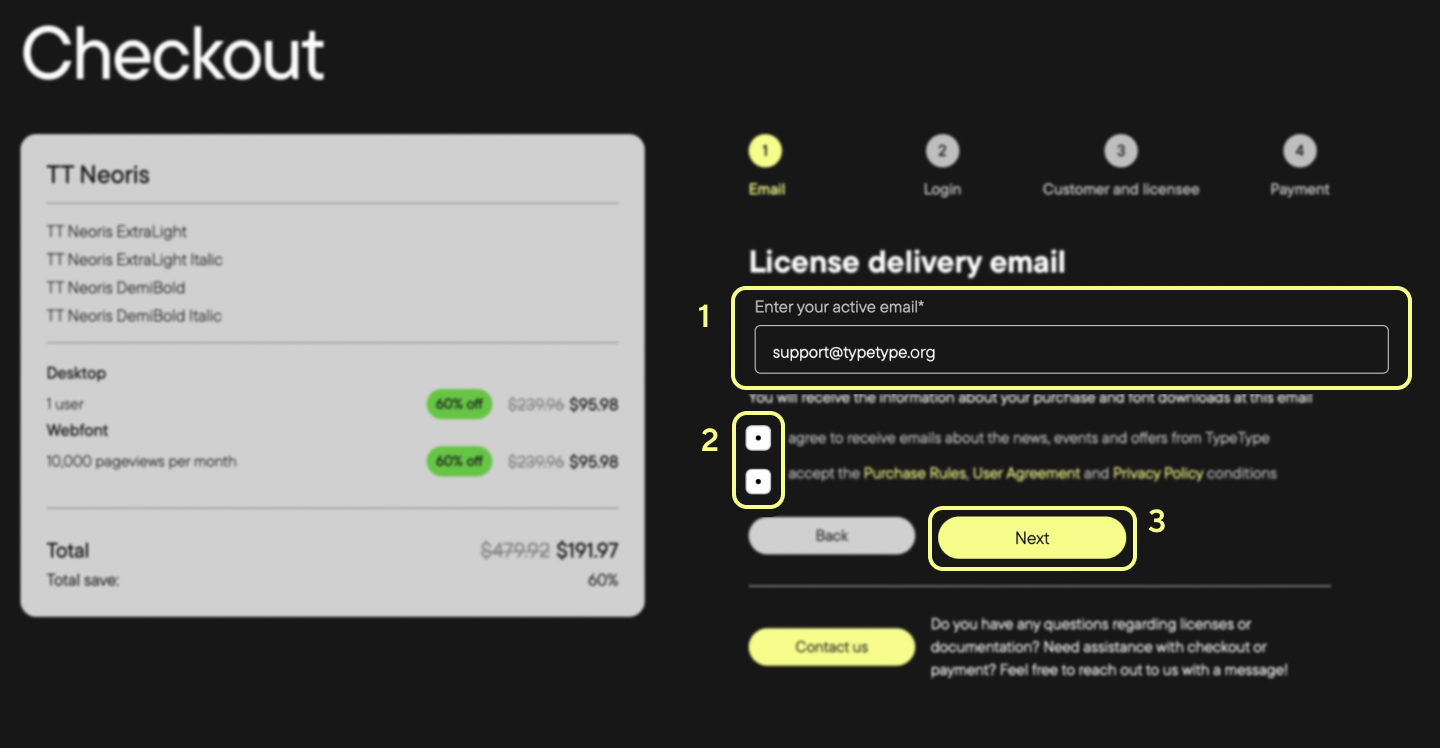
Step 3. On the newly opened page, enter your valid email address. After you pay, you will receive an email with information about your order and a link to download the purchased fonts.

Check the box to accept the terms and conditions of purchase, the user agreement, and the privacy policy.

Click the “Next” button.
How to purchase fonts online

By the way, if you have already signed up and signed in on our website, you won’t have to re-enter your data at this and the following purchase steps.

Registered users have their orders attached to their personal accounts, where you can always download font files and view all order details.

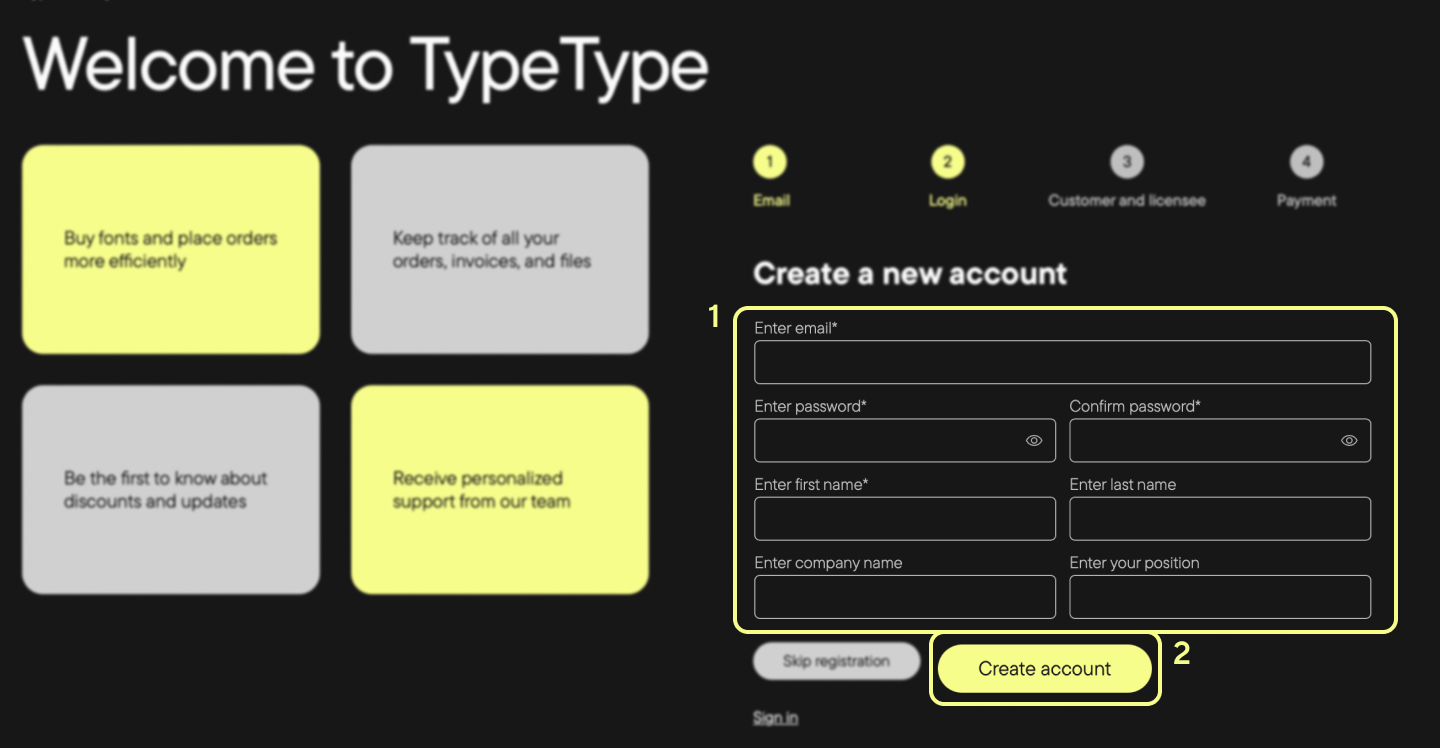
Step 4. If you don’t have an account, you can register one during checkout—right after step 3. To do so, fill out your information in the displayed field and click the “Create account” button.
How to purchase fonts online

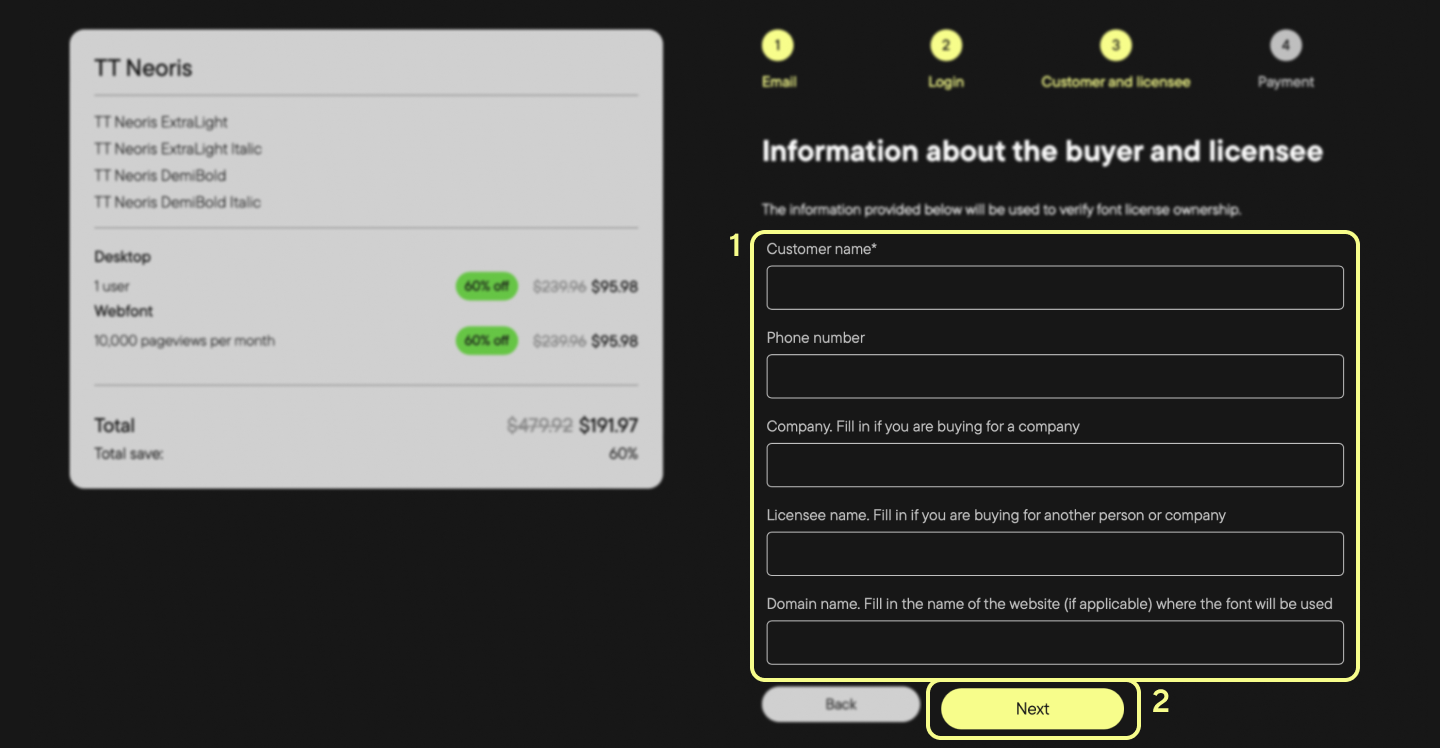
Step 5. Enter the buyer’s and licensee’s valid data. It will be used to validate the ownership license for the purchased fonts.

Click the “Next” button.
How to purchase fonts online

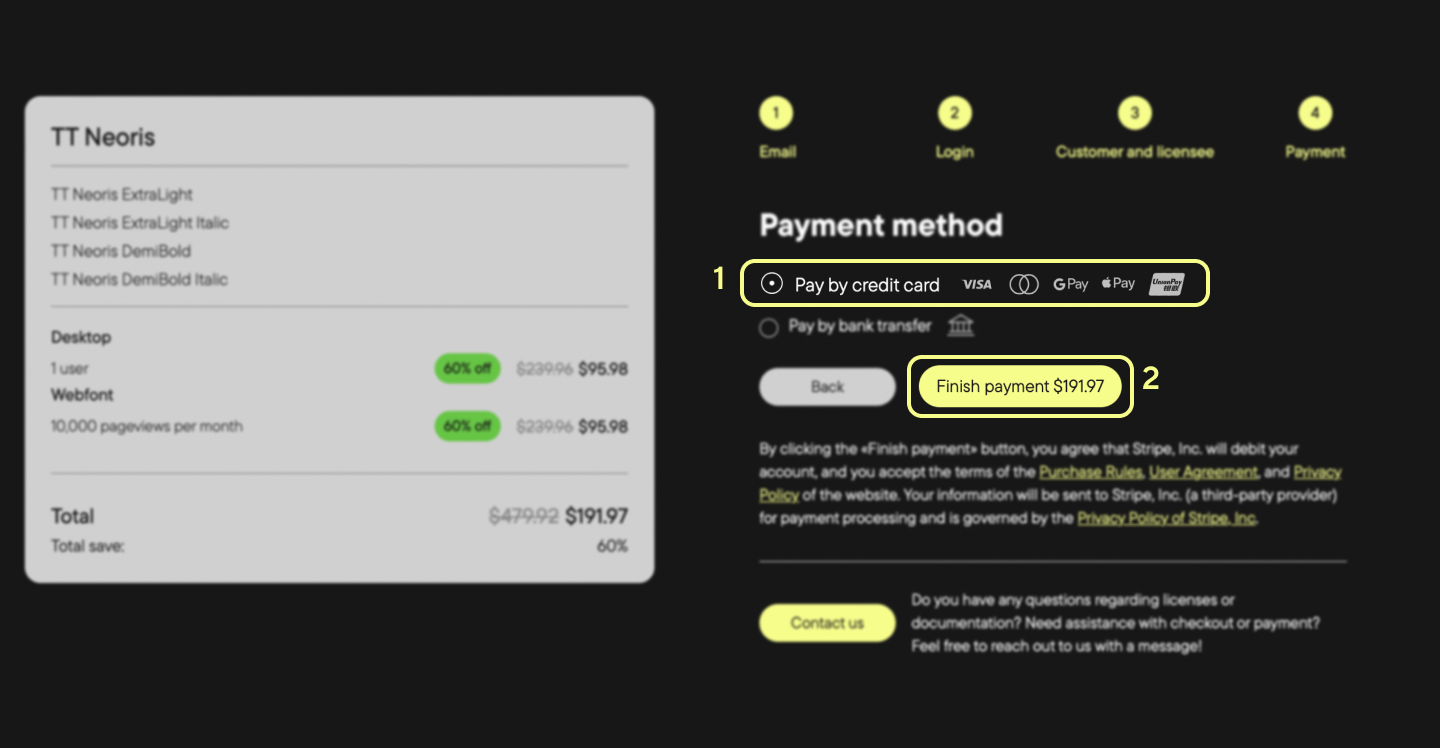
Step 6. Choose the “Pay by credit card” payment method.

Click the “Finish Payment” button.
How to purchase fonts online

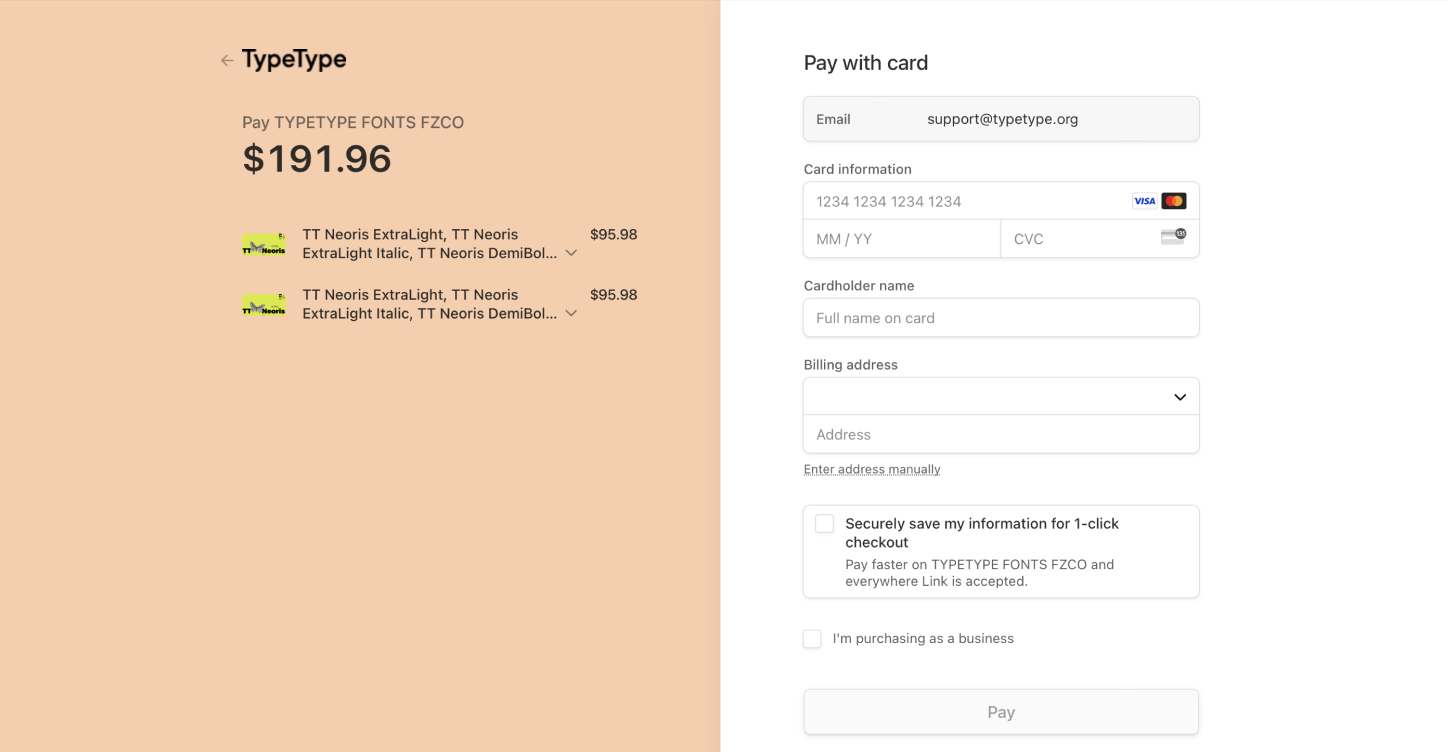
Step 7. You will be redirected to the Stripe checkout page.

Enter your bank card details and confirm the payment.
How to purchase fonts online

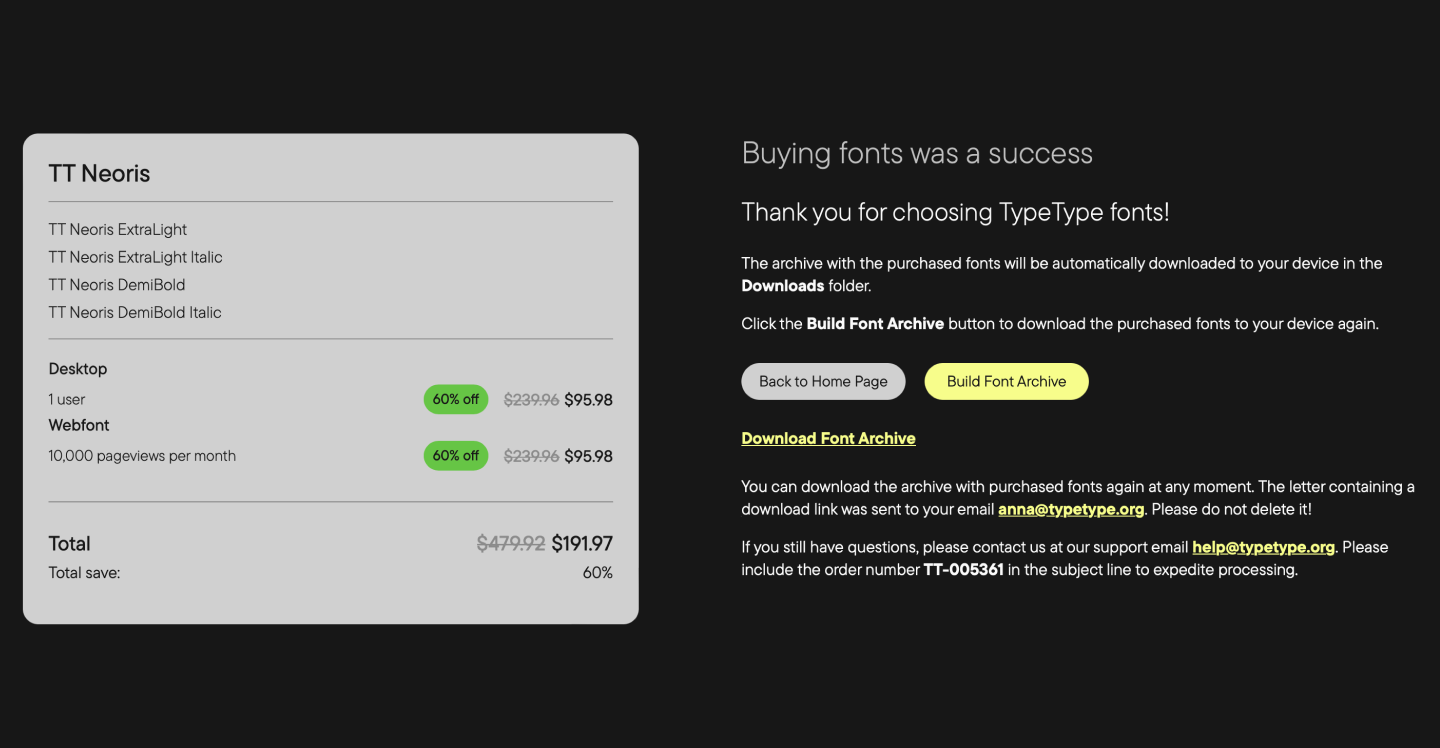
Step 8. After you complete the checkout process, you will be redirected to the page where you can download the purchased font.

The download will begin automatically. To download again, you can click the “Build Font Archive” button.
How to purchase fonts online

Step 9. The information about the order will be sent to the email address you provided earlier.

By clicking on the link in the letter, you can open the font download page at any time convenient to you.

Electronic payment for legal entities

We haven’t forgotten about those who prefer non-cash payment.

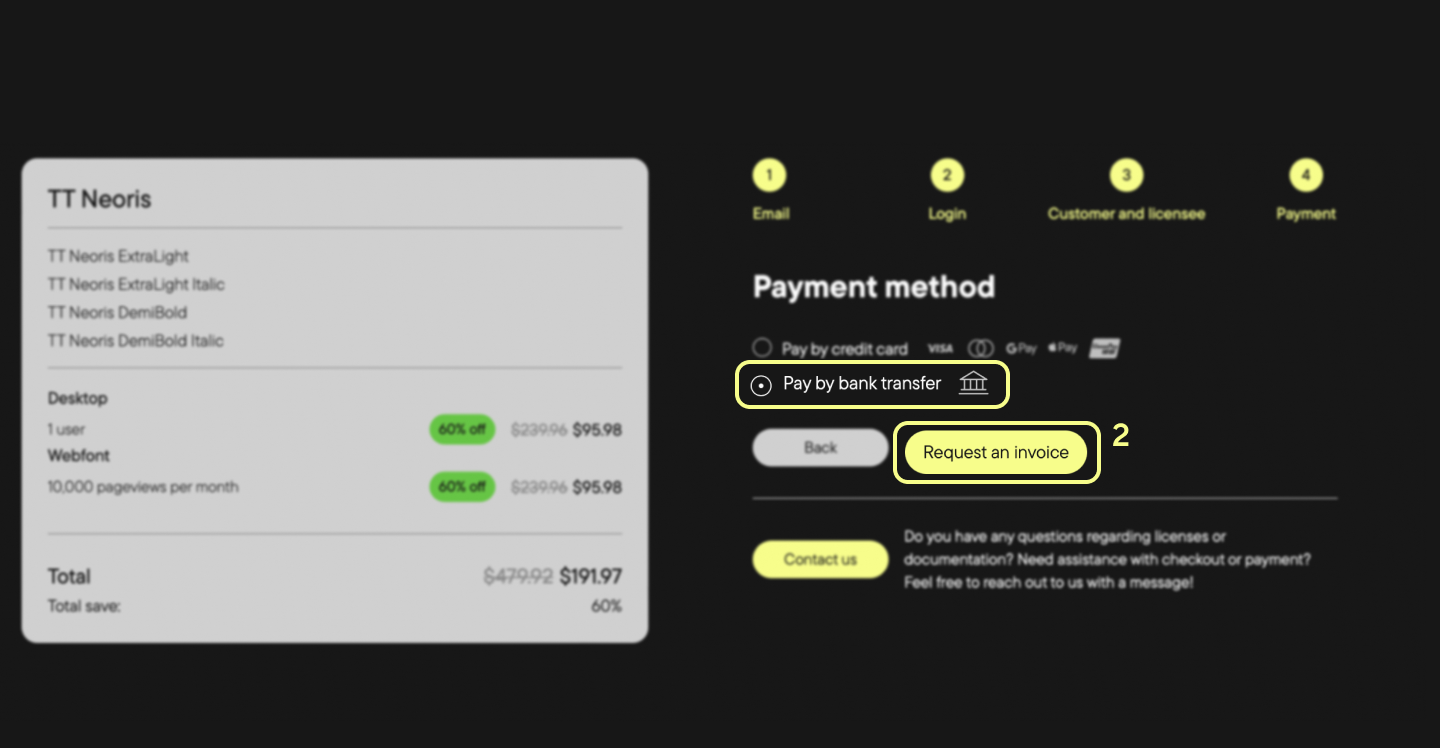
If you need to pay for an order by bank transfer, you can always leave a request to the store manager, and we’ll process it as soon as possible.

To leave a request to the store manager, choose the “Pay by bank transfer” payment method at Step 3 and click the “Request an invoice” button.
Electronic payment for legal entities

Thanks for taking the time to read our instructions!

If you have any questions or suggestions, email us at help@typetype.org.

We welcome your input to improve our services.
Latest publications

What is a Font Family? Definition, Types, and Examples
Work with fonts

In this article, we will break down the font family definition, explore what types of font families exist, explain how a family differs from a font and a typeface, detail what is included in a font family, and guide you on how to make the best choice for a website, UI interface, and brand.

Typography in Figma: Variables, Tokens and Design Systems
Work with fonts

The larger the project, the more noticeable the price of chaos. On a simple landing page, you can manually fix a couple of headings. In an app with hundreds of screens, multiple platforms, different modes (like light/dark themes), and localizations, this approach quickly breaks down. One designer changes the size of a caption, another creates a local style, a third manually tweaks the line height—and within a month, the team no longer understands which values are actually systemic. A systematic approach to typography in Figma is crucial: it helps not only to craft an amazing layout but also to make the design solid and sustainable in real production. In this article, we explore the capabilities of working with typography in Figma, break down the core concepts, and provide practical examples.

Why Unique Fonts Matter Even in the Age of AI-Generated Design
Work with fonts

AI-generated fonts make design faster than ever — but speed doesn’t equal uniqueness. Discover why custom typography, bespoke typefaces, and strategic font design remain essential for brand identity, authenticity, and competitive advantage in the AI era.

IP Protection as an Art: TypeType’s Flexible Licensing Control Strategy
Work with fonts

Drawing on their own experience, the specialists at TypeType explain how type foundries and designers can stop unlicensed use of their products and get additional revenue while avoiding reputational risk. In TypeType’s professional experience the popularity of a typeface is linked to the fact that it will be more likely used without an appropriate license—despite the fact that developing a single family can take years of meticulous work. We covered how font licensing works in detail here.

Font Research: An Expert Approach to Brand Typography
Work with fonts

Among TypeType Studio’s services, we offer typeface system research. Why do brands need such research, and how does it help them develop? How is it conducted? What does the research include, and how are the results interpreted? We answer these questions and show how it works in practice using the financial segment as an example.

TypeType’s Year in Review: Looking Back at 2025
TypeType news

2025 was an incredibly productive year for TypeType: we released 7 new fonts, updated 14 typefaces, and added Arabic language support to two of our bestsellers. In addition, we won awards in type design competitions, explored new platforms, improved our website, wrote about type design in our blog, gave lectures, met with you at webinars, and created joint projects with friends and partners.

Typography in the Museum: How We Developed the Corporate Typeface for the Hermitage
Corporate fonts Font creation

The TypeType team, with the support of the Mantera Group, has created a new font family for the State Hermitage Museum—the Hermitage Type Family. The typeface will be used across all of the Hermitage’s digital content; you can already see it on the website and the updated launch page of the mobile version. And this is just the beginning of a major overhaul of the museum’s digital identity, in which the new font will play a pivotal role.

Proxima Nova Font: Alternatives, Pairings, and the Secrets of Its Popularity
TypeType fonts Work with fonts

Proxima Nova is one of the most recognizable sans-serif fonts in modern design. In this article, we’ll explore the history of the Proxima Nova font family, its graphic characteristics and composition, figure out what fonts go with Proxima Nova, what its best alternatives are, and what license you need to use it.

See more

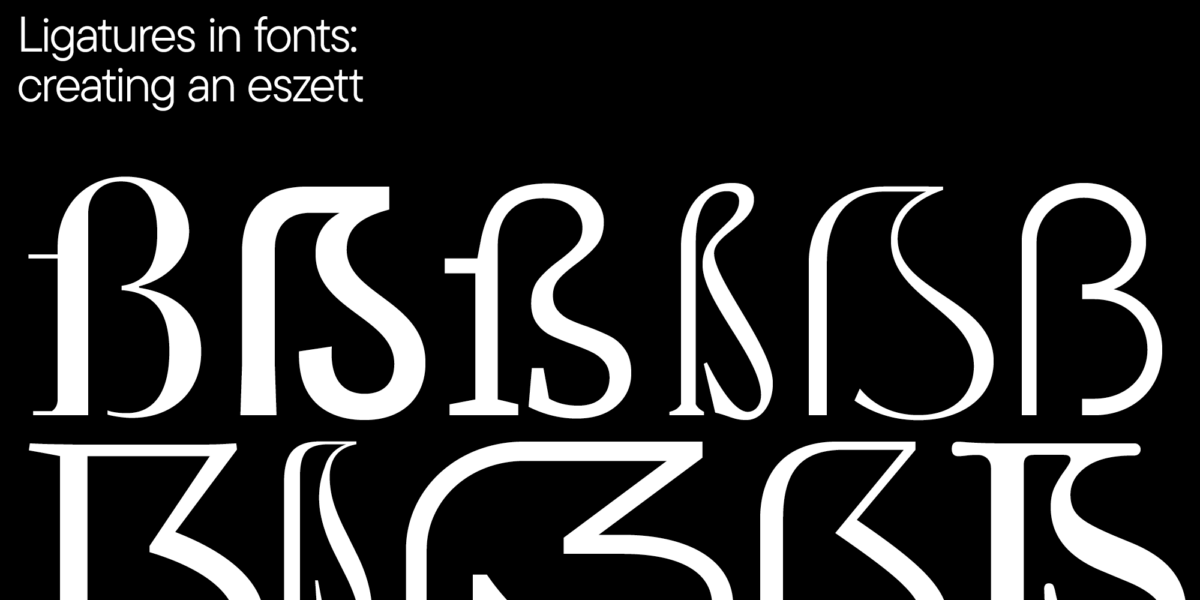
Ligatures in fonts: Creating eszetts
Font creation

When expanding character sets of fonts, novice type designers often face difficulties in drawing the eszett character.
In this article, we will take a journey through the history of this character, learn about its origin and role in modern typography.

The best web fonts: how to choose font for a website
TypeType fonts Work with fonts

To a novice designer, web fonts can seem complicated and even intimidating. But there are no reasons for despair, because over time, by studying the information and practicing, you will become a professional.

15 Best Modern Sans Serif Fonts for Your Design in 2026
TypeType fonts

Most modern brands choose sans serifs fonts as their corporate font. Such fonts began to gain popularity almost a century ago, but still remain at their peak. Let’s find out what is so attractive about these fonts and have a look at a selection of the best sans serifs from the TypeType collection.

At First Sight: Stylish Fonts for Headlines and Displays
TypeType fonts Work with fonts

Today we will talk about these options: graceful and daring, friendly and brutal, dynamic and stable. These are display fonts. They are different in character and expressiveness, but always attract attention when used properly.

15 Best Serif Fonts for Design Projects in 2026
TypeType fonts

Modern typography offers hundreds of serif typefaces for projects of every mood and direction. Despite this, many designers are still cautious about serif fonts, afraid to make projects look outdated.

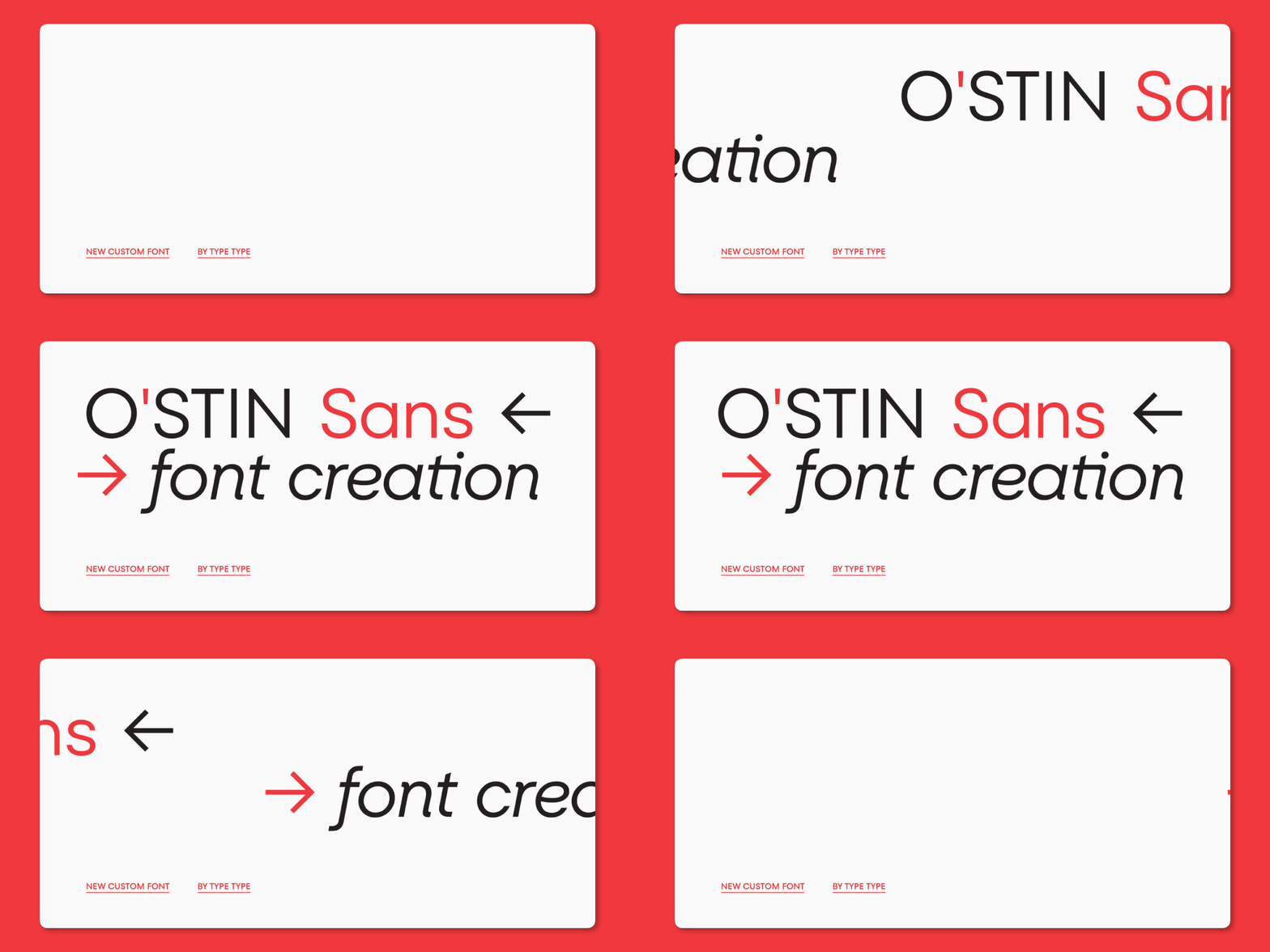
Corporate font for O’STIN: The full story
Corporate fonts Font creation

The font is part of the brand, responsible for the emotional context of the information communicated. Is it possible to complement these associations and expand the audience by changing the corporate font?

Creating a font from scratch: A detailed guide and tips for choosing software
Font creation Font customization Font mastering Work with fonts

Creating your first font is most difficult because the designer does not yet know all the details of development, does not have enough visual intuition and experience. When developing a font for the first time, you have to learn a lot in the process, transferring theoretical knowledge about type design to practice, which is always difficult.