top_banner_ttnormspro0426
Type foundry Blog Font Universe in a Bottle: How Pinot Agency and TypeType Created "Font Wine"

Font Universe in a Bottle: How Pinot Agency and TypeType Created “Font Wine”

Font Universe in a Bottle: How Pinot Agency and TypeType Created “Font Wine”

The font design studio TypeType and branding company Pinot Agency combined fonts and wine to create “font wine” — a project that originated in conversations over sparkling wine and grew to cosmic proportions. What is it and how should you enjoy it? We’ll tell you in this article!

Summer, Fonts, Wine
Summer, Fonts, Wine

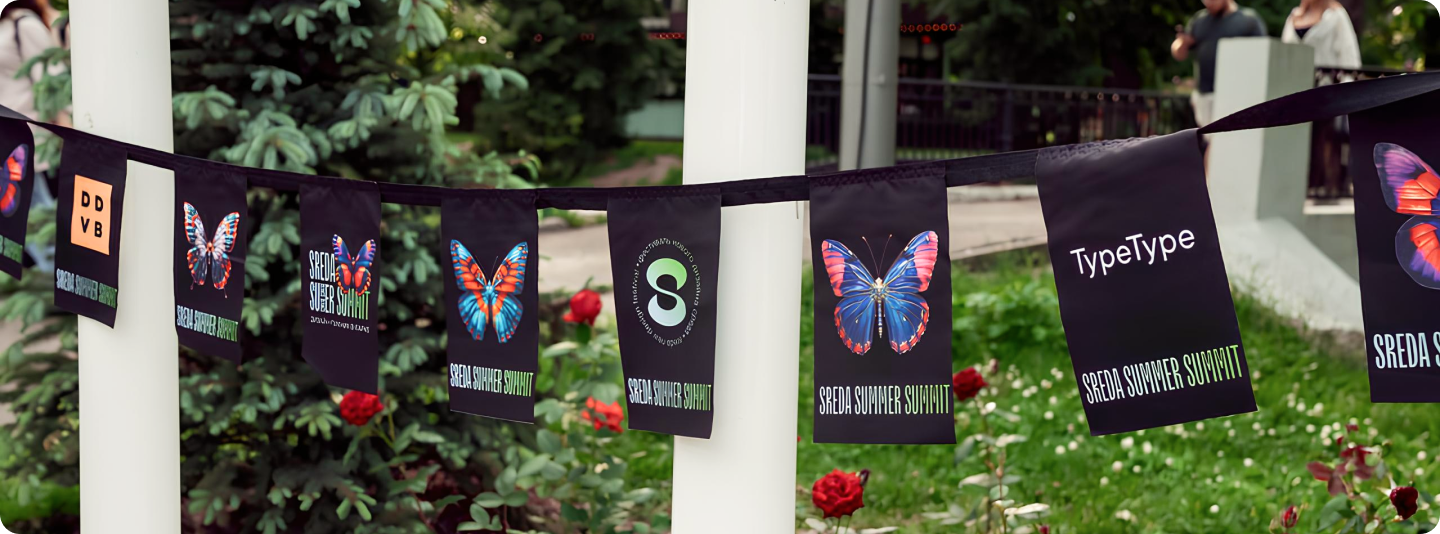
It all began in the summer of 2024. TypeType Studio became a partner of the Sreda Summer Summit festival, and there we met with colleagues from Pinot Agency.
Summer, Fonts, Wine

Initially, the team from the agency proposed creating a wine-font pairing. The idea was that each font, like each wine variety, has its own unique character. And, when united, they can highlight each other’s distinctive features, mood, and spirit.
Summer, Fonts, Wine

We decided to try implementing this concept: take several wine samples and match them with suitable fonts from the TypeType collection.
Summer, Fonts, Wine

So, the project received the working title “font wine,” and we moved on to the most interesting part — selecting wine-font pairs through tasting.
Wine-Font Pairing

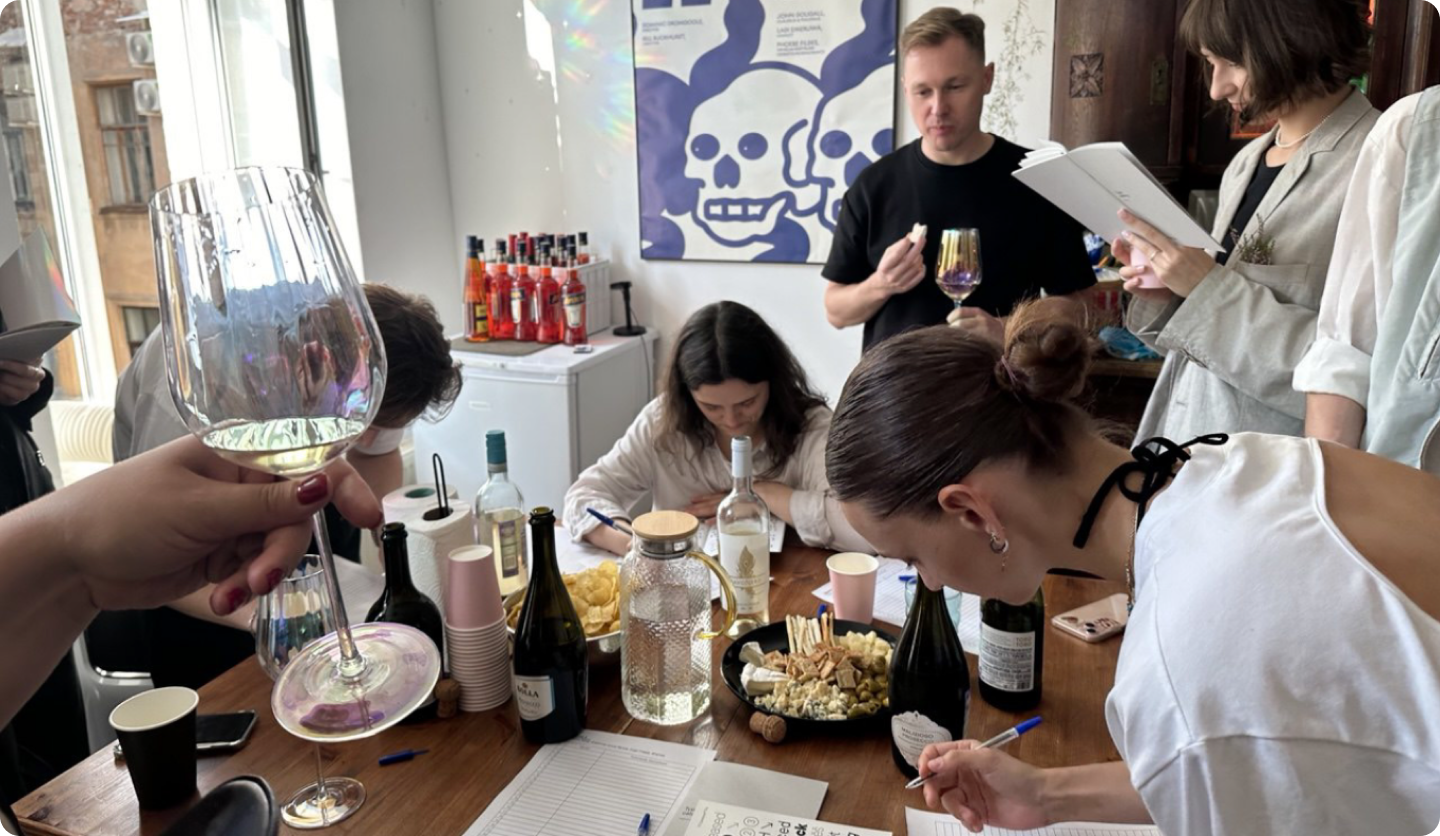
The tasting took place at the TypeType office. Font designers and other studio employees participated, as well as representatives from Pinot Agency. We obtained nine wine samples from our partners, Ladoga company: three reds, three whites, and three sparkling wines. Based on the tasting results, we needed to select three samples (one from each group) and three fonts that matched them.
Wine-Font Pairing

Each tasting participant could vote for one wine from each category that they liked the most and write down which font they associated with the chosen variety and why.

The top three pairs were:

  • Red wine Stigelmar Zweigelt Pur Burgenland and TT Ricks font. According to participants, the wine is mineral, prickly, like the spikes of TT Ricks. It has a bold, mysterious character, just like the font.
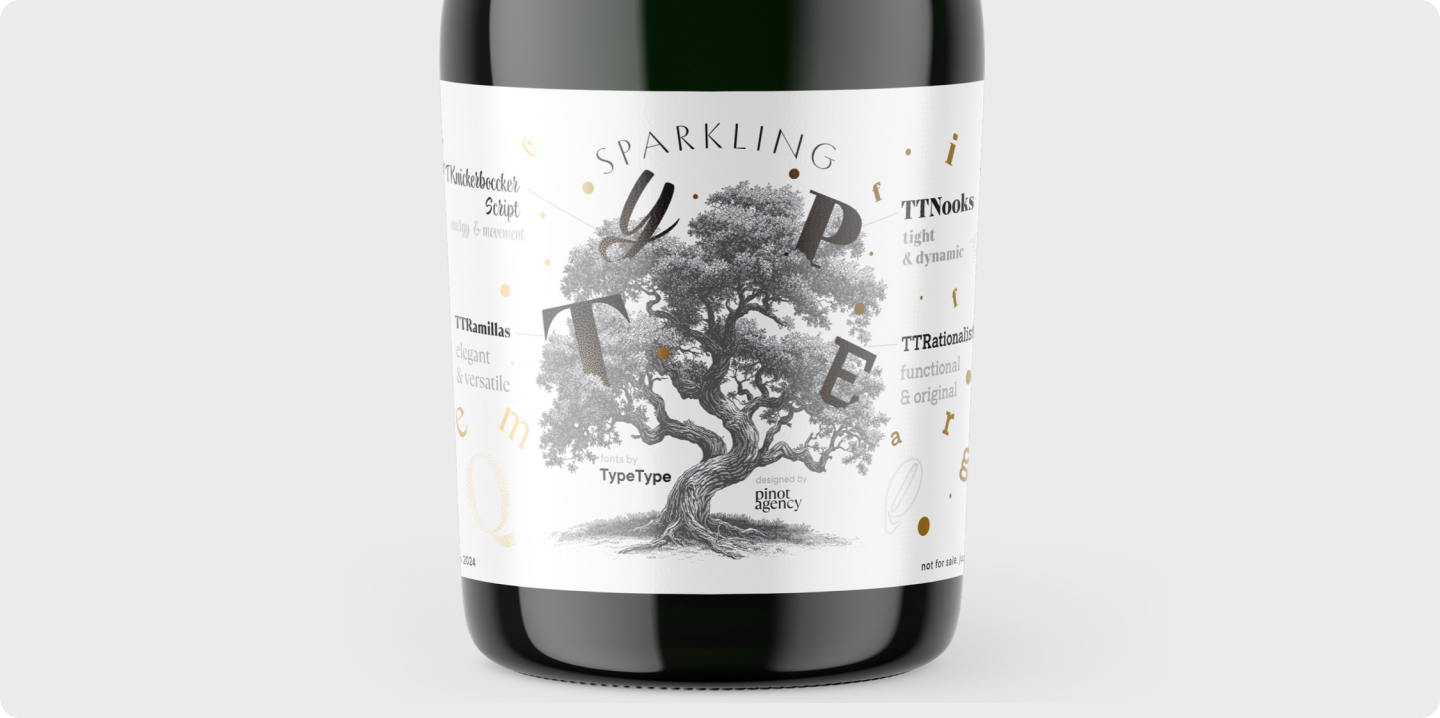
  • White wine Torotoro Marlborough Sauvignon Blanc and TT Neoris font. The wine has a fresh, well-balanced taste, much like the font design. At first, it seems simple, but upon careful examination, it reveals interesting details.
  • Sparkling wine Glera Spumante Fonte Extra Dry and TT Ricordi Allegria font. They share elegance, refinement, lightness, grace, and Italian origins.

Wine-Font Pairing

The sparkling wine received the most votes (it has long held a special place in our office refrigerator and in our hearts). So we decided to start with it.

A Metaphor of Cosmic Proportions

We realized that the pilot version should be more general and comprehensive, going beyond the original idea.
A Metaphor of Cosmic Proportions

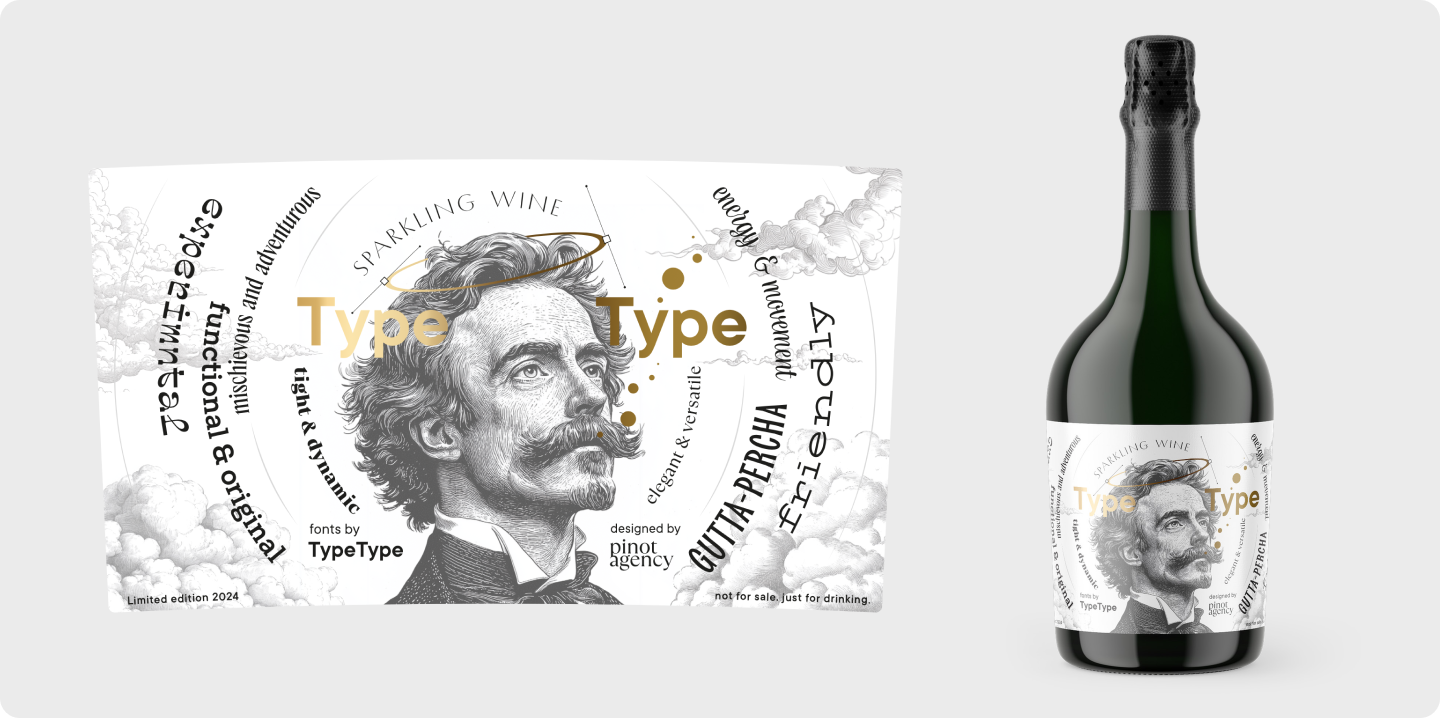
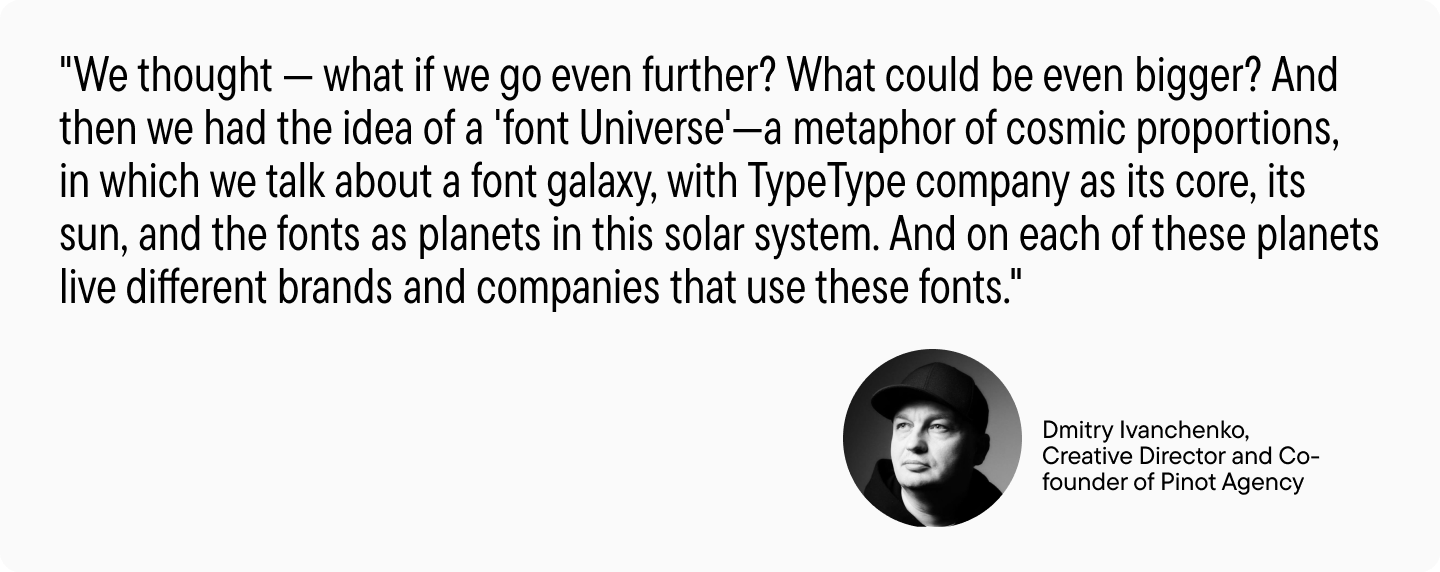
In the first concept, Pinot Agency emphasized that there are always people behind the fonts who create them. This resulted in a collective image of a “font god,” around whom different fonts revolve in orbit.
A Metaphor of Cosmic Proportions

However, we wanted to make the metaphor deeper, more powerful, and extensive. Therefore, in the second concept, we compared the process of creating a font to how a tree grows.
A Metaphor of Cosmic Proportions

But even this idea didn’t seem global enough. So a third concept emerged, which became the foundation for further work.
A Metaphor of Cosmic Proportions

Map of the Font Universe

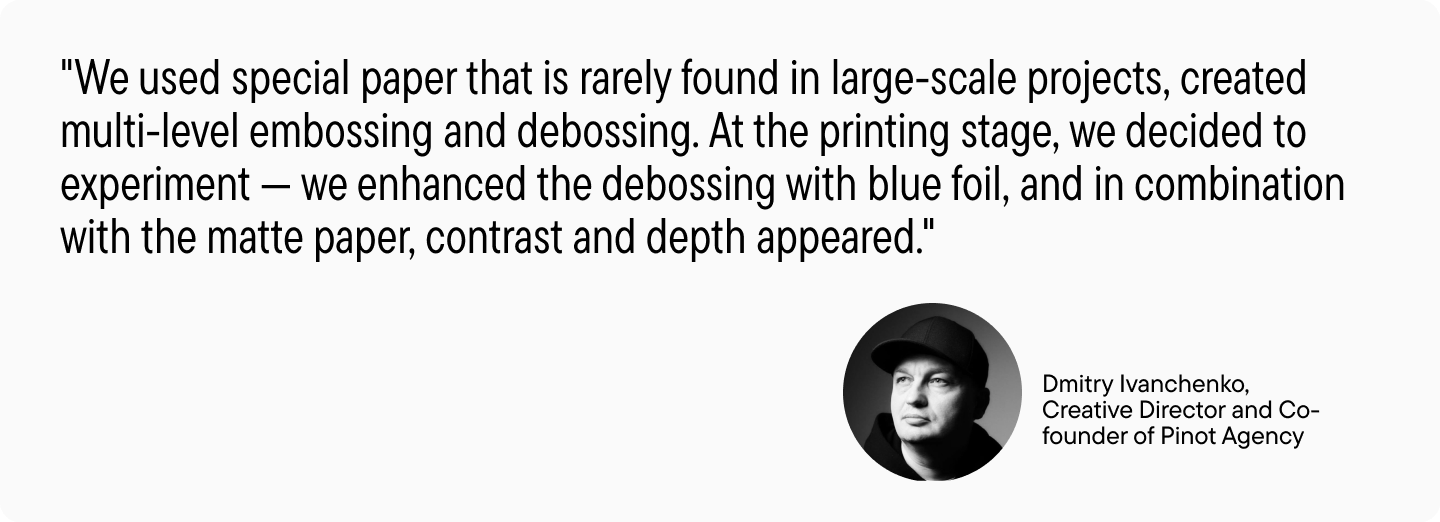
To bring this idea to life, Pinot Agency went to great lengths in terms of technology. Financial Papers Plus, a typography company from Moldova that became a partner in the project, played a major role in implementing the concept. They specialize exclusively in wine labels with in-depth detailing of various printing effects.

The textured Fasson Watermark paper became the foundation, helping to create depth and add texture and tactility to the label.
Map of the Font Universe

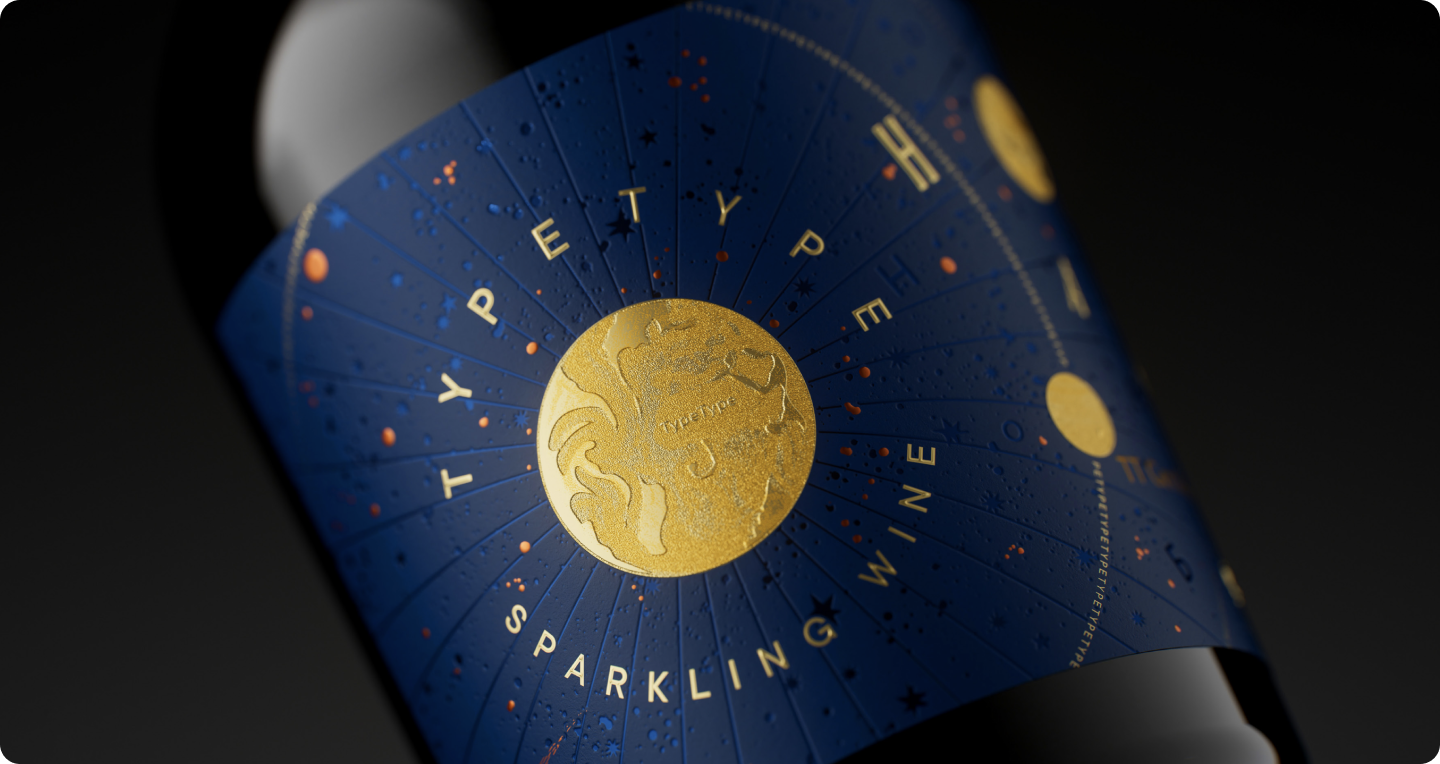
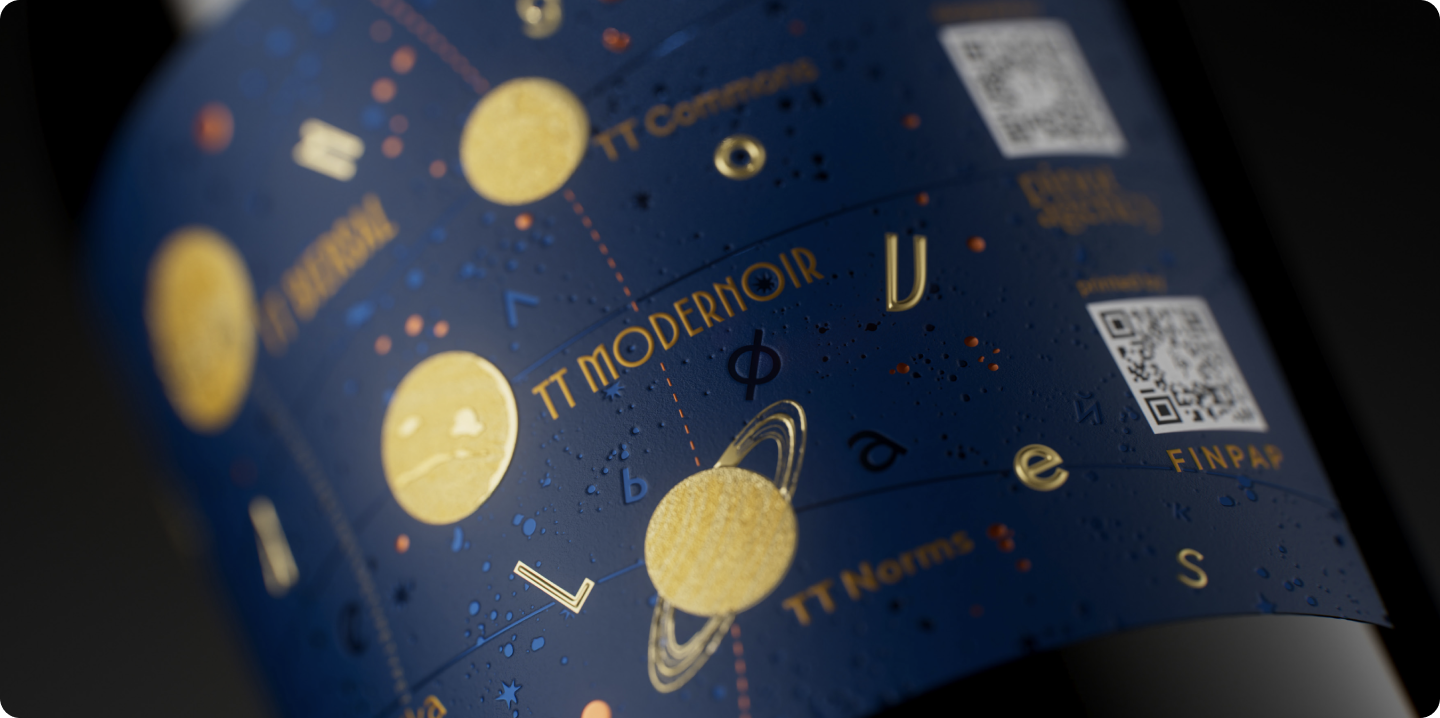
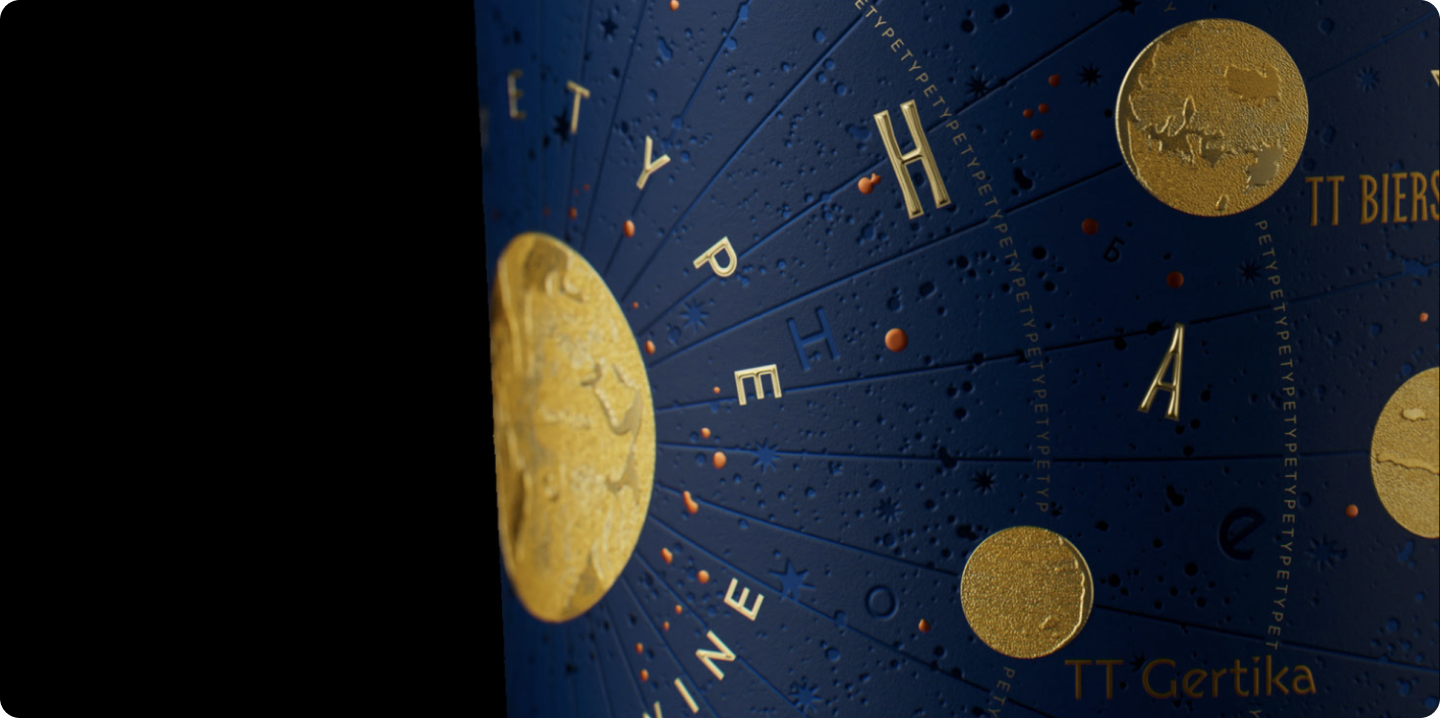
The mysterious twinkling of the stars was achieved with copper gel, and the planets were designed with embossing, adding a matte texture. On the sun, symbolizing TypeType, you can see the company name executed in micro-embossing.
Map of the Font Universe

The letters “flying” across the label appear here for a reason — they’re an Easter egg of sorts. These letters spell out the word “handgloves,” which font designers use as a reference when creating a font. It doesn’t have a special meaning but consists of characteristic characters that help determine if the font works. These characters are always drawn first.
Map of the Font Universe

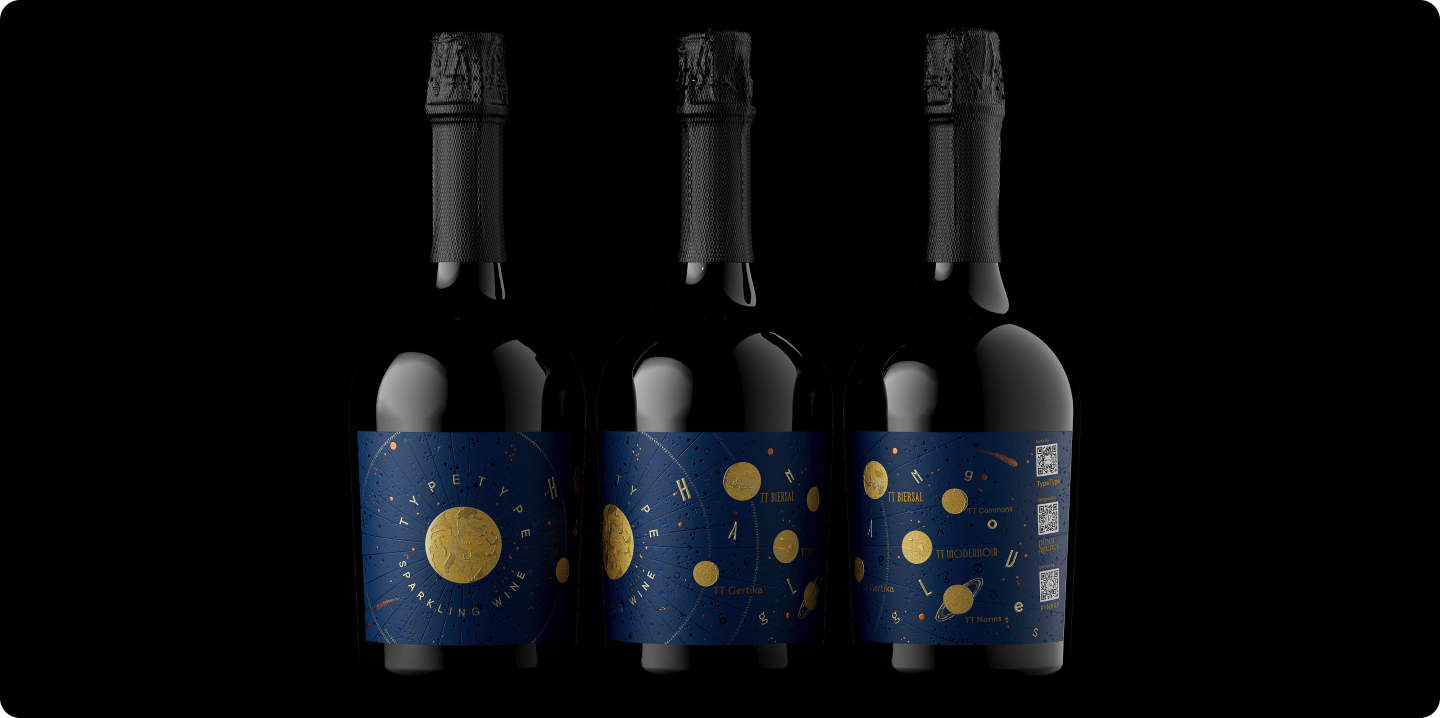
Another interesting detail is the orbit of our “font sun.” If you look closely, it consists of repeated words “typetype,” set in small letters.
Map of the Font Universe

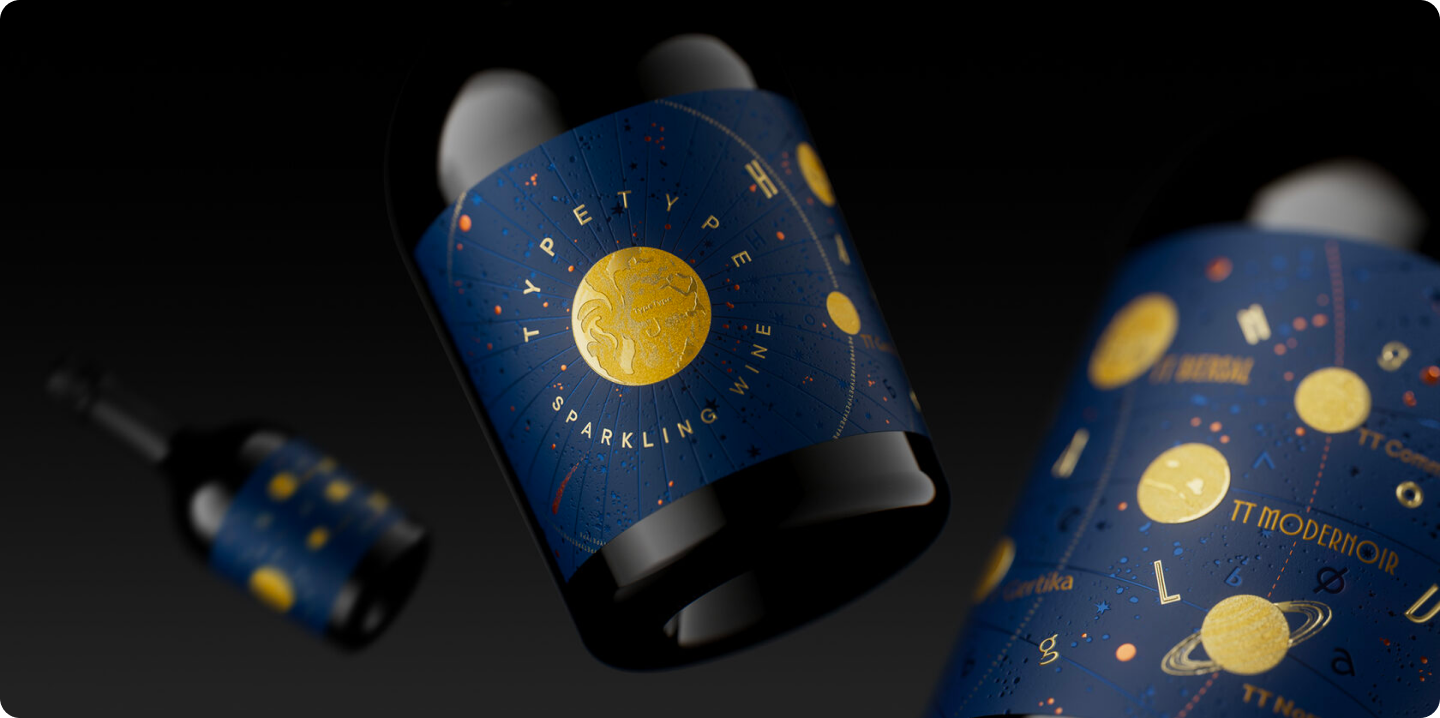
As a result, we released a series of branded bottles, with labels that became a kind of map of the Font Universe. By rotating the bottle in your hands, you can explore it, discovering new facets of the drink and nuances of the design.
Map of the Font Universe

Three, Two, One… Launch!

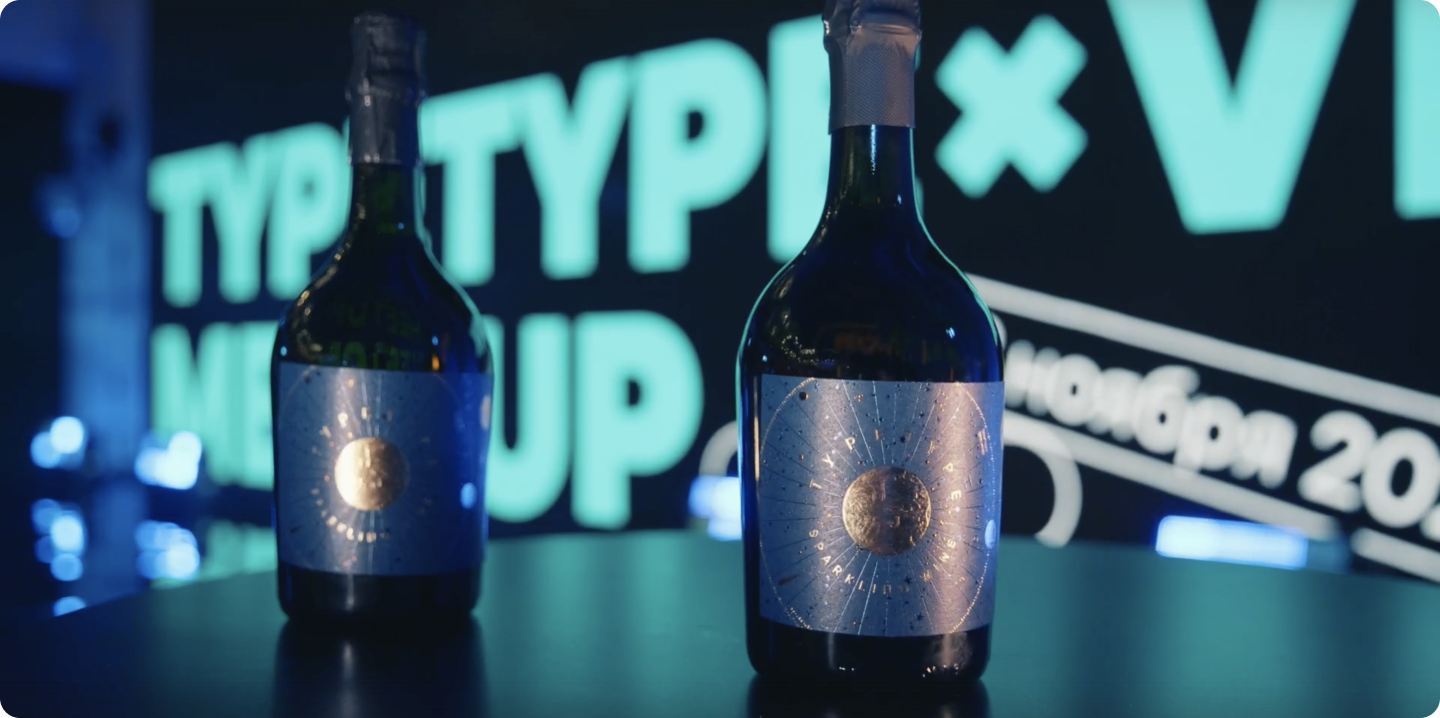
The project was officially named “Type&Wine. Font Universe.”
Three, Two, One… Launch!

We deeply cherish this project and gift branded bottles to our friends and partners. And, of course, we plan to develop the idea further — stay tuned for updates!
Latest publications

What is a Font Family? Definition, Types, and Examples
Work with fonts

In this article, we will break down the font family definition, explore what types of font families exist, explain how a family differs from a font and a typeface, detail what is included in a font family, and guide you on how to make the best choice for a website, UI interface, and brand.

Typography in Figma: Variables, Tokens and Design Systems
Work with fonts

The larger the project, the more noticeable the price of chaos. On a simple landing page, you can manually fix a couple of headings. In an app with hundreds of screens, multiple platforms, different modes (like light/dark themes), and localizations, this approach quickly breaks down. One designer changes the size of a caption, another creates a local style, a third manually tweaks the line height—and within a month, the team no longer understands which values are actually systemic. A systematic approach to typography in Figma is crucial: it helps not only to craft an amazing layout but also to make the design solid and sustainable in real production. In this article, we explore the capabilities of working with typography in Figma, break down the core concepts, and provide practical examples.

Why Unique Fonts Matter Even in the Age of AI-Generated Design
Work with fonts

AI-generated fonts make design faster than ever — but speed doesn’t equal uniqueness. Discover why custom typography, bespoke typefaces, and strategic font design remain essential for brand identity, authenticity, and competitive advantage in the AI era.

IP Protection as an Art: TypeType’s Flexible Licensing Control Strategy
Work with fonts

Drawing on their own experience, the specialists at TypeType explain how type foundries and designers can stop unlicensed use of their products and get additional revenue while avoiding reputational risk. In TypeType’s professional experience the popularity of a typeface is linked to the fact that it will be more likely used without an appropriate license—despite the fact that developing a single family can take years of meticulous work. We covered how font licensing works in detail here.

Font Research: An Expert Approach to Brand Typography
Work with fonts

Among TypeType Studio’s services, we offer typeface system research. Why do brands need such research, and how does it help them develop? How is it conducted? What does the research include, and how are the results interpreted? We answer these questions and show how it works in practice using the financial segment as an example.

TypeType’s Year in Review: Looking Back at 2025
TypeType news

2025 was an incredibly productive year for TypeType: we released 7 new fonts, updated 14 typefaces, and added Arabic language support to two of our bestsellers. In addition, we won awards in type design competitions, explored new platforms, improved our website, wrote about type design in our blog, gave lectures, met with you at webinars, and created joint projects with friends and partners.

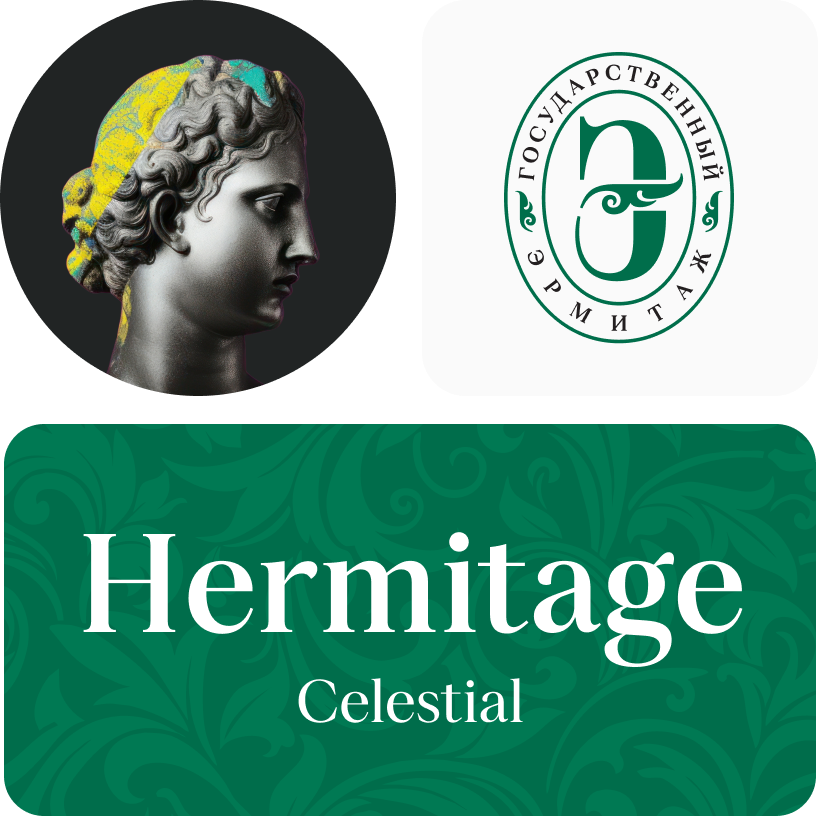
Typography in the Museum: How We Developed the Corporate Typeface for the Hermitage
Corporate fonts Font creation

The TypeType team, with the support of the Mantera Group, has created a new font family for the State Hermitage Museum—the Hermitage Type Family. The typeface will be used across all of the Hermitage’s digital content; you can already see it on the website and the updated launch page of the mobile version. And this is just the beginning of a major overhaul of the museum’s digital identity, in which the new font will play a pivotal role.

Proxima Nova Font: Alternatives, Pairings, and the Secrets of Its Popularity
TypeType fonts Work with fonts

Proxima Nova is one of the most recognizable sans-serif fonts in modern design. In this article, we’ll explore the history of the Proxima Nova font family, its graphic characteristics and composition, figure out what fonts go with Proxima Nova, what its best alternatives are, and what license you need to use it.

See more

Special Characters and Punctuation Marks in Fonts: Guide to Typographical Symbols
Work with fonts

Special characters and punctuation marks are present in almost all fonts. These font symbols play an important role in the perception and readability of text, as well as serving auxiliary (and sometimes decorative) functions. In this article, we’ll examine the most popular and interesting symbols and characters.

Numbers and numerals in typography: basic types
Work with fonts

While we often discuss letters in our articles, numbers in typography typically receive less attention. However, this topic is fascinating and more complex than it might appear at first glance. That’s why we’ve dedicated this article entirely to numerals! In this article, you’ll learn about different types of numerals, their purposes, the unique characteristics of each style, and where to find them in fonts.

20 Best Cyrillic Fonts of 2026
TypeType fonts Work with fonts

Finding high-quality and original Cyrillic fonts can be challenging, as the market primarily offers typefaces with Latin support. However, at our studio, we emphasize broad language support—particularly in our typefaces that support numerous Cyrillic-based languages. In this article, we’ve compiled a selection of functional and modern fonts with Cyrillic support from TypeType’s collection, suitable for various projects.

Measuring 2024 in Fonts: TypeType’s Year in Review
TypeType news

2024 has been an incredibly productive and significant year for TypeType. We released new fonts and updated existing ones, received awards, made our website more user-friendly, and shared knowledge about font design. In short, this year brought us numerous changes, and now it’s time to look back, reflect on our achievements, and outline plans for the future.

How to Name a Font? Learning from Real Examples
TypeType fonts Work with fonts

We often get asked how typeface designers come up with names for their fonts. It’s not as straightforward as it might seem, as each studio and individual designer has their unique approach. In this article, we’ll explore different aspects of font naming—from creative considerations to legal implications.

Retalic or Reversed Italic: Understanding Left-Leaning Type Design
Work with fonts

Many of our readers are undoubtedly familiar with the term “italic” as we frequently discuss these slanted and cursive fonts in our articles. However, the term “retalic” might be unfamiliar even to those well-versed in typography. Let’s explore this unique font style and its applications in modern design.

Best Ebook Fonts
Work with fonts

Choosing the right font for an ebook might seem like a simple task at first glance, but it actually requires a careful approach and consideration of several nuances. After all, digital media differs significantly from print. What exactly should you pay attention to? And how do you select the best font for reading ebooks? We’ll explain it all in this article!

Best Cursive Fonts in 2026: A Comprehensive Design Guide
Work with fonts

Cursive fonts are a powerful design tool that can elevate your visual projects when used thoughtfully. However, the key is knowing how to apply them effectively and appropriately. In this comprehensive guide, we’ll dive into the world of cursive fonts. You’ll learn what defines a cursive font, how it differs from traditional italic styles, and discover the most strategic ways to incorporate these unique typefaces into your design work.

How to Choose the Best Infographic Fonts: Comprehensive Guide
Work with fonts

Infographics is a versatile and convenient tool that finds application everywhere: business, advertising, science, journalism, and more. This is a powerful way to communicate information in a simple, visual manner. Why is it so essential to choose the right font for your infographic, and how to do this? How do you pair fonts with each other? What fonts work best for marketplace infographics? Read on to find out!