top_banner_ttneorispro0426
Fonderie Blog Numbers and numerals in typography: basic types

Numbers and numerals in typography: basic types

Numbers and numerals in typography

While we often discuss letters in our articles, numbers in typography typically receive less attention. However, this topic is fascinating and more complex than it might appear at first glance. That’s why we’ve dedicated this article entirely to numerals!

In this article, you’ll learn about different types of numerals, their purposes, the unique characteristics of each style, and where to find them in fonts.

Why are there different types of numerals?

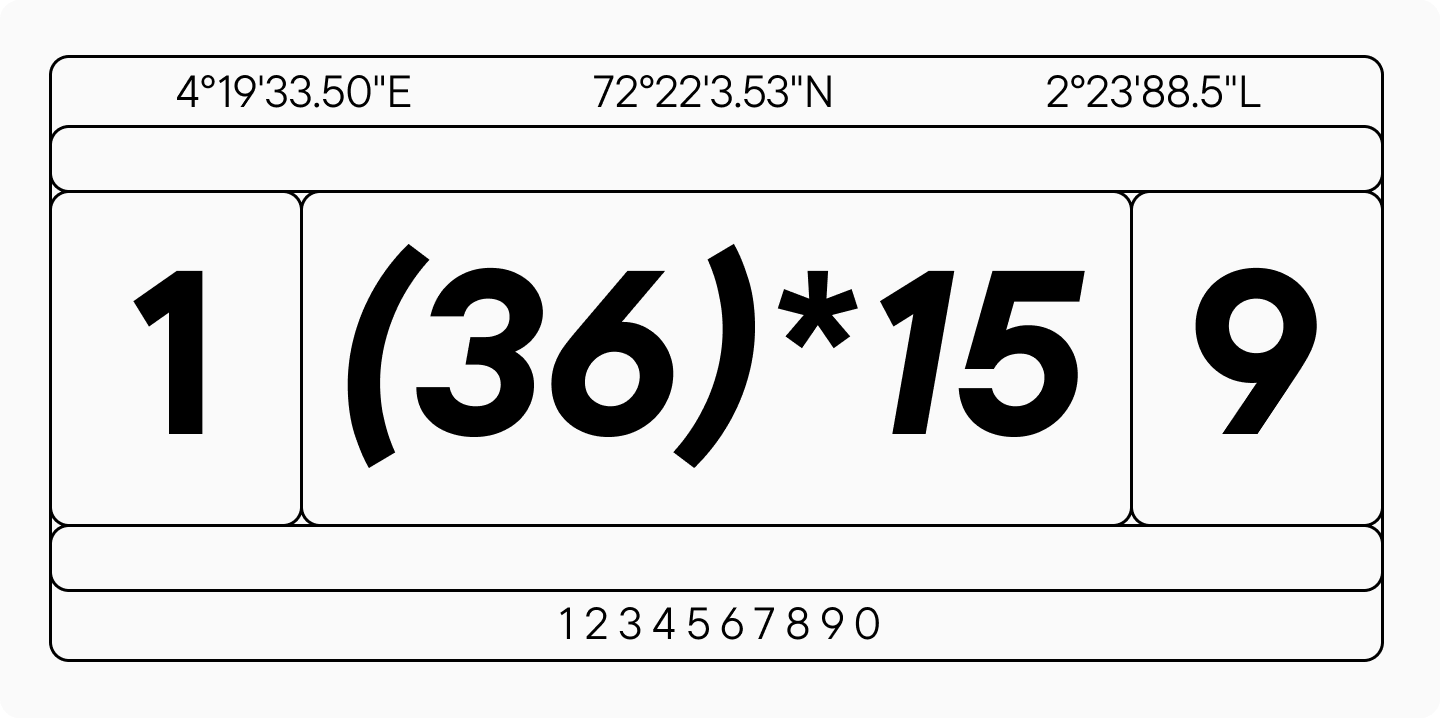
Numerals are symbols used to represent specific numbers (numerical values). Today, Arabic numerals—symbols from 1 to 9—are used almost worldwide. The first Western references to these numerals can be found in the Codex Vigilanus from 976 CE. In the Cyrillic tradition, Arabic numerals were introduced by Peter the Great in 1699.
different types of numerals

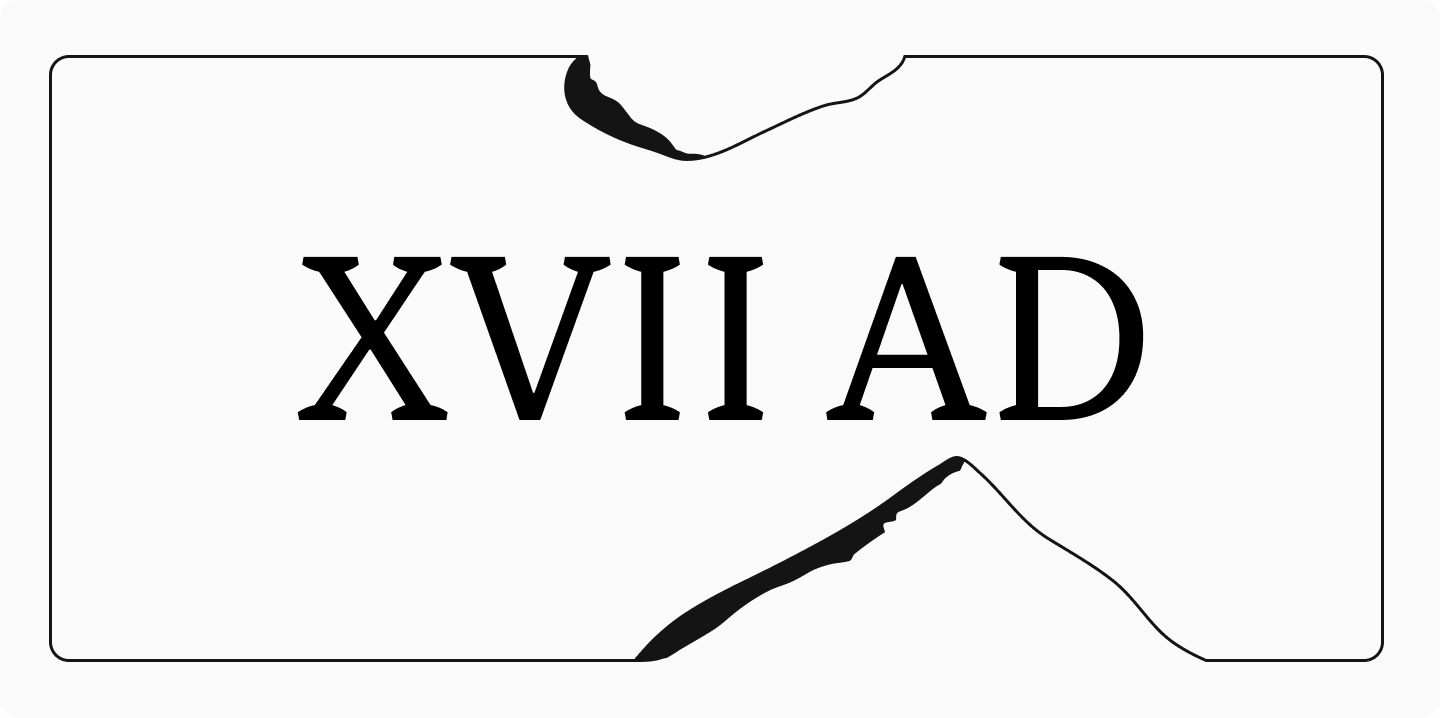
Roman numerals are still in use today, particularly for denoting centuries, millennia, and in book tables of contents.
Roman numerals

The most common type today is lining numerals (also known as lining figures, majuscule numerals, or titling figures). Let’s explore these and other types of numerals in detail.
Lining (majuscule) numerals

Lining (majuscule) proportionate numerals are numerals without ascenders or descenders, designed to match the height of uppercase letters. Their sidebearings follow the same logic as other characters in the typeface, meaning the width of each numeral varies. For example, the figure « 1 » takes up less space than « 9 » in the text.
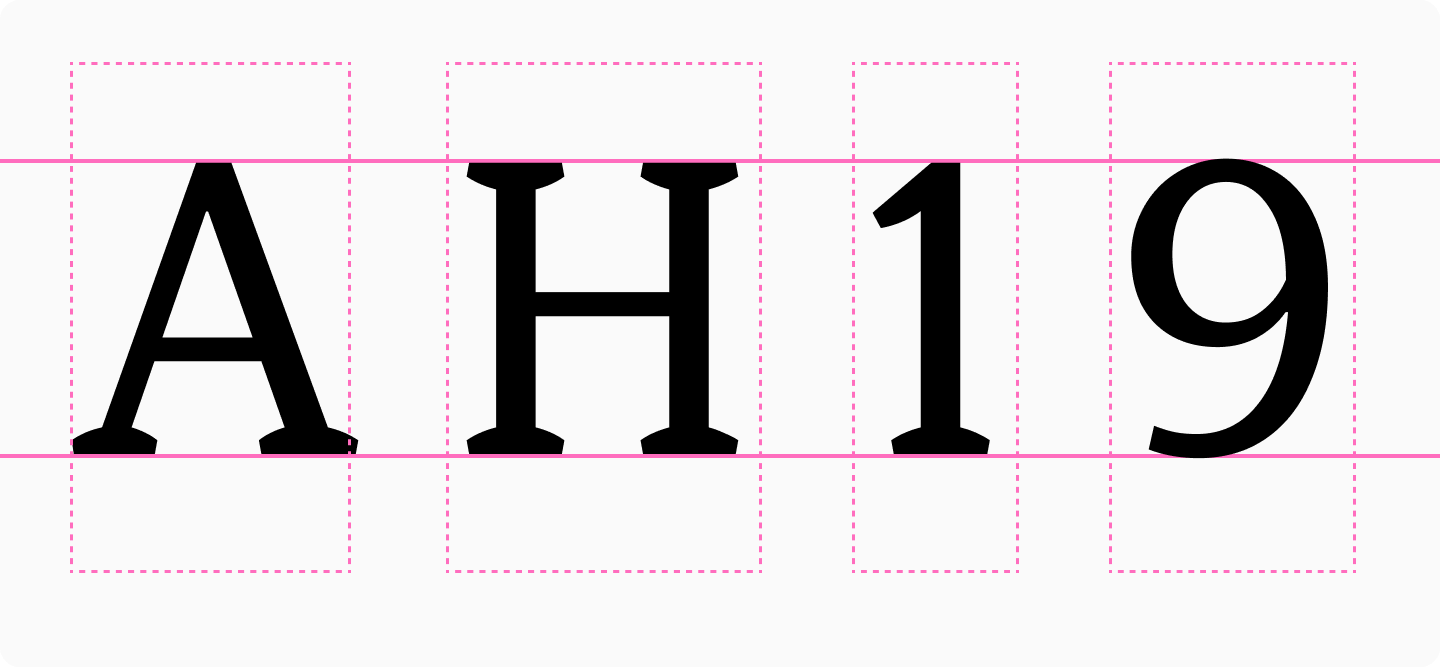
Lining (majuscule) numerals

Lining numerals are the default choice when there’s no specific reason to use other types of numerals, and they’re typically the standard set included in fonts.

Oldstyle (minuscule) numerals

Oldstyle (minuscule) numerals, also known as old style figures or text figures (lowercase), first appeared in European manuscripts in the 13th century. In typography, they were introduced in 1788 when British punchcutter Richard Austin created a set of numerals three-quarters the height of capitals for John Bell’s foundry.
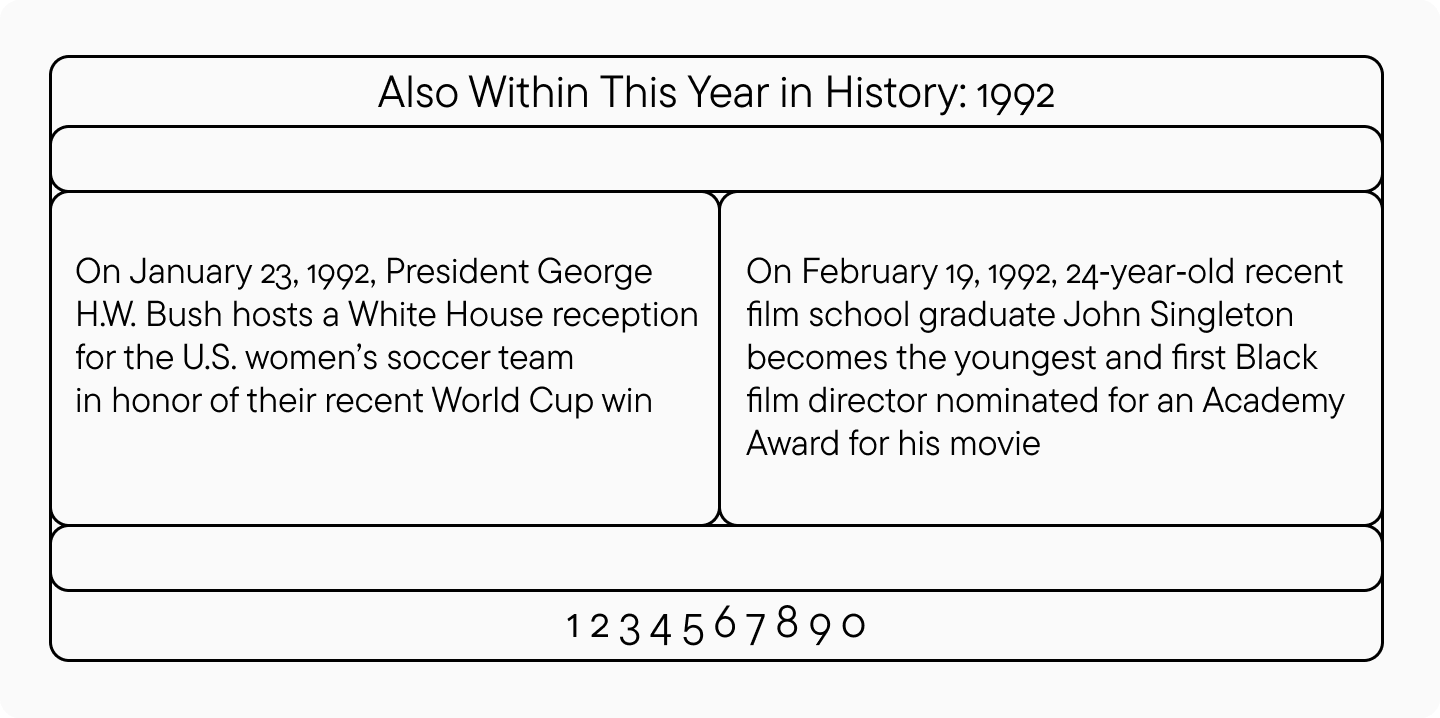
Oldstyle (minuscule) numerals

Oldstyle numerals feature ascenders and descenders, designed to match the height of lowercase letters or slightly taller. They’re specifically designed for use within body text, which is why they’re sometimes called text figures. Unlike lining numerals, oldstyle numerals blend harmoniously with the text, with each numeral effectively functioning like a letter in the line.
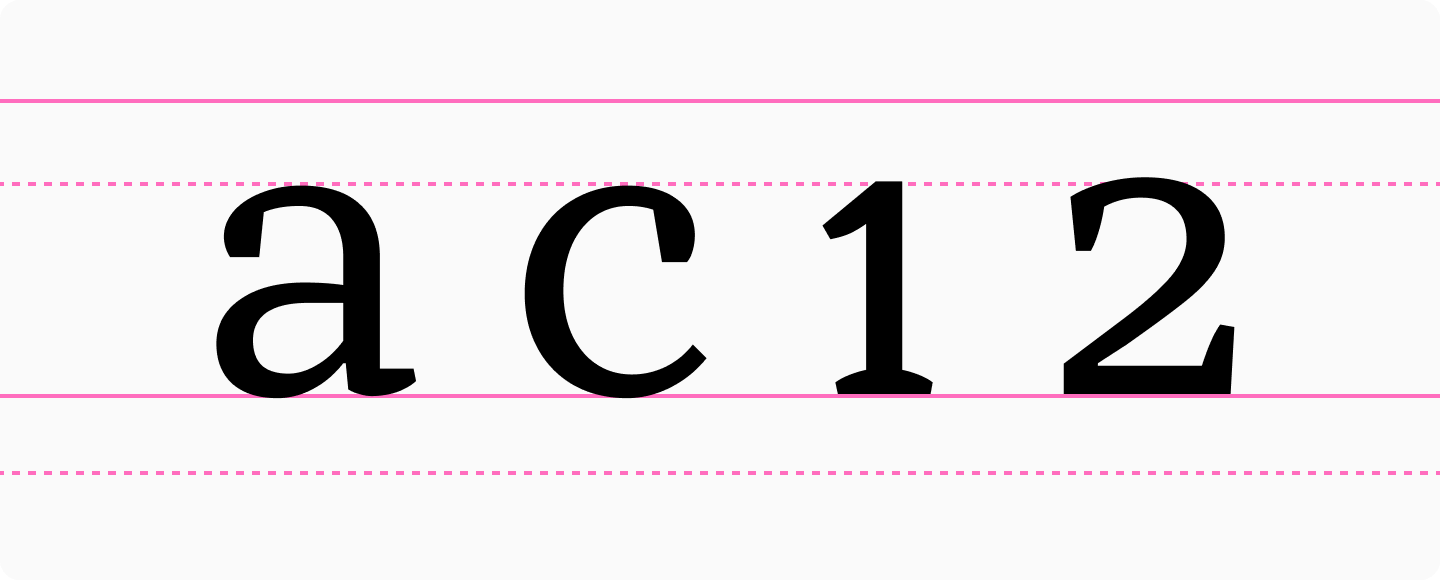
Oldstyle numerals

Typically, numerals 6 and 8 have ascenders, while 3, 4, 5, and 9 have descenders. However, alternative designs exist with different arrangements of ascenders and descenders, particularly for 3 and 5.
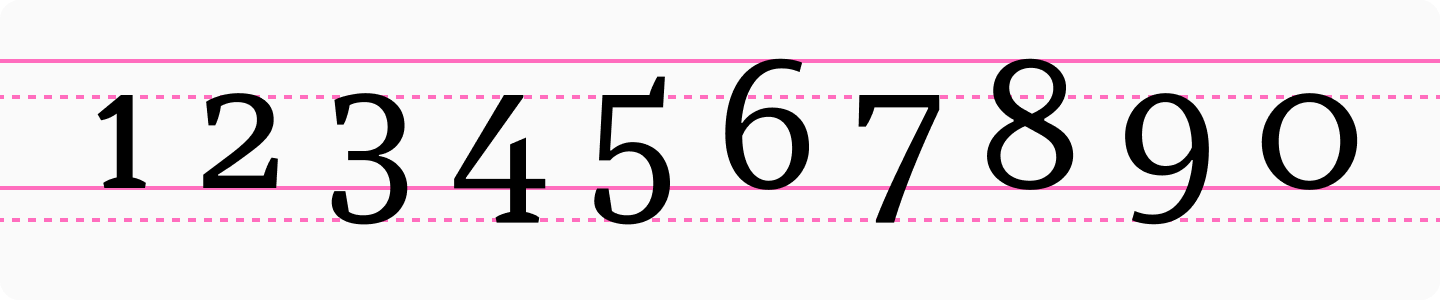
Oldstyle numerals

Interestingly, while oldstyle numerals were traditionally associated with serif typefaces, they’re now widely available in sans serif designs as well.
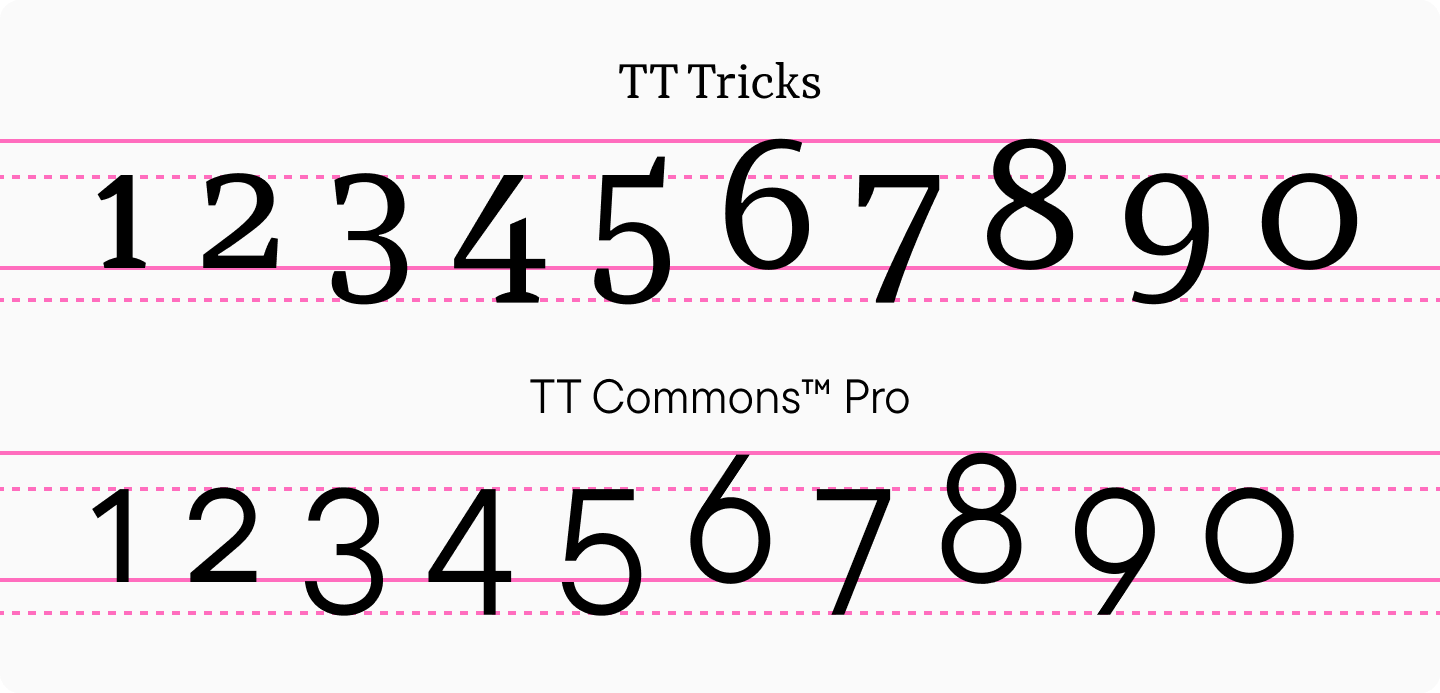
oldstyle numerals in tt fonts

These numerals are usually included as an additional set in fonts and can be accessed through the OpenType Oldstyle Figures feature.

Tabular figures

If you’re familiar with monospaced fonts, you’ll quickly understand tabular figures. If not, we recommend checking our Font Dictionary or reading our dedicated article on this topic.

Tabular figures (also called monospaced figures or tabular numerals) are the opposite of proportionate figures. Each numeral occupies the same amount of space—the figure « 1 » takes up exactly as much width as « 9. » Tabular figures are available in both lining and oldstyle forms.
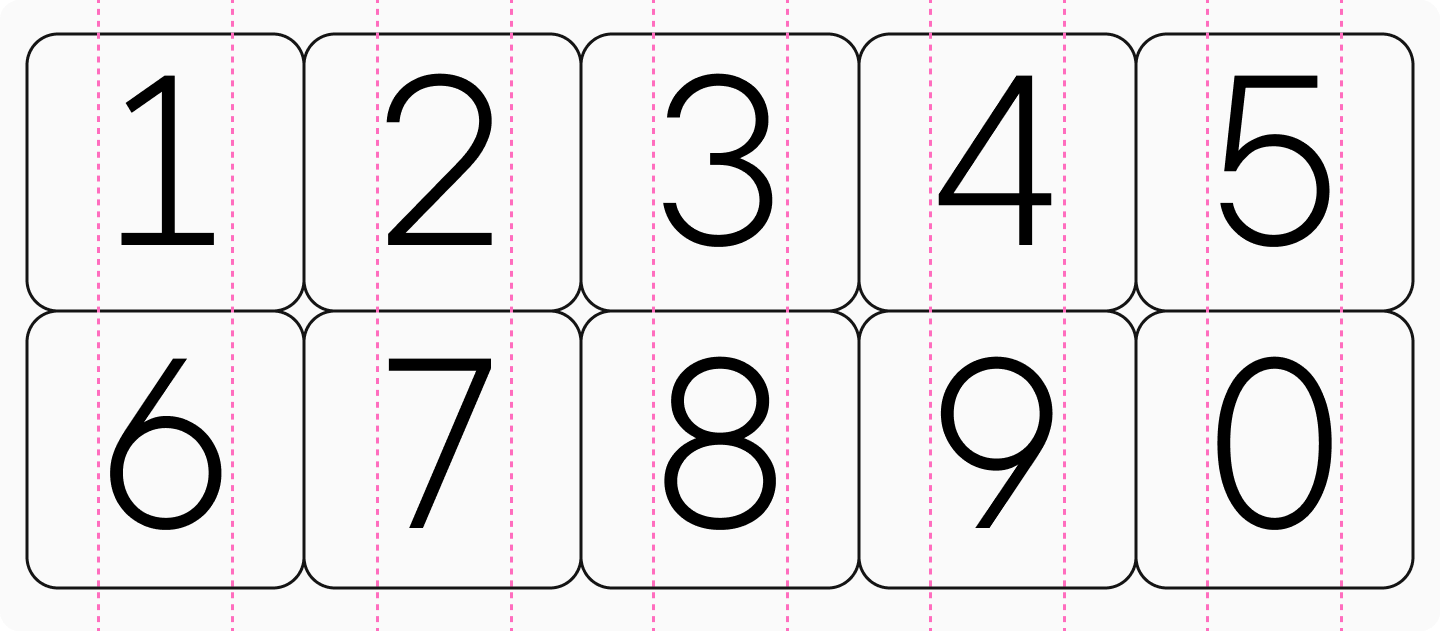
Tabular figures

Tabular figures can be lining and old style. Their primary purpose is to align vertically, making them ideal for use in tables and financial documents.
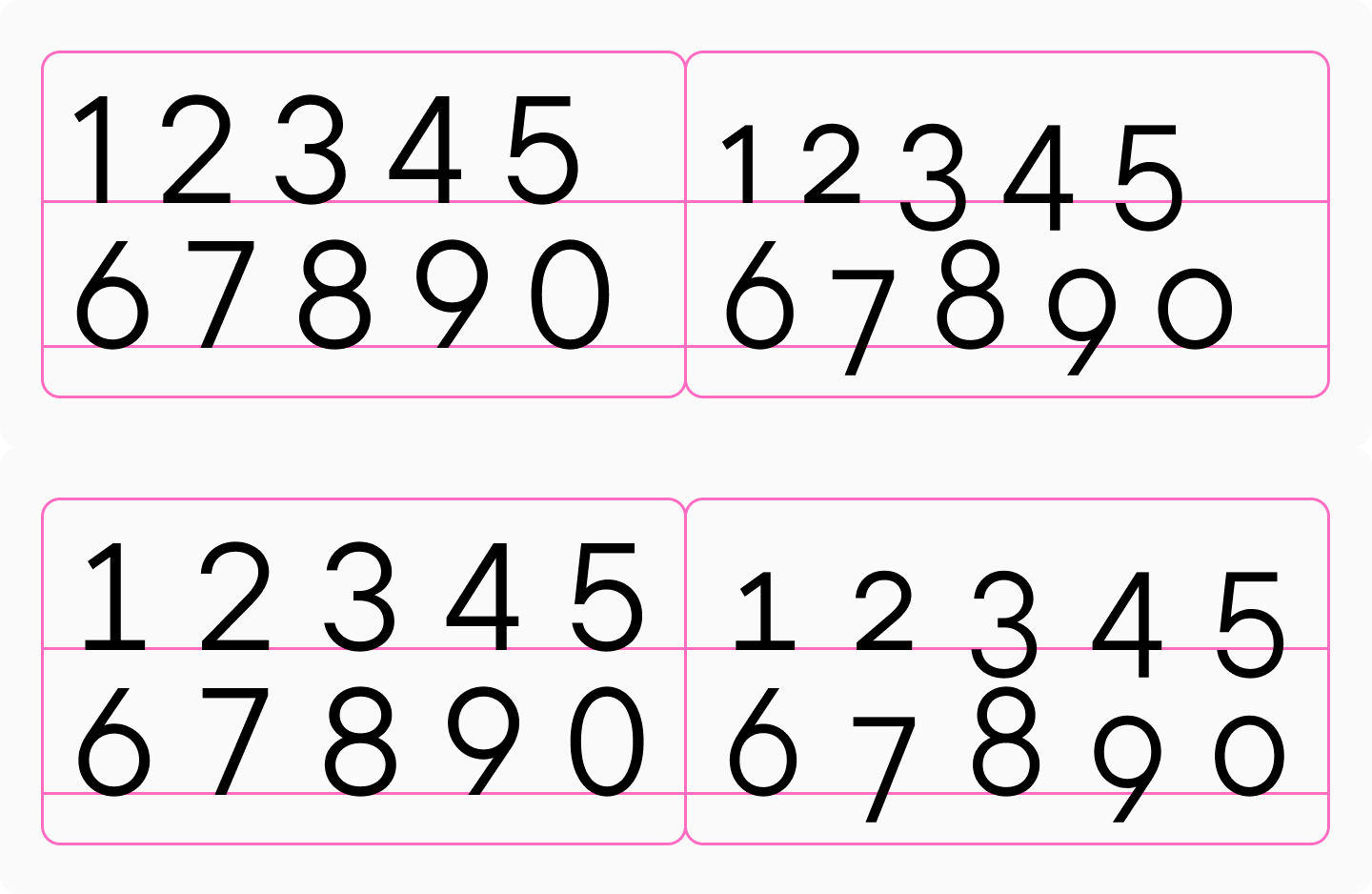
Tabular figures

The design of these numerals may either match or differ from their proportional counterparts, depending on the typeface’s concept and the need to fit characters within the fixed width.

Numerators and Denominators

Numerators and denominators are smaller forms of lining numerals used in the upper and lower portions of fractions:

  • Numerators appear in the upper portion of fractions
  • Denominators appear in the lower portion of fractions
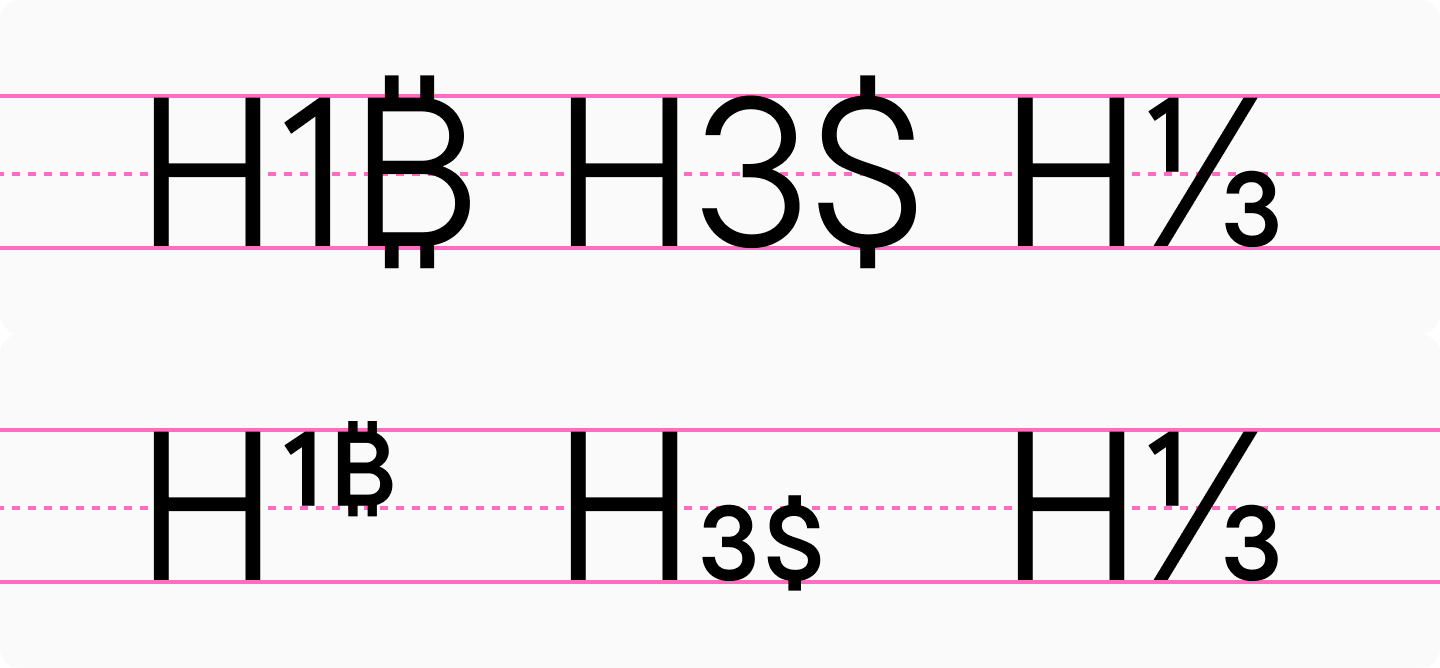
Numerators and Denominators

Superiors and Inferiors

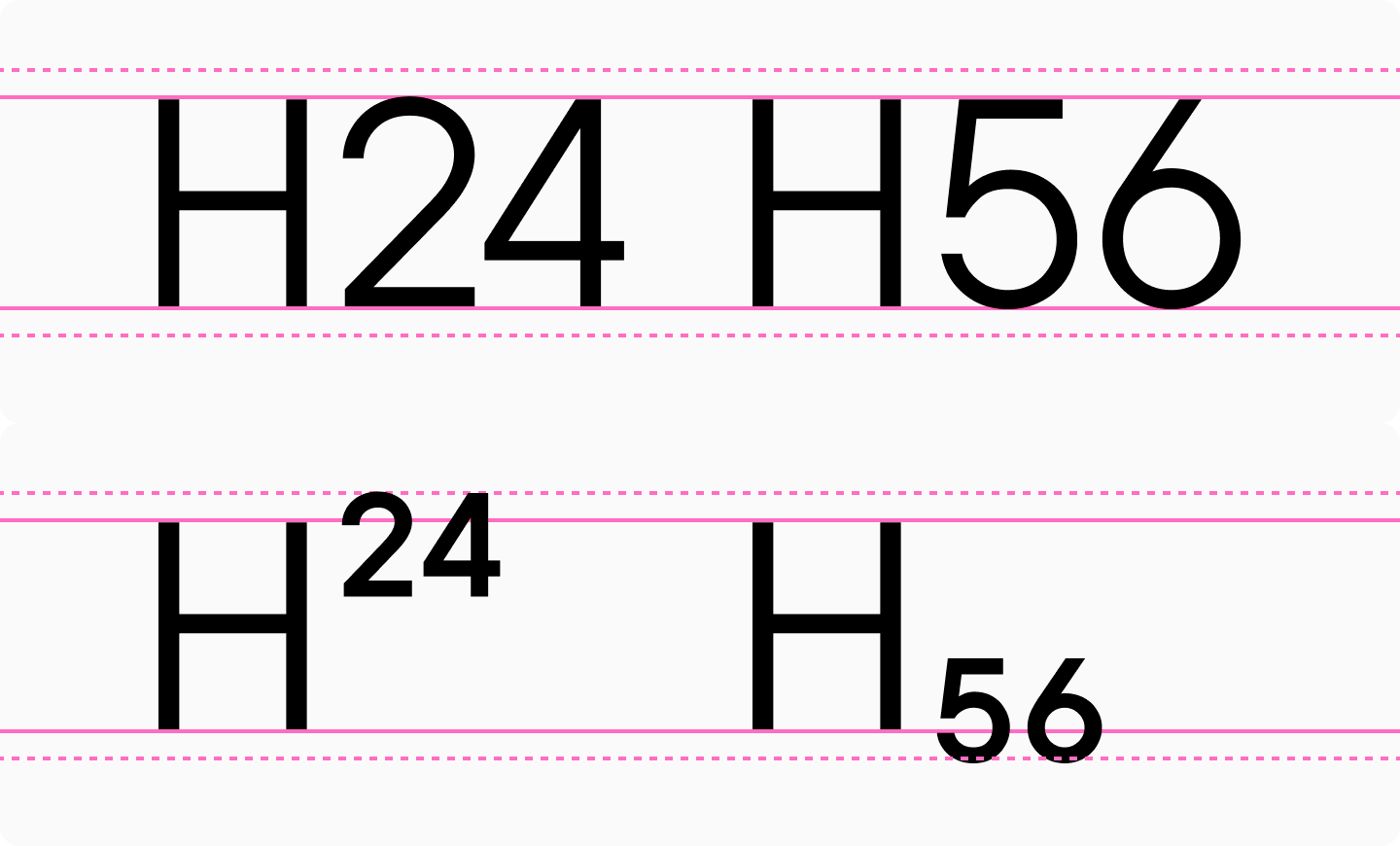
Superior figures are smaller forms of lining numerals positioned in the upper portion of the line. They’re used for footnotes, mathematical expressions, ionic charges, etc.
Superiors and Inferiors

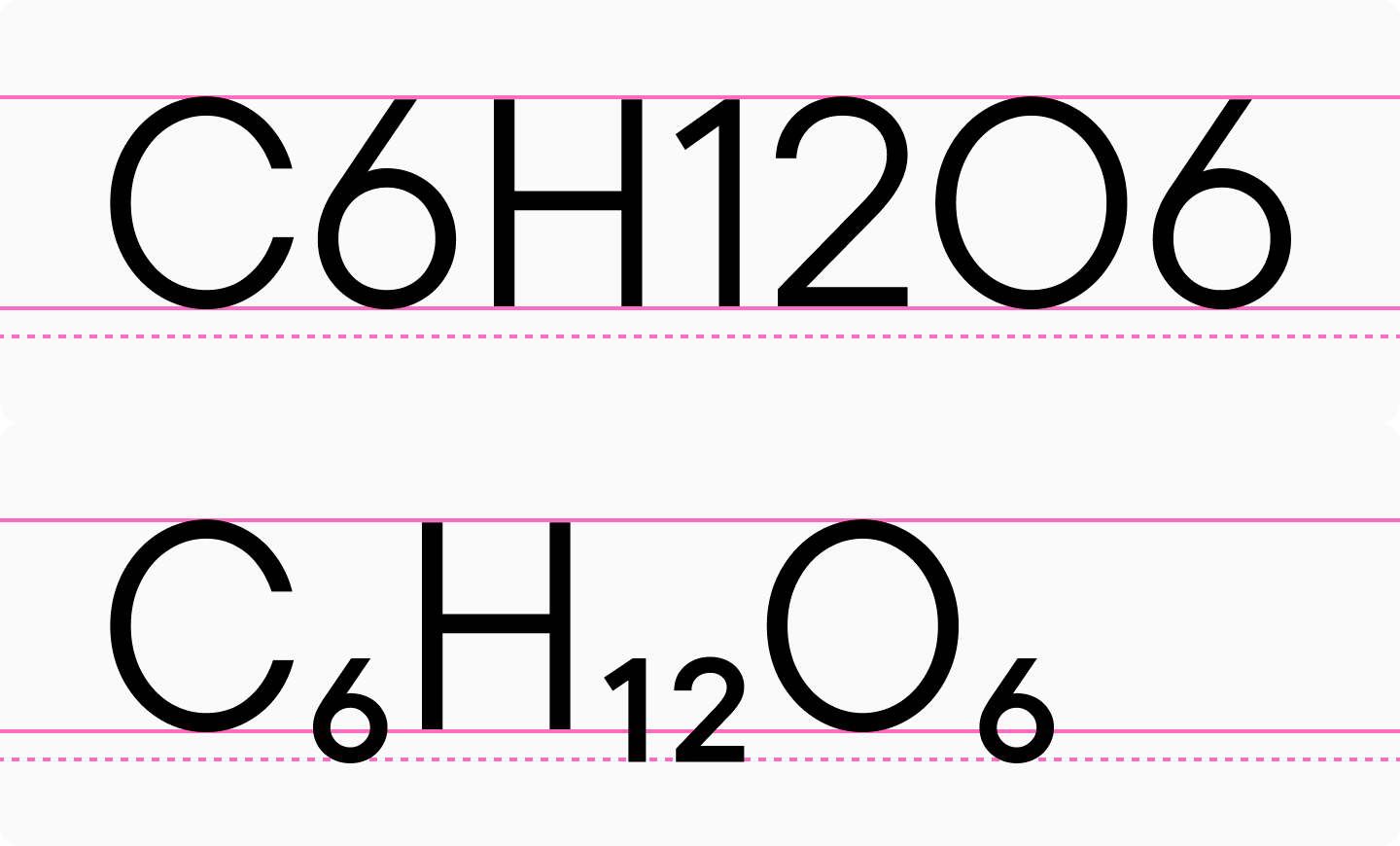
Inferior figures are smaller forms of lining numerals positioned in the lower portion of the line. They’re commonly used in formulas, mathematical expressions, and chemical compound notations.
Superiors and Inferiors

Circled figures or Negative circled figures

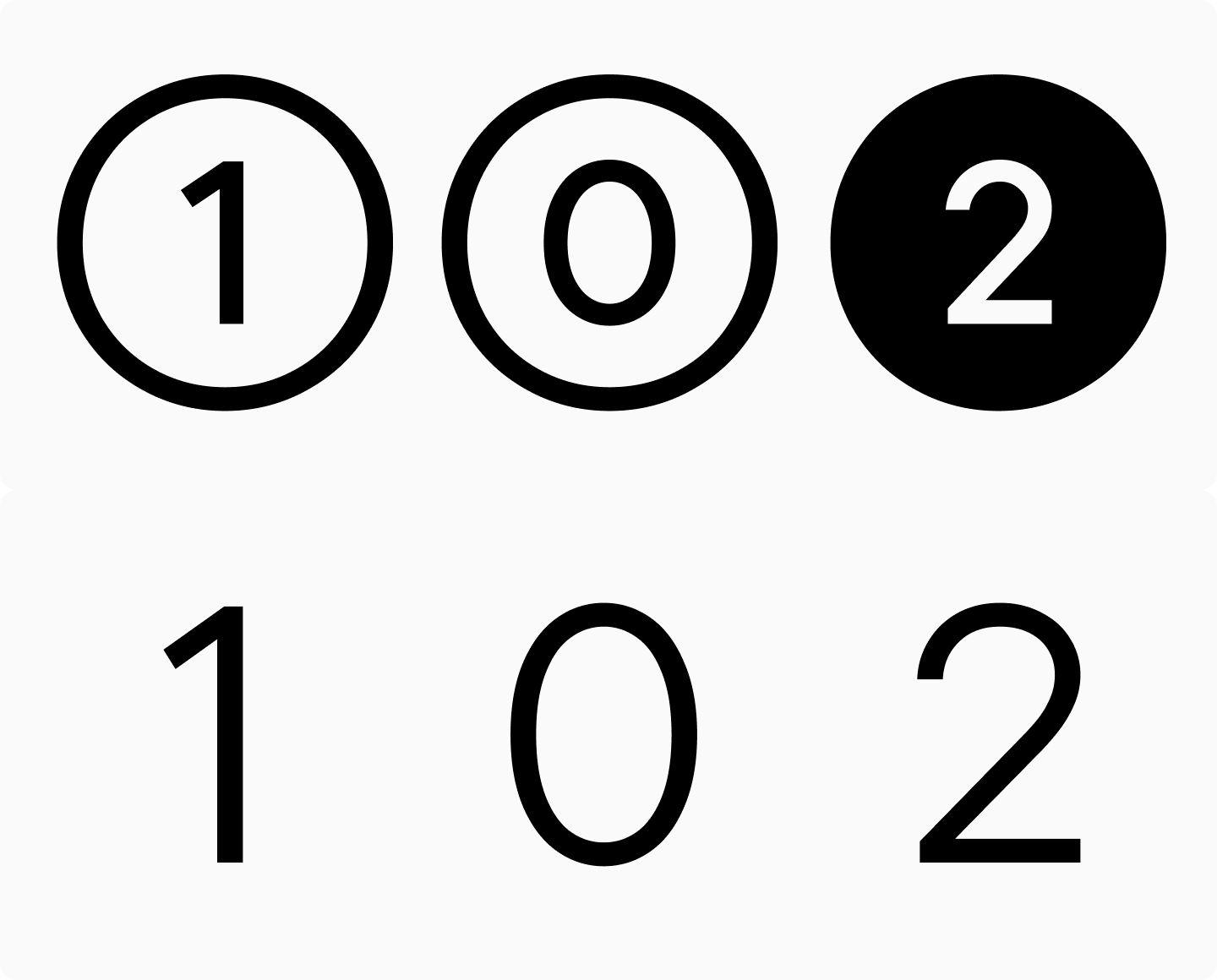
Font files often include circled figures in two styles: filled and outline circles.
Circled figures

These serve decorative purposes, such as numbered lists or design elements, and are typically accessed through stylistic sets.

How to Find Different Types of Numerals in Fonts

All these numerical variations can be accessed through OpenType features, provided they’re included in the specific font file. For detailed information on how to find these numeral styles in different software applications, as well as how to determine which features are available in a font beforehand, check out our in-depth article on the topic.

Conclusion

As you can see, font files contain many interesting features beyond just letters! Explore all the possibilities of working with fonts, and follow our blog for regular updates on typography, fonts, and type design.
Dernières publications

TypeType’s Year in Review: Looking Back at 2025

2025 was an incredibly productive year for TypeType: we released 7 new fonts, updated 14 typefaces, and added Arabic language support to two of our bestsellers. In addition, we won awards in type design competitions, explored new platforms, improved our website, wrote about type design in our blog, gave lectures, met with you at webinars, and created joint projects with friends and partners.

Voir plus
Typography in the Museum: How We Developed the Corporate Typeface for the Hermitage

The TypeType team, with the support of the Mantera Group, has created a new font family for the State Hermitage Museum—the Hermitage Type Family. The typeface will be used across all of the Hermitage’s digital content; you can already see it on the website and the updated launch page of the mobile version. And this is just the beginning of a major overhaul of the museum’s digital identity, in which the new font will play a pivotal role.

Voir plus
Proxima Nova Font: Alternatives, Pairings, and the Secrets of Its Popularity

Proxima Nova is one of the most recognizable sans-serif fonts in modern design. In this article, we’ll explore the history of the Proxima Nova font family, its graphic characteristics and composition, figure out what fonts go with Proxima Nova, what its best alternatives are, and what license you need to use it.

Voir plus
The Perfect Moment Is Now: Launching Our Creative Lab, TT Labs

We spent a lot of time thinking about how to find a place for creative freedom within this system, how to set aside time for small passion projects, how to step outside our usual boundaries, and how to give spontaneity a chance. And we realized that the perfect moment will never come unless you take the first step. So we took it—and that’s how the TT Labs creative laboratory was born. Here’s the story from the beginning!

Voir plus
What is Typography in Graphic Design: Key Concepts, Principles, and Examples

Discover what typography is, why it’s important in design, and how to apply its main principles, styles, and rules to create visually strong text.

Voir plus
A Font with a Wide Reach: A Special Project for SHIFTBRAIN’s 20th Anniversary

In 2023, the Japanese marketing agency SHIFTBRAIN launched an interactive website dedicated to the company’s 20th anniversary. For this project, the TypeType team developed a unique variable font capable of stretching to extreme horizontal widths. As a foundation, we used the bestseller TT Norms® Pro, which was already the company’s corporate typeface—you can see it on the main SHIFTBRAIN website.

Voir plus
Pangrams Explained: Meaning, Types, Usage and Complete List of Examples

If you’re interested in design, you’ve almost certainly come across the famous sentence about the quick brown fox and the lazy dog. Or perhaps one about a jived fox nymph and a quick waltz. These are pangrams—sentences that contain all the letters of the alphabet. In this article, we’ll provide a more detailed pangram definition, explain why these phrases are so important, and provide a list of the most popular pangrams in English.

Voir plus
Bold Fonts: How to Use Them in Design

Font weight is a crucial characteristic that directly impacts the perception of an entire design. In this article, we’ll explore where and how to apply bold fonts, the different types that exist, and look at some examples of such fonts from the TypeType collection.

Voir plus
Web Font Optimization: The Key to Instant Website Loading Speed

Since fonts are a vital part of web design, proper font optimization plays a key role in ensuring your website is fast and efficient. Let’s explore why web font optimization is so crucial and what steps you can take to ensure your fonts load faster.

Voir plus

Voir plus

20 Best Cyrillic Fonts of 2026

Finding high-quality and original Cyrillic fonts can be challenging, as the market primarily offers typefaces with Latin support. However, at our studio, we emphasize broad language support—particularly in our typefaces that support numerous Cyrillic-based languages. In this article, we’ve compiled a selection of functional and modern fonts with Cyrillic support from TypeType’s collection, suitable for various projects.

Voir plus
Measuring 2024 in Fonts: TypeType’s Year in Review

2024 has been an incredibly productive and significant year for TypeType. We released new fonts and updated existing ones, received awards, made our website more user-friendly, and shared knowledge about font design. In short, this year brought us numerous changes, and now it’s time to look back, reflect on our achievements, and outline plans for the future.

Voir plus
How to Name a Font? Learning from Real Examples

We often get asked how typeface designers come up with names for their fonts. It’s not as straightforward as it might seem, as each studio and individual designer has their unique approach. In this article, we’ll explore different aspects of font naming—from creative considerations to legal implications.

Voir plus
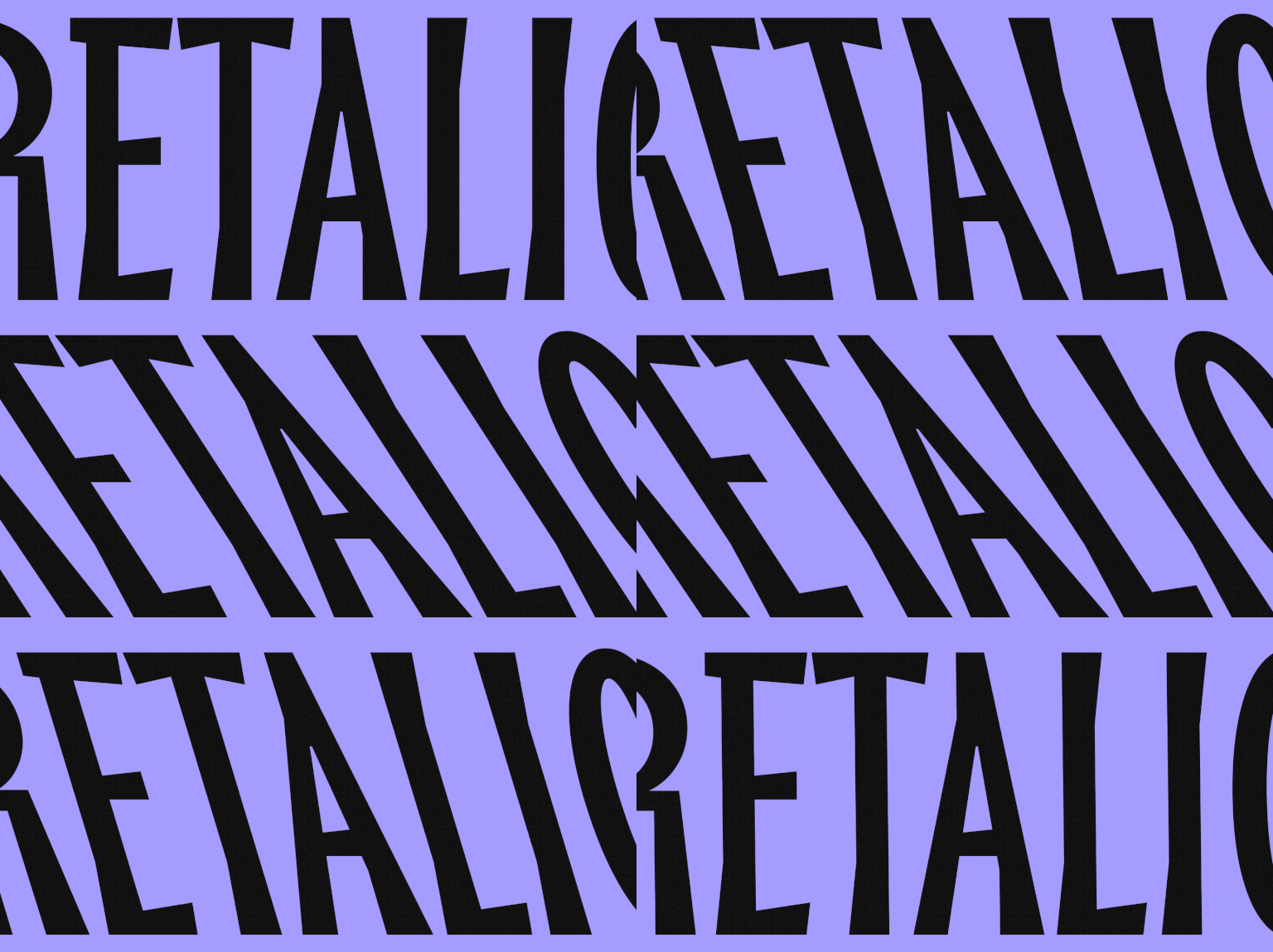
Retalic or Reversed Italic: Understanding Left-Leaning Type Design

Many of our readers are undoubtedly familiar with the term “italic” as we frequently discuss these slanted and cursive fonts in our articles. However, the term “retalic” might be unfamiliar even to those well-versed in typography. Let’s explore this unique font style and its applications in modern design.

Voir plus
Best Ebook Fonts

Choosing the right font for an ebook might seem like a simple task at first glance, but it actually requires a careful approach and consideration of several nuances. After all, digital media differs significantly from print. What exactly should you pay attention to? And how do you select the best font for reading ebooks? We’ll explain it all in this article!

Voir plus
Best Cursive Fonts in 2026: A Comprehensive Design Guide

Cursive fonts are a powerful design tool that can elevate your visual projects when used thoughtfully. However, the key is knowing how to apply them effectively and appropriately. In this comprehensive guide, we’ll dive into the world of cursive fonts. You’ll learn what defines a cursive font, how it differs from traditional italic styles, and discover the most strategic ways to incorporate these unique typefaces into your design work.

Voir plus
How to Choose the Best Infographic Fonts: Comprehensive Guide

Infographics is a versatile and convenient tool that finds application everywhere: business, advertising, science, journalism, and more. This is a powerful way to communicate information in a simple, visual manner. Why is it so essential to choose the right font for your infographic, and how to do this? How do you pair fonts with each other? What fonts work best for marketplace infographics? Read on to find out!

Voir plus
On Opposite Sides: Wide and Narrow Fonts

Wide and narrow fonts are among the newest trends in typography, graphic design, and web design. At first glance, some may seem odd and awkward, but when thoughtfully applied, they can infuse a project with freshness, boldness, relevance, and strength. What are narrow and wide fonts, what variations do they come in, and where are they used? Let’s explore this together in this article.

Voir plus
How do you add a font to your computer? 

How to install a new font on a PC? Users and designers face this question very often. Rest assured, there is nothing tricky in this process! This article provides a step-by-step guide to help you understand how to install downloaded fonts correctly on Windows and iOS-powered computers.

Voir plus