top_banner_ttnormspro0426
Fonderie Blog How to Name a Font? Learning from Real Examples

How to Name a Font? Learning from Real Examples

How to Name a Font? Learning from Real Examples

We often get asked how typeface designers come up with names for their fonts. It’s not as straightforward as it might seem, as each studio and individual designer has their unique approach. In this article, we’ll explore different aspects of font naming—from creative considerations to legal implications.

Why should you approach font naming with careful consideration? What criteria should you use, and what factors should you keep in mind? Let’s dive in and examine real examples from our typeface collection.

How a Type Designer Can Choose a Name for a Font

A font’s name is a crucial part of its identity and presentation. A well-chosen typeface name not only helps emphasize the design concept but also contributes to its successful promotion.
How a Type Designer Can Choose a Name for a Font

For instance, an original, creative name can draw attention to an experimental or unusual font family. Meanwhile, a simple and concise name can help users select your font for specific design tasks.

In essence, how you name your font can significantly impact its success. Let’s explore what makes a good font name stand out from the rest.
Criteria for a Good Font Family Name

While these criteria are subjective, at TypeType we follow several important principles when deciding how to name our fonts:

  • Uniqueness
  • Relevance to the typeface design
  • Visual and acoustic appeal
  • Designer’s perspective

Let’s examine each of these criteria in detail.

Uniqueness

Uniqueness is the first and most crucial parameter to consider when choosing a typeface name, and here’s why:

  • It prevents confusion with other typeface families (we try to avoid names that look or sound similar to existing ones)
  • An original name helps your font stand out and emphasizes its individuality
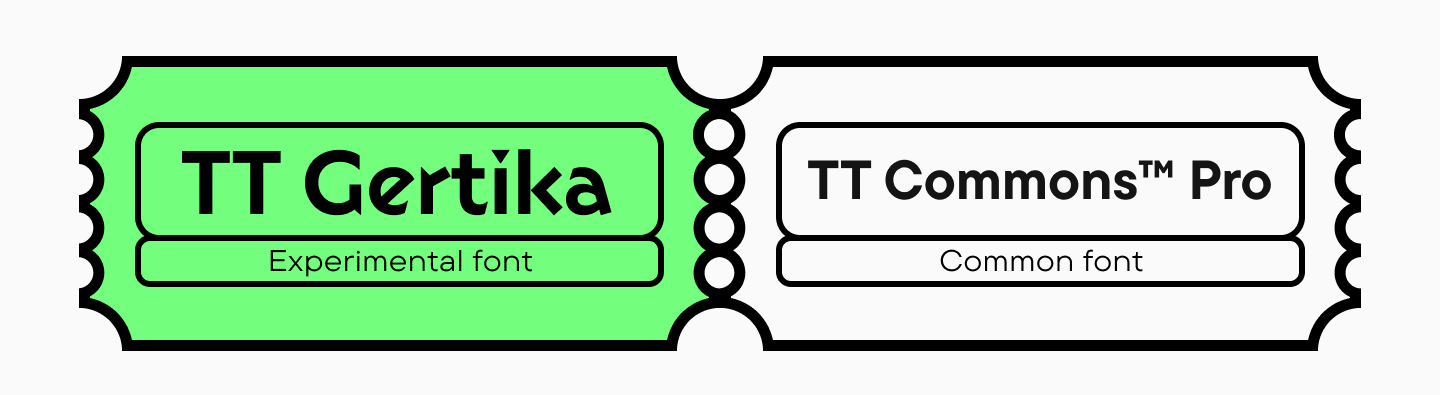
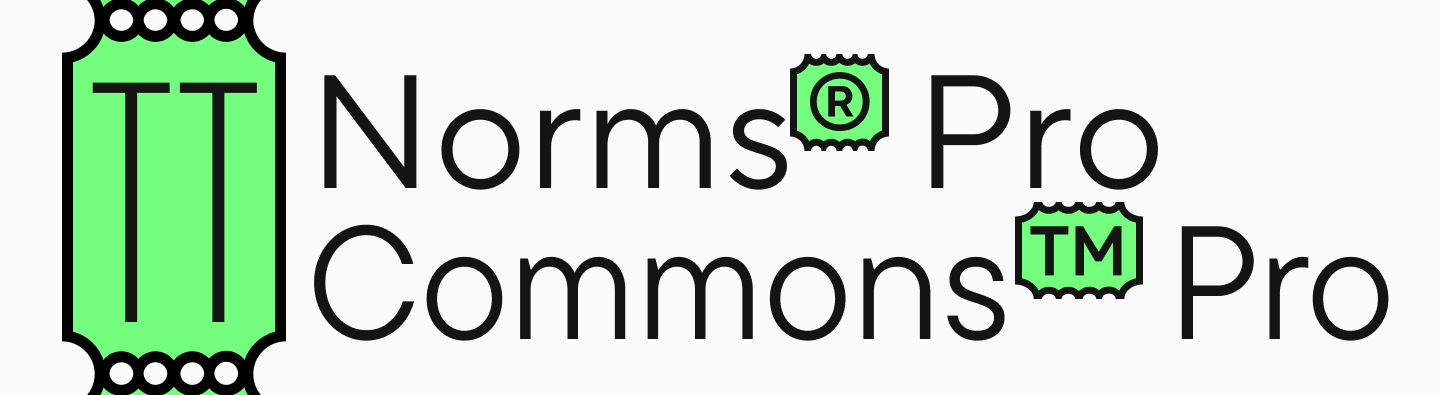
  • Some typography studios register their font names, and using similar names could lead to legal issues. For example, at TypeType, we have two legally protected font names: TT Norms® Pro and TT Commons™ Pro
Uniqueness

Speaking of “TT”: to make names unique and emphasize brand ownership, a type foundry can add their studio abbreviation to the family name. For example, TT (TypeType), FF (FontFont), PT (ParaType), and so on.

How to Check the Uniqueness of a Font Name

The main challenge you’ll likely face when choosing a font name is that many names are already taken.
How to Check the Uniqueness of a Font Name

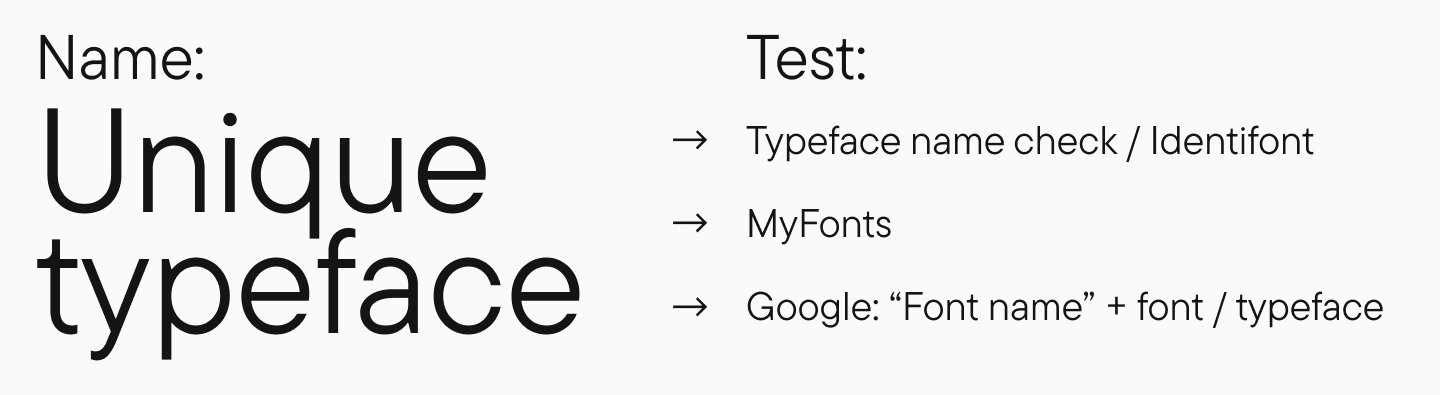
Here’s how to verify if your chosen name is unique:

  • Check the name on Typeface name check and Identifont websites
  • If no similar options appear, expand your search to font marketplaces like MyFonts
  • Finally, perform a Google search using the format: [font name] + font or typeface to ensure the name isn’t used elsewhere

Relevance to the Typeface Design

The next criterion is how well the name matches the font family itself. It’s beneficial when the name reflects the product’s essence and helps users understand the typeface’s character and the designer’s intent.

When the chosen name helps communicate the designer’s concept, intended use, and application areas, it positively impacts the font’s marketing potential.

Visual and Acoustic Appeal

First impressions matter in typography too, and the name influences the overall perception of your font family.
Visual and Acoustic Appeal

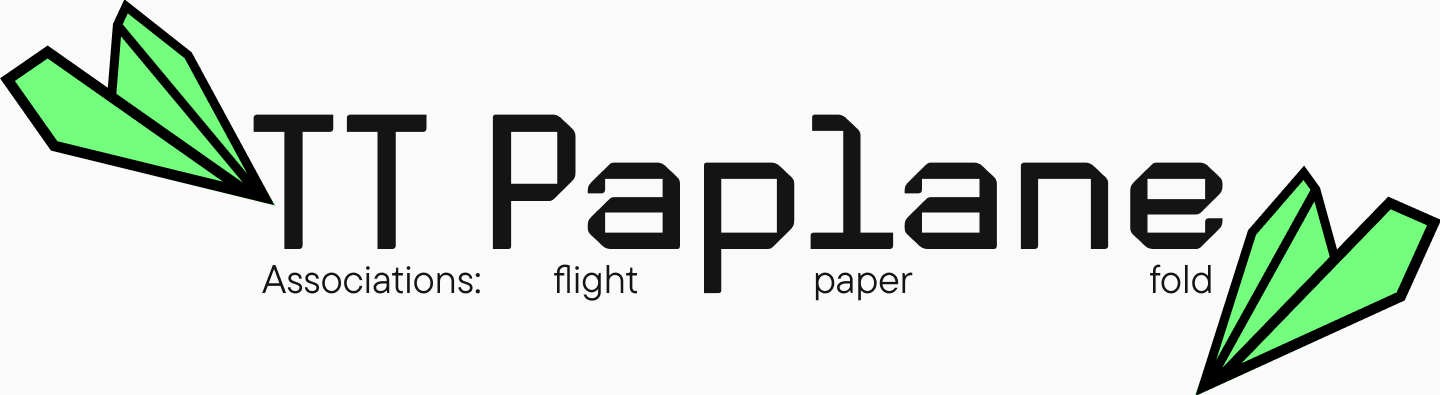
When selecting a name, consider the associations it might evoke. Examine how it looks in writing, how the letters work together, its readability, and whether it sounds similar to any words with unfortunate meanings. Remember that both positive and negative associations can affect how people perceive your typeface.

An important consideration when creating a new word: verify its meaning—it might be used in slang, have negative connotations, offend certain groups, or have inappropriate translations in other major languages. A search engine or online translator can be helpful here.

At TypeType, we also try to choose font names that showcase the most interesting and unique glyphs from the typeface.

Designer’s Perspective

The final criterion, which we call “Designer’s Perspective,” leads us to how we name our typefaces at TypeType. Usually, the concept’s author is responsible for naming the font, aiming to reflect their vision of the project.

Let’s look at some examples of our naming approach.

What Logic Did We Use to Name Our Fonts: Real Examples

Since our studio’s foundation, we’ve maintained a consistent logic for all font names, giving them meaningful identities.
What Logic Did We Use to Name Our Fonts: Real Examples

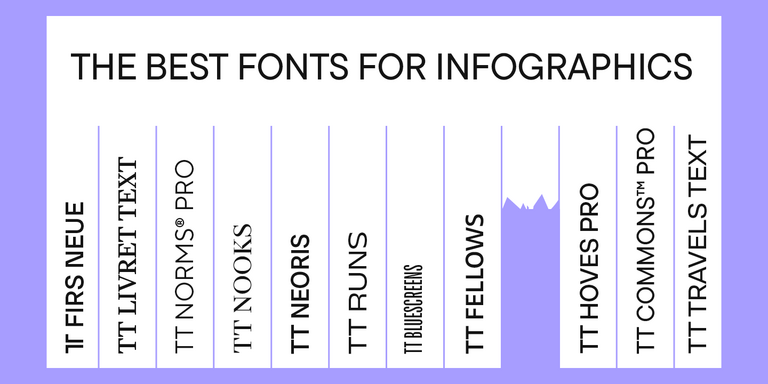
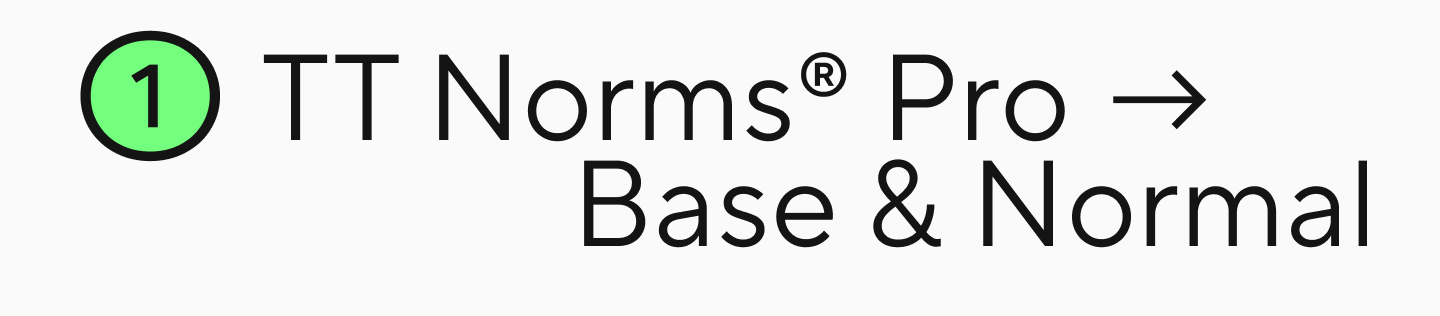
Our bestseller TT Norms® Pro got its name because it’s « normal »—standard and suitable for everything. It’s the perfect foundation for any project.

What Logic Did We Use to Name Our Fonts: Real Examples

Another bestseller, TT Commons™ Pro, suggests that it’s « common »—neutral enough to work in any project or task. It’s a typeface that will reliably support your design from all angles.

What Logic Did We Use to Name Our Fonts: Real Examples

TT Hoves Pro’s name combines the first syllables of two words: horizontals and verticals. This geometric typeface emphasizes horizontal and vertical elements.

What Logic Did We Use to Name Our Fonts: Real Examples

For TT Livret, designer Yulia Gonina wanted the font to be used in books, so the name comes from the French « petit livre » (little book).
What Logic Did We Use to Name Our Fonts: Real Examples

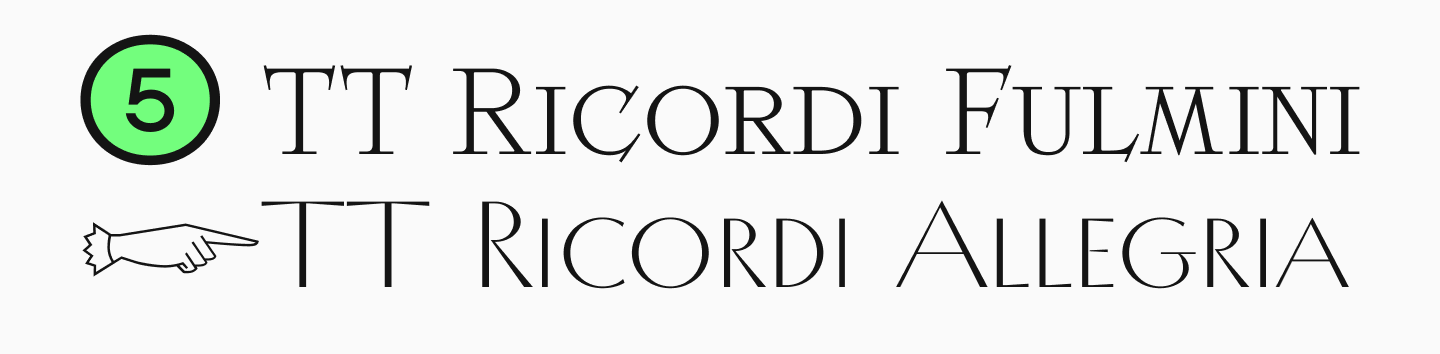
The TT Ricordi family features Italian names, as all these designs were inspired by historical inscriptions found on Italian stones and plaques. For instance, in TT Ricordi Fulmini,
« Fulmini » means « lightning » in Italian, while « Allegria » in TT Ricordi Allegria means « cheerfulness. »
What Logic Did We Use to Name Our Fonts: Real Examples

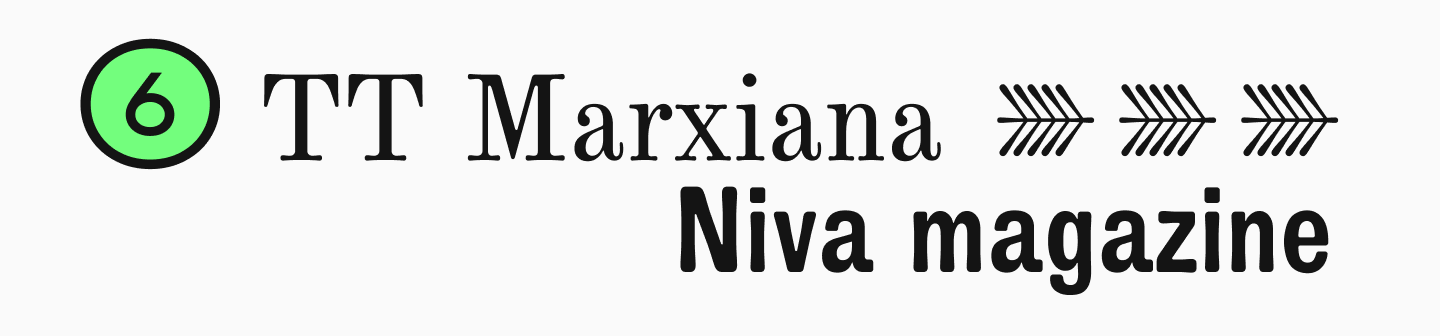
TT Marxiana’s name has historical roots too. This typeface family was inspired by fonts used in the 1887 « Niva » magazine, published by Adolf Marx’s publishing house. The name honors the publisher’s surname.
What Logic Did We Use to Name Our Fonts: Real Examples

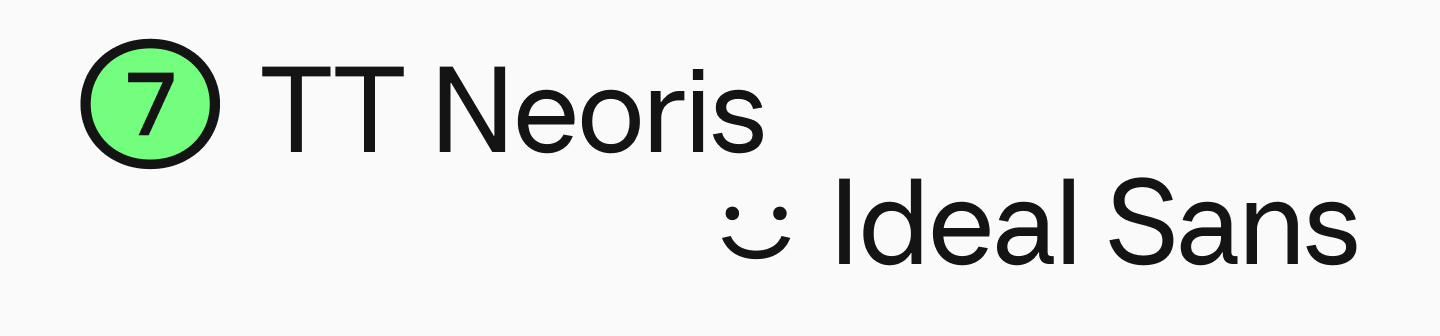
The Neo-Grotesque transformer TT Neoris combines two words: « neo » (new) and « rise. » These words reflect our modern approach to Neo-Grotesque typefaces, as we conducted extensive research to make it truly innovative.

What Logic Did We Use to Name Our Fonts: Real Examples

Senior Type Designer Alina Gabidulova shared the story behind naming the experimental TT Carvist. It all began with brainstorming associations for the typeface. This resulted in a list of associations: something Gothic yet Old Slavic, connection, bilingualism, folk, patterns, ornament, lace, stained glass, embroidery, weaving, labyrinth, and poster. Based on these associations, we used Google Translate to search for corresponding words and concepts in various languages. The finalists were « TT Cyrthic » and « TT A0, » which were both available and fitting in meaning. However, it turned out that search engine queries for « TT A0 » returned completely unsuitable results. That’s when the marketing department stepped in and continued the search. And so, TT Carvist was born—a name that references stone carving.

What Logic Did We Use to Name Our Fonts: Real Examples

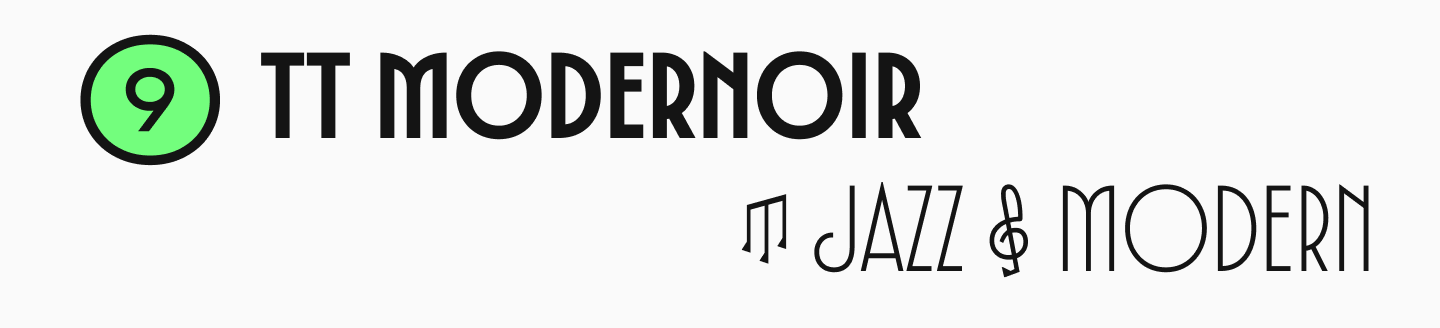
In our recent experimental project TT Modernoir, designer Toma Streltsova drew inspiration from French Art Nouveau typography and film noir aesthetics, which is reflected in the name of this typeface.
What Logic Did We Use to Name Our Fonts: Real Examples

Conclusion

Now you can see the importance of choosing an original and appealing name for your font. We hope our experience and tips will help you in this challenging task! After all, if you’ve created an entire typeface, naming it should be the easy part!
Dernières publications

TypeType’s Year in Review: Looking Back at 2025

2025 was an incredibly productive year for TypeType: we released 7 new fonts, updated 14 typefaces, and added Arabic language support to two of our bestsellers. In addition, we won awards in type design competitions, explored new platforms, improved our website, wrote about type design in our blog, gave lectures, met with you at webinars, and created joint projects with friends and partners.

Voir plus
Typography in the Museum: How We Developed the Corporate Typeface for the Hermitage

The TypeType team, with the support of the Mantera Group, has created a new font family for the State Hermitage Museum—the Hermitage Type Family. The typeface will be used across all of the Hermitage’s digital content; you can already see it on the website and the updated launch page of the mobile version. And this is just the beginning of a major overhaul of the museum’s digital identity, in which the new font will play a pivotal role.

Voir plus
Proxima Nova Font: Alternatives, Pairings, and the Secrets of Its Popularity

Proxima Nova is one of the most recognizable sans-serif fonts in modern design. In this article, we’ll explore the history of the Proxima Nova font family, its graphic characteristics and composition, figure out what fonts go with Proxima Nova, what its best alternatives are, and what license you need to use it.

Voir plus
The Perfect Moment Is Now: Launching Our Creative Lab, TT Labs

We spent a lot of time thinking about how to find a place for creative freedom within this system, how to set aside time for small passion projects, how to step outside our usual boundaries, and how to give spontaneity a chance. And we realized that the perfect moment will never come unless you take the first step. So we took it—and that’s how the TT Labs creative laboratory was born. Here’s the story from the beginning!

Voir plus
What is Typography in Graphic Design: Key Concepts, Principles, and Examples

Discover what typography is, why it’s important in design, and how to apply its main principles, styles, and rules to create visually strong text.

Voir plus
A Font with a Wide Reach: A Special Project for SHIFTBRAIN’s 20th Anniversary

In 2023, the Japanese marketing agency SHIFTBRAIN launched an interactive website dedicated to the company’s 20th anniversary. For this project, the TypeType team developed a unique variable font capable of stretching to extreme horizontal widths. As a foundation, we used the bestseller TT Norms® Pro, which was already the company’s corporate typeface—you can see it on the main SHIFTBRAIN website.

Voir plus
Pangrams Explained: Meaning, Types, Usage and Complete List of Examples

If you’re interested in design, you’ve almost certainly come across the famous sentence about the quick brown fox and the lazy dog. Or perhaps one about a jived fox nymph and a quick waltz. These are pangrams—sentences that contain all the letters of the alphabet. In this article, we’ll provide a more detailed pangram definition, explain why these phrases are so important, and provide a list of the most popular pangrams in English.

Voir plus
Bold Fonts: How to Use Them in Design

Font weight is a crucial characteristic that directly impacts the perception of an entire design. In this article, we’ll explore where and how to apply bold fonts, the different types that exist, and look at some examples of such fonts from the TypeType collection.

Voir plus
Web Font Optimization: The Key to Instant Website Loading Speed

Since fonts are a vital part of web design, proper font optimization plays a key role in ensuring your website is fast and efficient. Let’s explore why web font optimization is so crucial and what steps you can take to ensure your fonts load faster.

Voir plus

Voir plus

Retalic or Reversed Italic: Understanding Left-Leaning Type Design

Many of our readers are undoubtedly familiar with the term “italic” as we frequently discuss these slanted and cursive fonts in our articles. However, the term “retalic” might be unfamiliar even to those well-versed in typography. Let’s explore this unique font style and its applications in modern design.

Voir plus
Best Ebook Fonts

Choosing the right font for an ebook might seem like a simple task at first glance, but it actually requires a careful approach and consideration of several nuances. After all, digital media differs significantly from print. What exactly should you pay attention to? And how do you select the best font for reading ebooks? We’ll explain it all in this article!

Voir plus
Best Cursive Fonts in 2026: A Comprehensive Design Guide

Cursive fonts are a powerful design tool that can elevate your visual projects when used thoughtfully. However, the key is knowing how to apply them effectively and appropriately. In this comprehensive guide, we’ll dive into the world of cursive fonts. You’ll learn what defines a cursive font, how it differs from traditional italic styles, and discover the most strategic ways to incorporate these unique typefaces into your design work.

Voir plus
How to Choose the Best Infographic Fonts: Comprehensive Guide

Infographics is a versatile and convenient tool that finds application everywhere: business, advertising, science, journalism, and more. This is a powerful way to communicate information in a simple, visual manner. Why is it so essential to choose the right font for your infographic, and how to do this? How do you pair fonts with each other? What fonts work best for marketplace infographics? Read on to find out!

Voir plus
On Opposite Sides: Wide and Narrow Fonts

Wide and narrow fonts are among the newest trends in typography, graphic design, and web design. At first glance, some may seem odd and awkward, but when thoughtfully applied, they can infuse a project with freshness, boldness, relevance, and strength. What are narrow and wide fonts, what variations do they come in, and where are they used? Let’s explore this together in this article.

Voir plus
How do you add a font to your computer? 

How to install a new font on a PC? Users and designers face this question very often. Rest assured, there is nothing tricky in this process! This article provides a step-by-step guide to help you understand how to install downloaded fonts correctly on Windows and iOS-powered computers.

Voir plus
Font Licensing: Complete Guide for Designers and Business Clients

In this article, you will find out what types of font licensing exist, how to choose a suitable font license and use it, how to verify and buy a commercial font license, and how to avoid unpleasant typeface licensing issues whether you are a designer or a client.

Voir plus
Kerning, Tracking, Leading & Spacing in Typography: What’s the Difference?

Even seasoned designers sometimes mix up the concepts of kerning, tracking, spacing, and leading. Become a pro at distinguishing them! Learn the definitions of these concepts, explore their differences, and discover some helpful tips on how to use them while working on your fonts.

Voir plus
Branching out: How Scandinavian Sans TT Firs Grew and Found Its Font Pair

In 2023, we breathed new life into the beloved Scandinavian sans serif TT Firs Neue by dramatically refining and renewing the typeface to comply with cutting-edge standards. Soon after, we introduced the text font pair for this typeface – an elegant TT Firs Text. This article is dedicated to how it all began, why we decided to update TT Firs Neue, what we added and modified, and how TT Firs Text was born.

Voir plus