top_banner_ttneorispro0426
Fonderie Blog Font and Typeface: What's the difference?

Font and Typeface: What’s the difference?

Font vs Typeface: What's the difference?

Introduction 

The words « font » and « typeface » are often considered synonyms. This happens not only due to lack of understanding—even among professionals, the term « font » is used to substitute both « typeface » and « font style. » The absence of commonly accepted terminology worsens the situation because all font designers rely on different interpretations.

In this article, we will describe the distinctions between fonts and typefaces and discuss the importance of distinguishing between them.

Font vs typeface: Going deeper into terminology

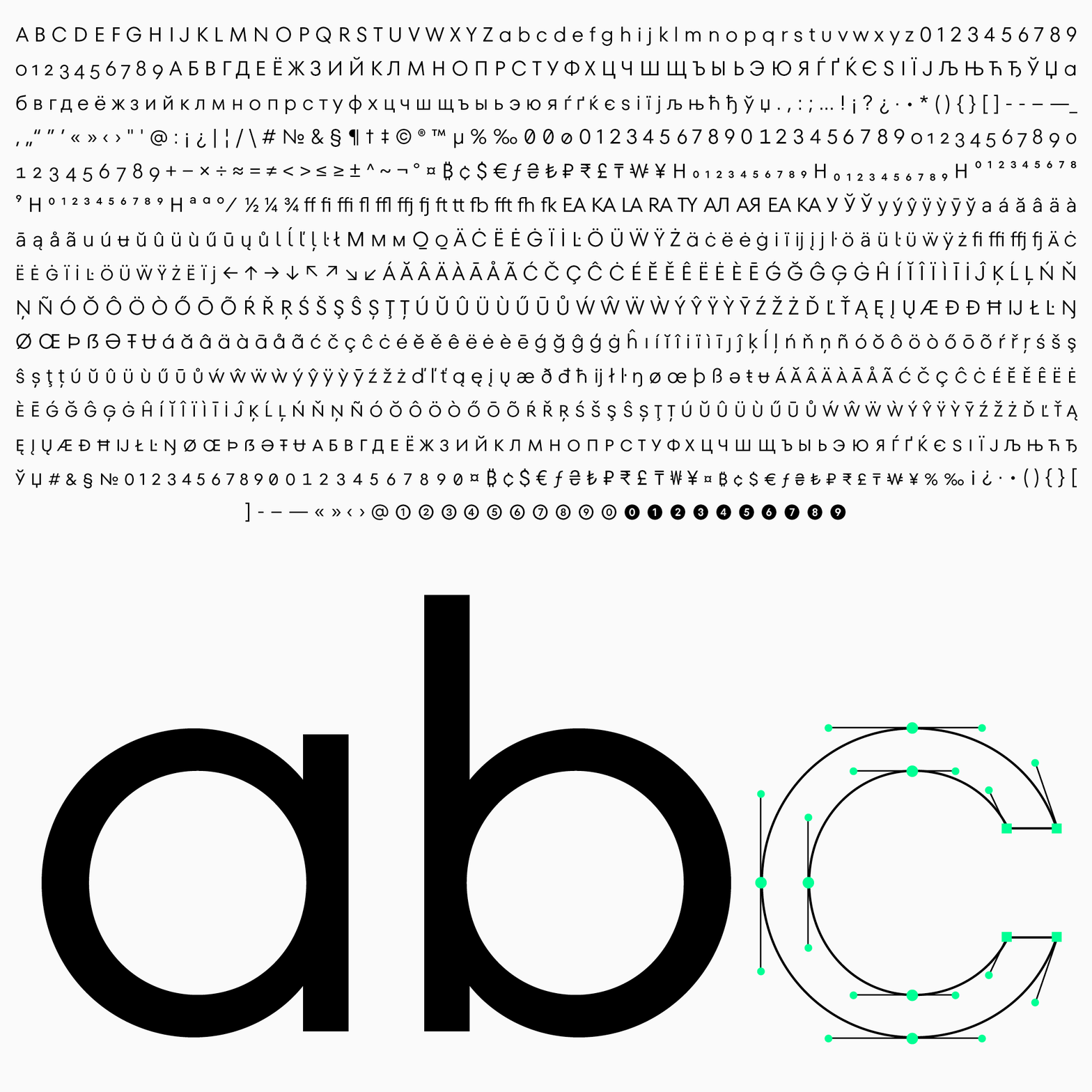
Font is a set of characters, encompassing letters, numbers, punctuation, and diverse symbols utilized for setting the text.

According to this broad definition, the meaning of the term “font” can be understood as both:

  1. A collection of symbols or typographical letters (made of metal or digital) needed for typesetting;
  2. A character set with a shared stylistic identity and design.
Font and typeface: terminology

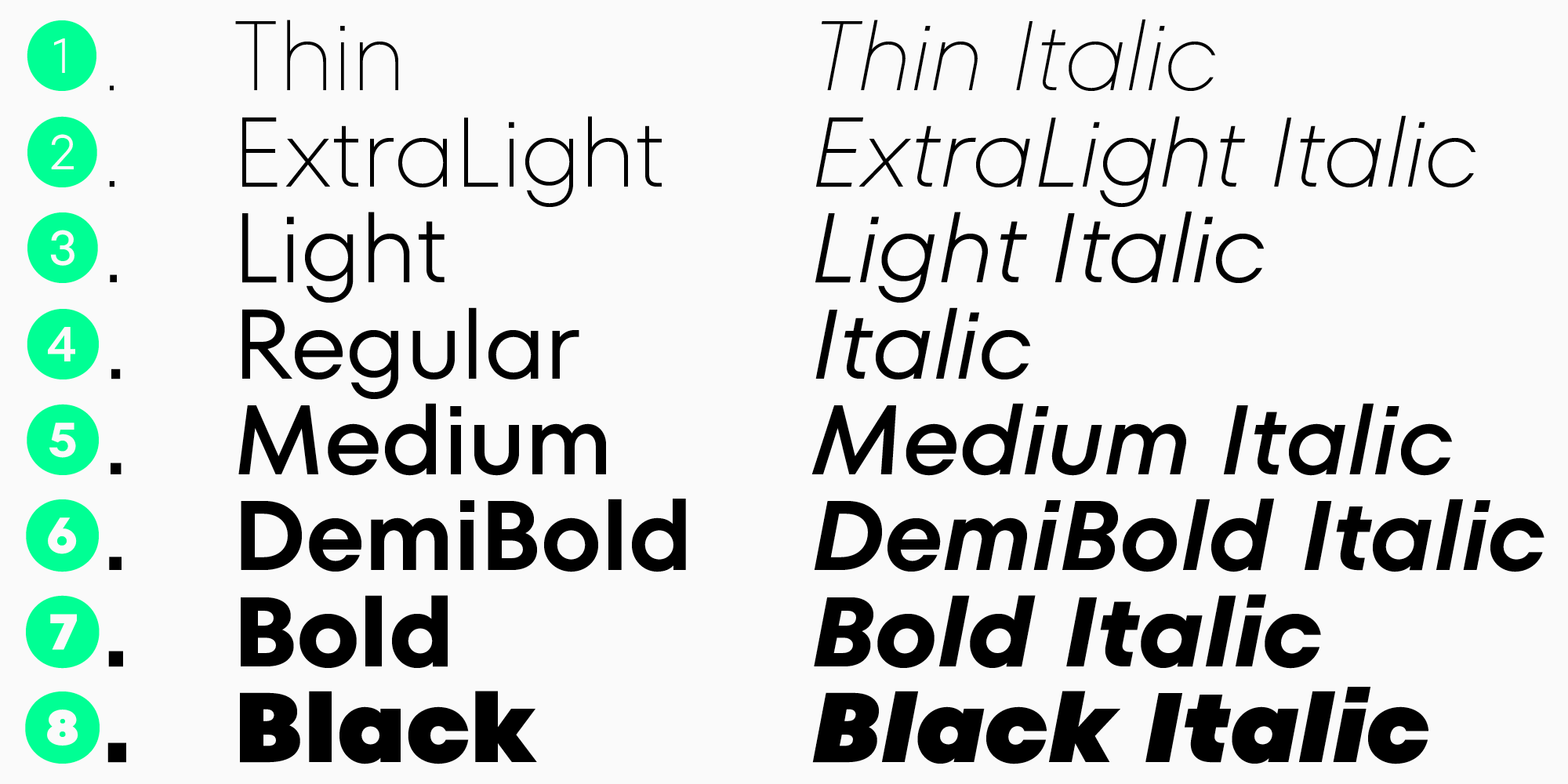
The term “typeface” found its place in typography in the early 1900s when the first “extended” font families emerged, designed by Morris Fuller Benton for the American Type Founders (ATF) studio. These font families included fonts with varying styles (widths and weights) yet united by a shared aesthetic.
Font vs typeface

In modern typefaces, fonts can even vary in aesthetics, bound by artistic vision alone.
What is a font?

So, a font is what we can find inside a typeface or a type family. However, in typography, the word « font » is often used to signify both a typeface itself and an individual font style. A font style is a font’s particular weight and slope degree. 

For example, when we say that TT Norms® Pro is a font with the most extensive language support among other fonts in the TypeType collection, we are actually talking about the TT Norms® Pro typeface. And if we suggest using the font TT Livret Text Regular as the most optimal choice for typing sizeable text blocks, we are referring to the specific font style. 

Consequently, it’s possible to understand the meaning depending on the context. Yet, to make sense of the difference between fonts and typefaces, we recommend leaning on the following definition:

A font is a full set of symbols and glyphs united by style and used for text typing. Meaning it’s the file itself, a font carrier.
What is a font?

What kinds of fonts (font styles) exist?

Regarding font classification, the subject in most cases is typefaces. That’s why we will define the term « typeface » and cover the classifications later in the article. For now, let’s start small and unravel the different kinds of font styles. 

A font style is a font’s particular weight. In their turn, they can vary in slope degree. 

One font may include roman and italic (slanted) font styles.

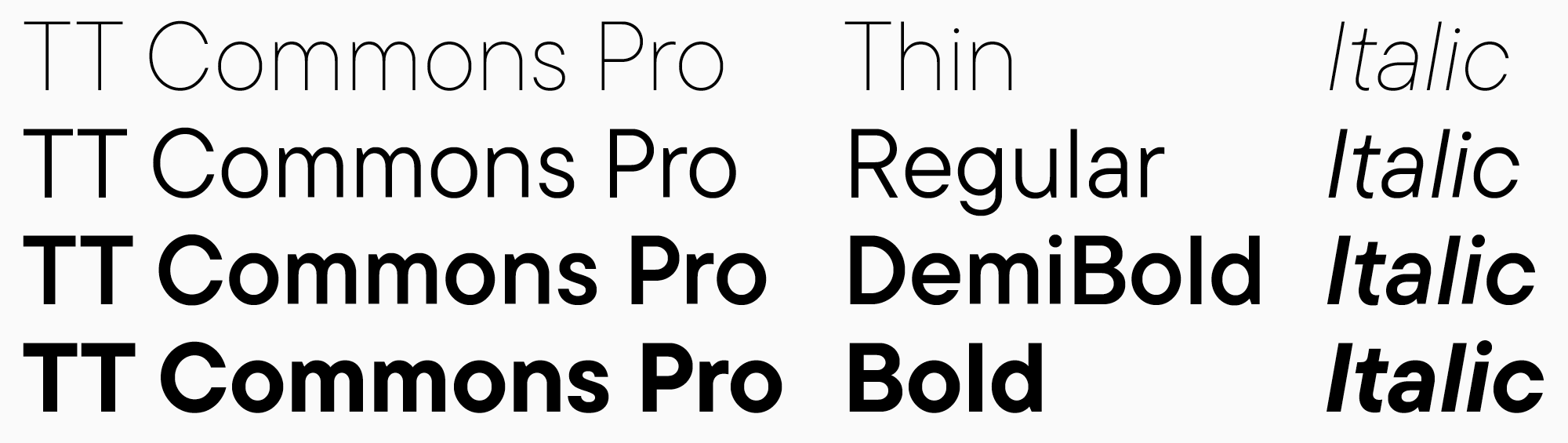
The varying font weights can be subdivided into three categories: thin, regular, and bold. The most popular and frequently used font styles are Thin, Regular, DemiBold, and Bold. Different studios can extend the font style set as they see it. For instance, it’s quite common to come across fonts featuring the Hairline font style.
What kinds of fonts (font styles) exist?

Fonts with various font styles are grouped into type families (typefaces). Let’s delve into what they are. 

What is a typeface/type family?

To begin with, we should distinguish between the terms « type family » and « typeface », although they have similar meanings. 

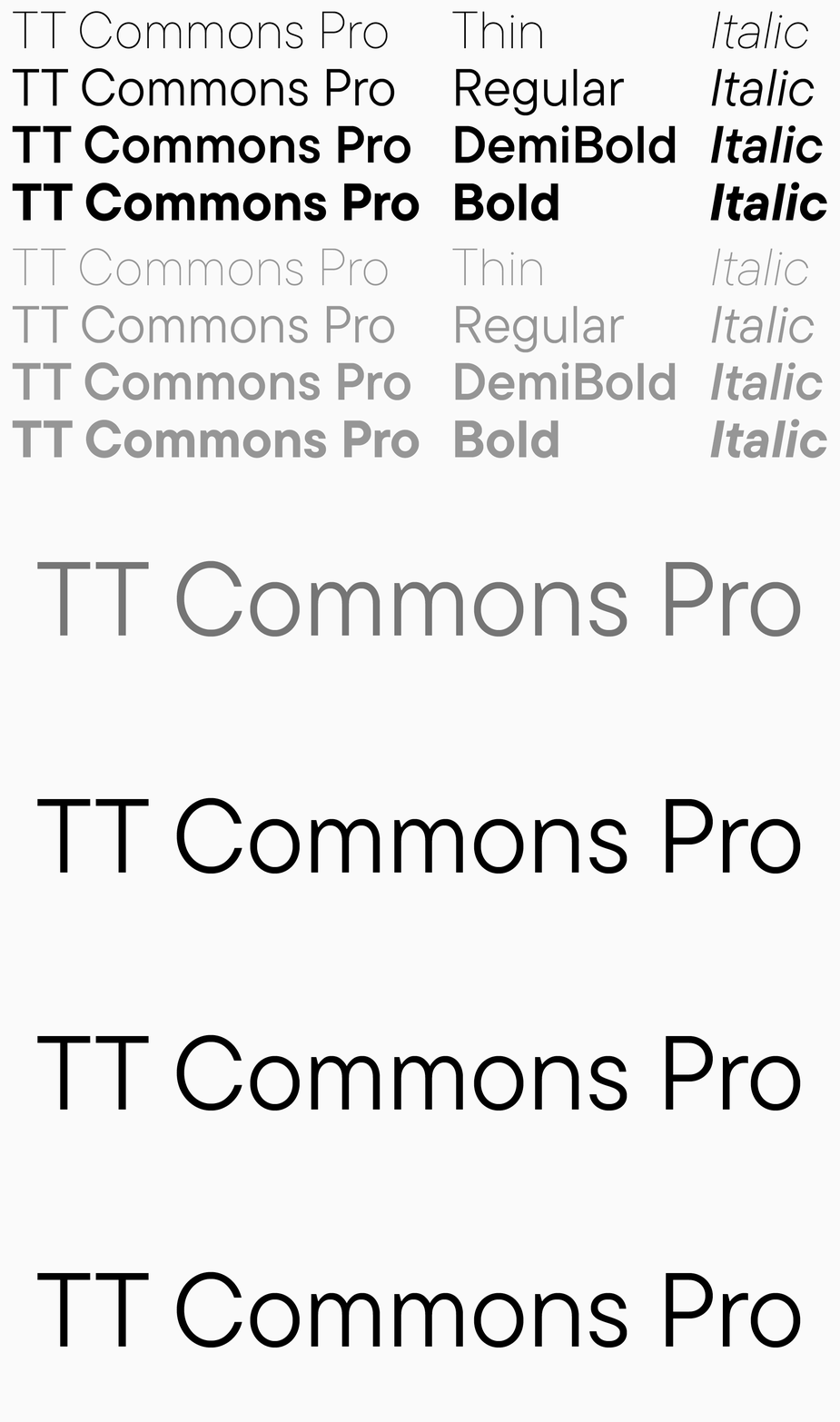
A type family (or a font family) is a system comprising variations of the primary design (font styles). They are united by the name and idea. At the same time, fonts inside one type family may differ in purpose, personality, and style.
What is a typeface/type family?

The term « typeface » can also refer to both an entire type family and only a part of it—this term is used as a synonym for « type family. » 

However, this term has another definition as well. According to the Google Fonts dictionary, typeface is the core visual design and idea that can be implemented through various typesetting technologies, and font is one of these implementations. In other words, a typeface is what you see, and a font is what you use.

In this sense, let’s reiterate that when we talk about font classification, we specifically refer to typefaces. Let’s find out more about them.

What types of typefaces are there?

There is no standard classification of fonts or typefaces. At this point, we won’t dive deeper into this topic. Instead, we will cover the basics so you can better understand the difference between fonts and typefaces. If you want to learn more about type classifications, we recommend reading our article about them.

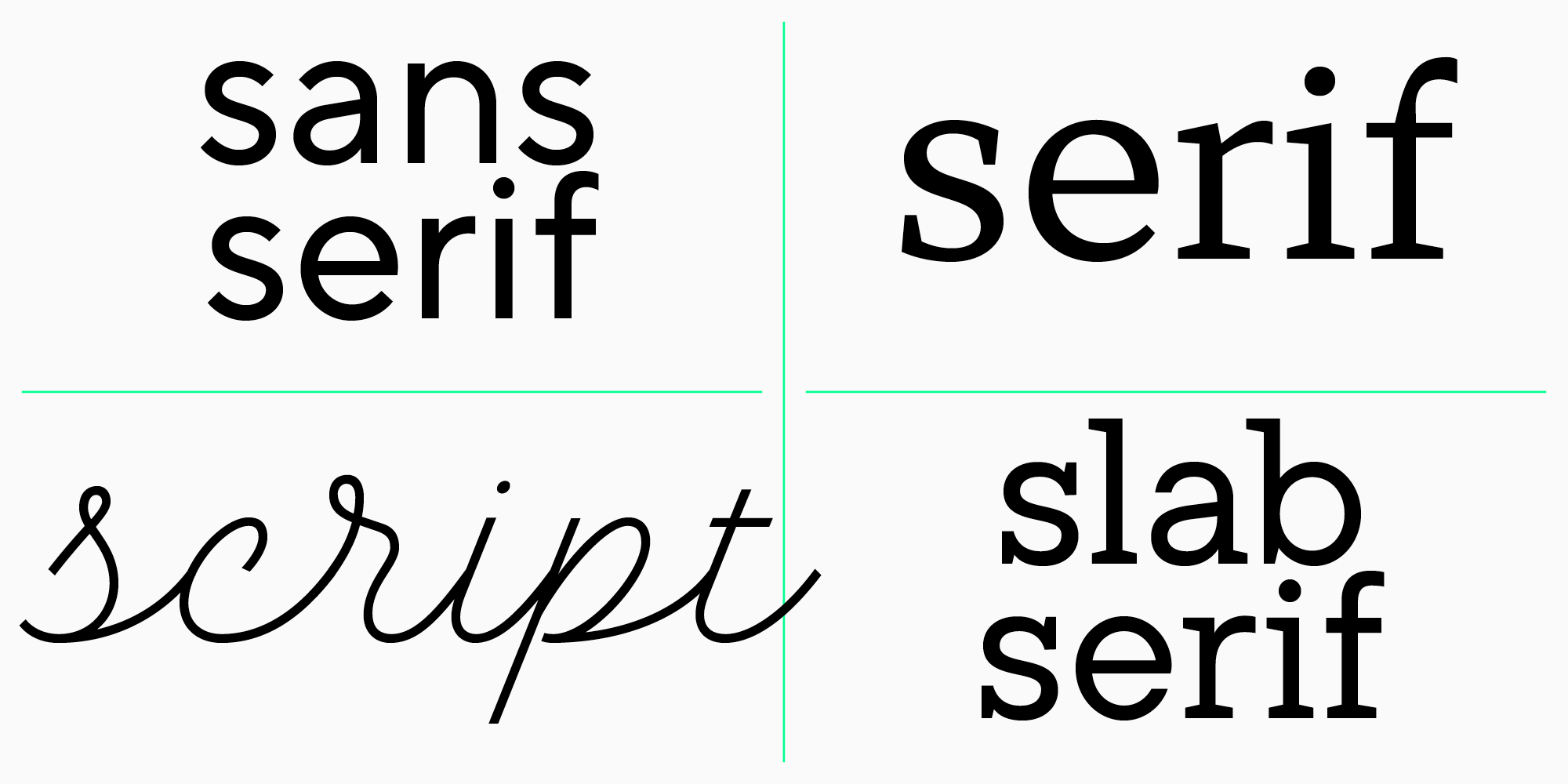
The most common typeface styles are sans serifs (grotesques), serifs (antiquas), slab serifs, and script typefaces.
What types of typefaces are there?
  • Sans serifs (grotesques) are a group of typefaces that don’t have serifs. They are characterized by low contrast or no contrast at all. A great example of a geometric sans serif would be TT Commons Pro.
  • Serifs (antiquas) are a group of typefaces with serifs. Typically, they exhibit high contrast. For instance, TT Ramillas is a Transitional Antiqua.
  • Slab serifs are marked by heavy rectangular serifs. An example of such a font is our TT Rationalist

All the above-mentioned examples from the TypeType collection are typefaces that consist of various fonts.

  • Script fonts imitate handwriting. They can also form typefaces, but we intentionally separate them from the rest of the list to make a clear distinction between fonts and typefaces one more time. So, the TypeType collection has a script font called TT Lovelies Script. It qualifies as a font specifically because its entire contents are a single font style.

Font vs typeface: What is their difference in practice, and why is it important for designers to distinguish them?

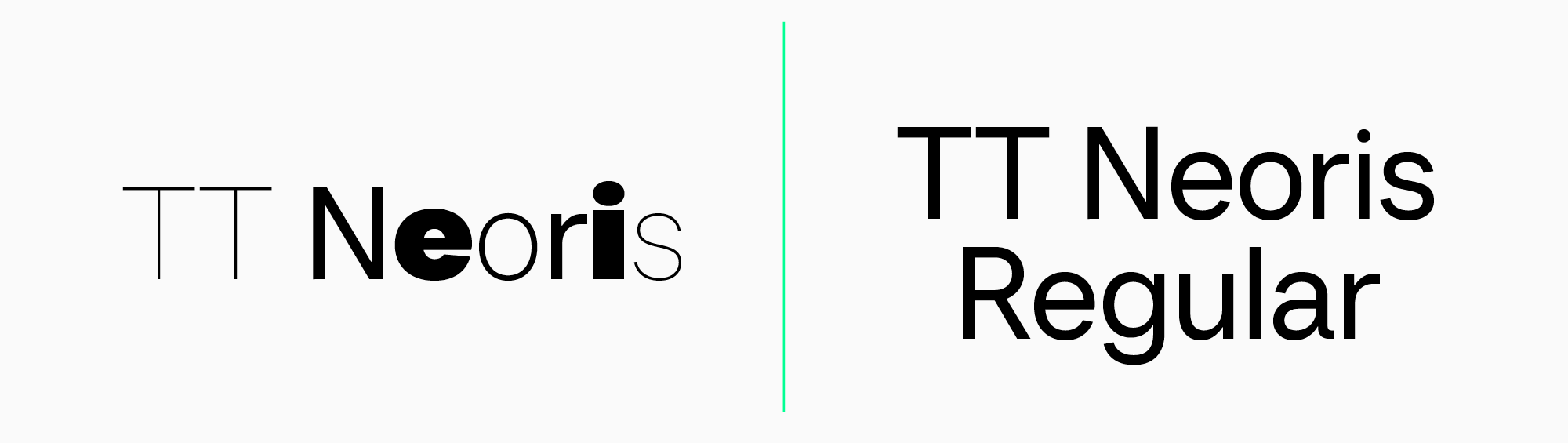
It’s essential for both designers and clients to understand the difference between fonts and typefaces. This can significantly facilitate project development. As you know, fonts within a typeface can vary considerably. For instance, if the task for a designer is to use TT Neoris, the resulting mockup can turn out completely different from what the client expected because this typeface is highly versatile. But if the task is narrowed down to using a specific font, like TT Neoris Regular, such a surprise can be avoided.
Font vs typeface: What is their difference in practice, and why is it important for designers to distinguish them?

Conclusion: Are the differences between fonts and typefaces crucial?

Font design terminology is a living being: together with the development of typography and the advancement of technologies, new terms emerge. However, categorizing and understanding the old ones was already difficult as they represent a very complex system. For those working with fonts or just intrigued by the field, understanding the diverse meanings of these terms is essential. It is the only way to immerse yourself in the subject and comprehend it.
Dernières publications

TypeType’s Year in Review: Looking Back at 2025

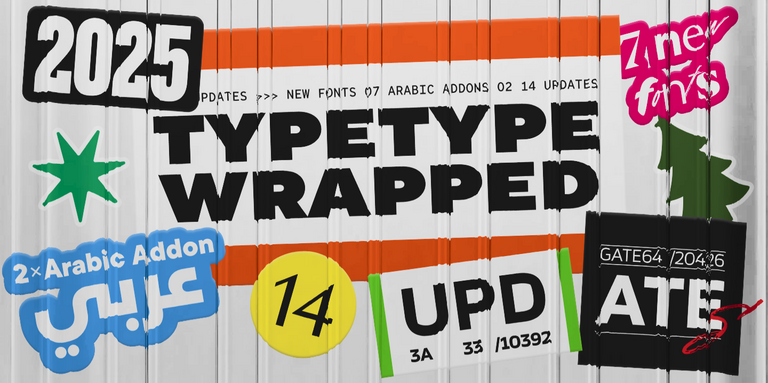
2025 was an incredibly productive year for TypeType: we released 7 new fonts, updated 14 typefaces, and added Arabic language support to two of our bestsellers. In addition, we won awards in type design competitions, explored new platforms, improved our website, wrote about type design in our blog, gave lectures, met with you at webinars, and created joint projects with friends and partners.

Voir plus
Typography in the Museum: How We Developed the Corporate Typeface for the Hermitage

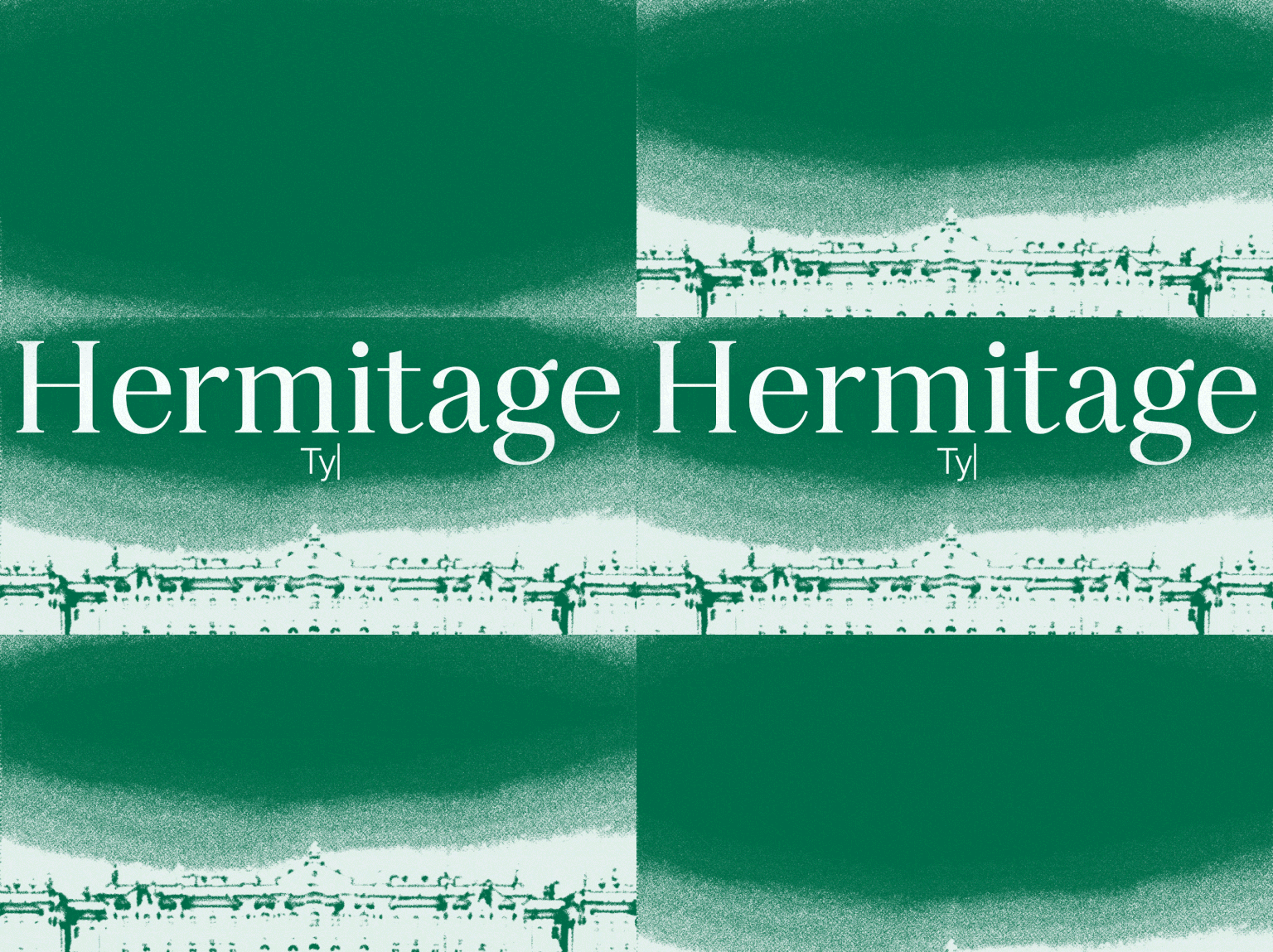
The TypeType team, with the support of the Mantera Group, has created a new font family for the State Hermitage Museum—the Hermitage Type Family. The typeface will be used across all of the Hermitage’s digital content; you can already see it on the website and the updated launch page of the mobile version. And this is just the beginning of a major overhaul of the museum’s digital identity, in which the new font will play a pivotal role.

Voir plus
Proxima Nova Font: Alternatives, Pairings, and the Secrets of Its Popularity

Proxima Nova is one of the most recognizable sans-serif fonts in modern design. In this article, we’ll explore the history of the Proxima Nova font family, its graphic characteristics and composition, figure out what fonts go with Proxima Nova, what its best alternatives are, and what license you need to use it.

Voir plus
The Perfect Moment Is Now: Launching Our Creative Lab, TT Labs

We spent a lot of time thinking about how to find a place for creative freedom within this system, how to set aside time for small passion projects, how to step outside our usual boundaries, and how to give spontaneity a chance. And we realized that the perfect moment will never come unless you take the first step. So we took it—and that’s how the TT Labs creative laboratory was born. Here’s the story from the beginning!

Voir plus
What is Typography in Graphic Design: Key Concepts, Principles, and Examples

Discover what typography is, why it’s important in design, and how to apply its main principles, styles, and rules to create visually strong text.

Voir plus
A Font with a Wide Reach: A Special Project for SHIFTBRAIN’s 20th Anniversary

In 2023, the Japanese marketing agency SHIFTBRAIN launched an interactive website dedicated to the company’s 20th anniversary. For this project, the TypeType team developed a unique variable font capable of stretching to extreme horizontal widths. As a foundation, we used the bestseller TT Norms® Pro, which was already the company’s corporate typeface—you can see it on the main SHIFTBRAIN website.

Voir plus
Pangrams Explained: Meaning, Types, Usage and Complete List of Examples

If you’re interested in design, you’ve almost certainly come across the famous sentence about the quick brown fox and the lazy dog. Or perhaps one about a jived fox nymph and a quick waltz. These are pangrams—sentences that contain all the letters of the alphabet. In this article, we’ll provide a more detailed pangram definition, explain why these phrases are so important, and provide a list of the most popular pangrams in English.

Voir plus
Bold Fonts: How to Use Them in Design

Font weight is a crucial characteristic that directly impacts the perception of an entire design. In this article, we’ll explore where and how to apply bold fonts, the different types that exist, and look at some examples of such fonts from the TypeType collection.

Voir plus
Web Font Optimization: The Key to Instant Website Loading Speed

Since fonts are a vital part of web design, proper font optimization plays a key role in ensuring your website is fast and efficient. Let’s explore why web font optimization is so crucial and what steps you can take to ensure your fonts load faster.

Voir plus

Voir plus

Best Fonts for Reading: Top 10

Looking for the most convenient and easy-to-read font for reading from a phone screen or e-book? Check out the TypeType list of the best fonts for reading! Find out which font boasts the best readability.

Voir plus
UniversiTTy: Lesson 4. Planning a Font Family

Expanding our exploration of sketches, the focus in this article will shift to more pragmatic sketches — those of a font family. You’ll find out why it’s essential to determine the contents of your typeface during the first stages of your project.

Voir plus
10+ Best Fonts for Mobile Apps in 2026

Today, we’re sharing our list of the best modern fonts for web and mobile apps in 2023. Learn more about choosing fonts for your digital projects and what kinds of fonts most designers prefer.

Voir plus
UniversiTTy: Lesson 3. Your Future Font Sketches: Technique, Digitization, Testing

In our ongoing series about the first stages of crafting typefaces, let’s explore probably the most creative step—sketching.

Voir plus
The Impact of Fonts in Web Design on User Experience

In the ever-evolving landscape of web design, it’s not just the vibrant visuals or interactive elements that grip a visitor’s attention. Lurking quietly, yet undeniably powerfully, typography plays a pivotal role in shaping a user’s experience. Fonts, often overlooked, are the silent narrators of the digital tales we traverse daily.

Voir plus
15+ Best Fonts for Logo Design in 2026

A logo is an indispensable part of any brand’s identity. All logos can be roughly subdivided into 3 large groups: emblems/brandmarks, wordmarks, and combination marks. Brandmarks always accentuate the symbol, whereas fonts often take on a leading role in the other two types of logos. In this article, we’ll focus on how to find this perfect match and provide the list of 15 best fonts for logo design from the TypeType collection, which are trending in 2025.

Voir plus
UniversiTTy: Lesson 2. How Not to Get Lost When Working on a Font. The Art of Task Outlining

Before you begin designing letters and forming the font, it is essential to carry out initial preparation to get a clear idea about the project’s outcome. In this article, we will focus on the essence of this preliminary stage and the importance of this work, describing and analyzing the process of task outlining.

Voir plus
4 Quick Ways to Identify Fonts Used on Websites

Enthusiastic designers are constantly on the lookout for new fonts. Not only while they are working. You can notice new fonts to add to your collection while scrolling social media, browsing brands’ websites, and even playing your favorite video games. All that is left is a technical aspect: to identify a font family used in the project and purchase a license for it. There are many ways of identifying fonts. In this article, we will cover the easiest ones.

Voir plus
Best Fonts for Books: How to Choose

Web and printing in typography are two different worlds. At least, they are often presented this way. In reality, many typefaces can be used in both domains. To understand what typeface to choose, it is important to know the differences between book fonts and web fonts. This article covers the topic of fonts for books and how to choose the best typeface for book design, magazines, or any other printed material.

Voir plus